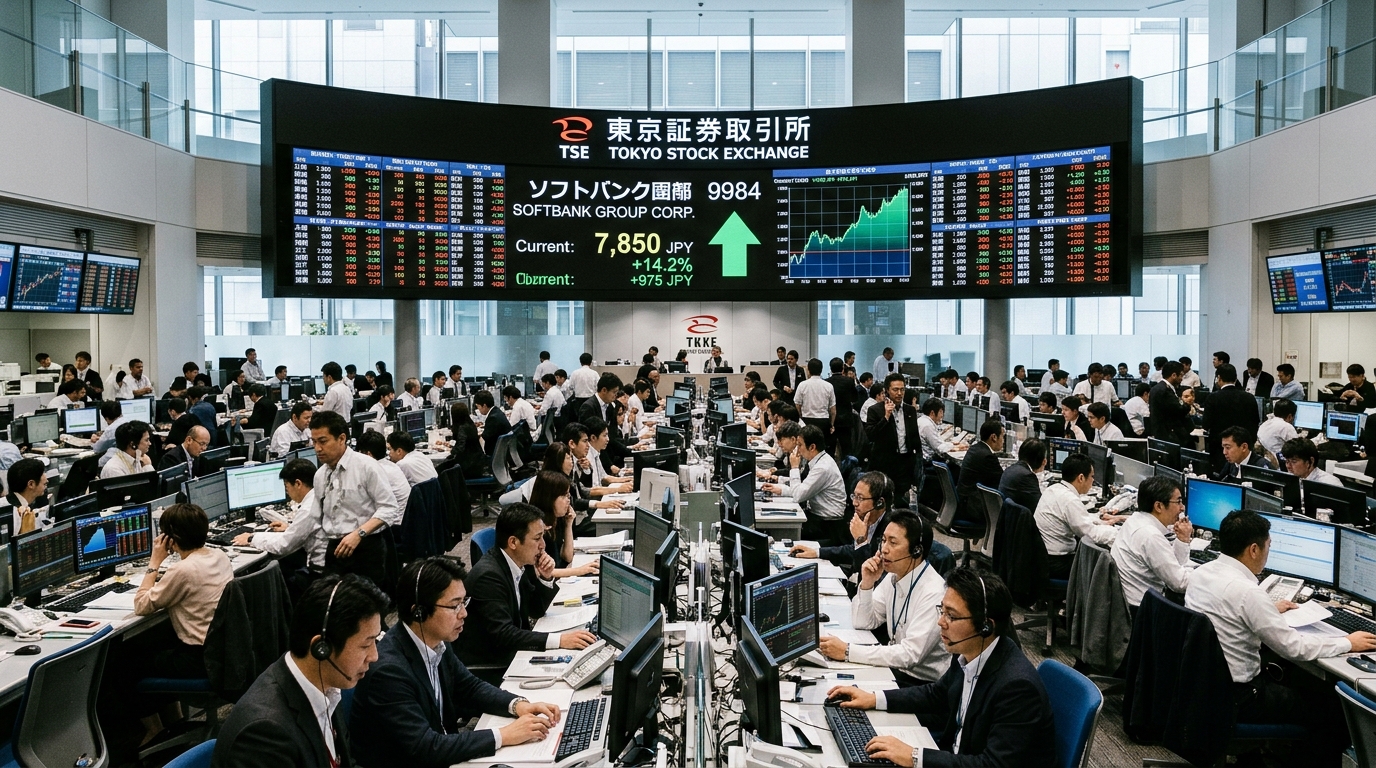
AI Selloff Spurs Global Rotation Beyond U.S. Megacaps

Investor unease around the AI trade broadened on November 8, with multiple wire reports pointing to a reassessment of valuation, concentration risk, and the political costs of large-scale data-center expansion. While the headlines do not suggest a wholesale collapse in equities, they do indicate a more selective market in which capital is looking beyond the dominant U.S. AI names.
Several wires point to the same pressure point
CNBC reported that Berkshire Hathaway shares surged as Wall Street swooned amid AI fears, a notable sign that investors may be shifting toward companies seen as less exposed to the most crowded parts of the technology trade. A separate CNBC report said Berkshire more than doubled its buybacks in the third quarter even as earnings declined, a combination that can appeal to investors looking for capital returns and perceived balance-sheet resilience during a market rotation.
The weakness in AI sentiment is not limited to share-price action. CNBC also reported that Anthropic’s IPO is meeting backlash after U.S. midterm results showed a stinging rebuke of data centers. That matters because it broadens the AI debate from valuation alone to infrastructure, permitting, energy use, and local political acceptance.
MarketWatch added another layer, warning that the S&P 500 could be dangerously exposed to AI and outlining simple alternatives. Even without specific allocation data in the headline, the message is clear: benchmark concentration is becoming part of the market conversation.
Why this matters beyond technology
The AI trade has shaped not only tech leadership but also index performance, power demand expectations, and broader risk appetite. If investors begin to treat AI exposure as a source of crowding rather than a guaranteed engine of growth, market leadership can widen quickly.
That possibility gained support from Investing.com, which reported that the AI stock selloff is driving investors to China, India, and overlooked Asian sectors. This suggests the current move is not just a retreat from risk, but also a rotation into markets perceived to have different earnings drivers and lower dependence on the most expensive AI-linked themes.
In practical terms, that can affect sector leadership in financials, industrials, consumer stocks, and selected international equities. It can also influence currencies and commodity demand if capital flows become more geographically diversified.
Political and infrastructure concerns are entering the valuation debate
One of the more important aspects of the current pullback is that it is no longer only about whether AI companies can justify high multiples. The CNBC headline on Anthropic highlights growing pushback against data centers after the U.S. midterm elections. That means investors may increasingly ask whether expansion plans face permitting delays, higher power costs, community resistance, or other policy hurdles.
This is a significant shift because the AI buildout has relied on assumptions about rapid infrastructure deployment. If those assumptions weaken, market expectations around future revenue, chip demand, and cloud spending could also be recalibrated.
Defensive leadership is gaining attention
Berkshire Hathaway’s relative strength is notable in that context. According to CNBC, the company’s shares rose while broader Wall Street sentiment weakened. That does not by itself define a new cycle, but it does fit a familiar pattern: when investors become less confident in high-growth narratives, they often revisit diversified companies with large cash flows and flexible capital allocation.
The appeal of Berkshire in the current news cycle is therefore symbolic as well as financial. It represents a market willing to reward optionality and stability while questioning crowded growth exposures.
What investors are likely watching next
The available headlines suggest investors will keep watching three things: whether AI-related weakness spreads beyond the largest names, whether political resistance to data-center expansion intensifies, and whether international markets continue to attract flows as alternatives to U.S. megacap concentration.
For now, the evidence from CNBC, MarketWatch, and Investing.com points to a more skeptical phase for the AI trade rather than an indiscriminate equity selloff.
Neutral outlook: The near-term market tone suggests rotation rather than capitulation, but AI concentration risk and infrastructure politics are emerging as central questions for global equities.
MarketPro reports are AI-assisted analyses of publicly reported market news. Not investment advice.