Democrats target Trump tariffs as trade fight returns
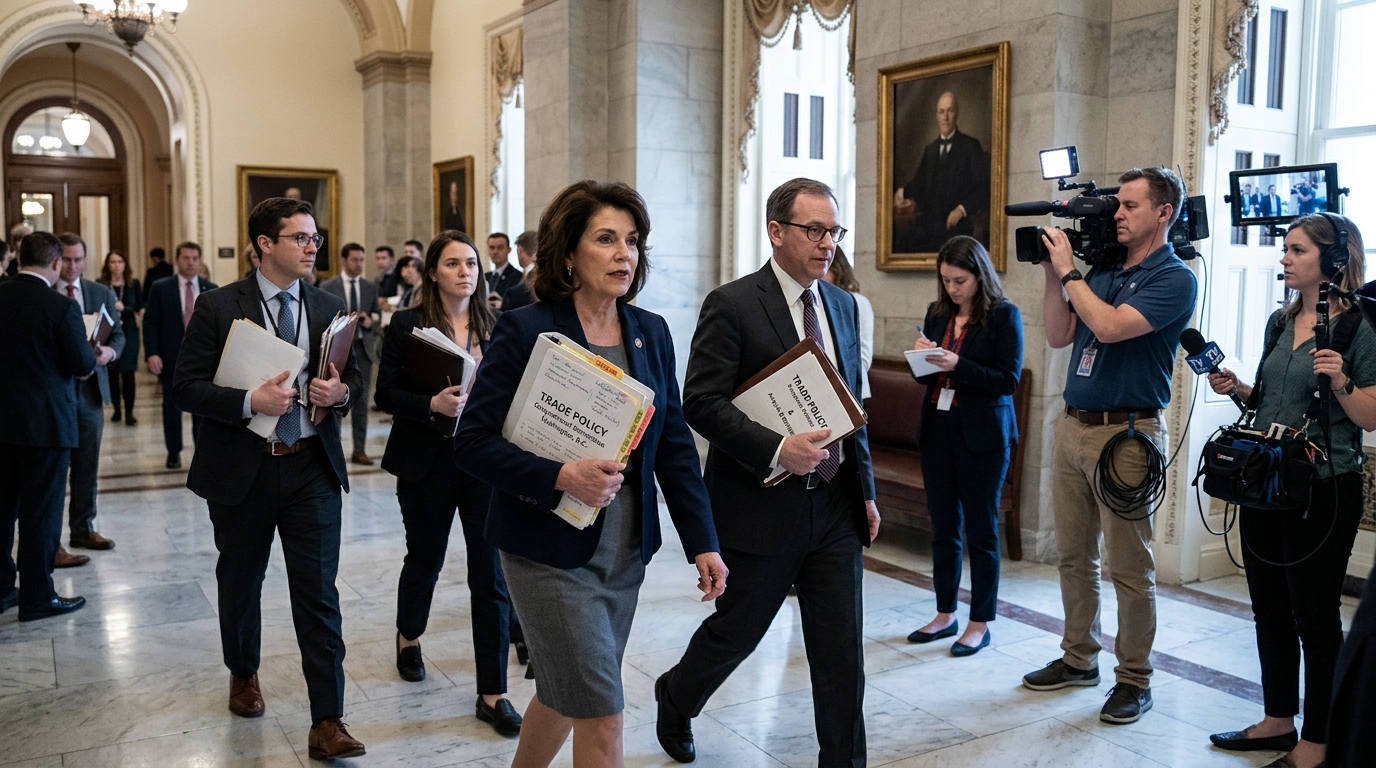
Trade policy is moving back toward the center of the U.S. economic debate after CNBC reported that Democrats are preparing an effort to try to end President Donald Trump's tariffs. While the headline does not detail the legislative path or timing, it points to a renewed political challenge to a tariff framework that has shaped business planning, supply chains and import costs.
The development matters for markets because tariffs sit at the intersection of inflation, industrial policy and global trade relations. Even without a full policy reversal, a coordinated congressional push can re-open the debate around who ultimately bears tariff costs and how much flexibility companies have in passing them on.
Why tariff policy still matters
Tariffs are not only a diplomatic tool. They also affect the real economy through procurement decisions, sourcing strategies and pricing. Importers, retailers and manufacturers tend to watch any sign of tariff changes closely because those changes can alter cost structures well before any official repeal or expansion takes effect.
According to CNBC, Democrats are now trying to challenge Trump's tariffs, signaling that trade barriers remain a live policy issue rather than a settled part of the business backdrop. That is significant for companies with exposure to imported inputs, as well as for sectors that have relied on tariff protection.
MarketWatch's broader recent coverage has also emphasized that investors are watching macro signals closely as market correlations rise again and concerns around growth, inflation and leadership in equities evolve. In that kind of environment, tariff headlines can carry wider significance because they influence expectations around prices, margins and trade flows.
Potential market channels to watch
Without going beyond the available reporting, there are several clear channels through which a renewed tariff fight could affect markets:
- Business costs: import-dependent companies may reassess input pricing and procurement risk.
- Inflation debate: policymakers and economists often examine whether tariffs add to consumer and producer costs.
- Supply chains: firms may revisit diversification plans if they believe tariff policy could change again.
- Cross-border trade: exporters and logistics providers may face changing assumptions about demand and routing.
The political dimension also matters. Trade policy can be harder to unwind than to impose, especially when tariffs become tied to broader negotiations over domestic industry, labor and strategic competition. That means the latest Democratic push may be important even if it does not immediately deliver a sweeping rollback.
Why this is a macro story, not just a political one
Reader data at MarketPro has consistently shown strong interest in practical macro stories with geopolitical and policy implications. Tariffs fit that pattern because they affect multiple asset classes and economic narratives at once. They can influence corporate earnings expectations, consumer price discussions, and the tone of international negotiations.
The tariff debate also arrives as investors are already digesting fresh uncertainty around U.S. growth and inflation indicators, according to Investing.com, which highlighted that inflation data are on tap as a tech-led market swoon has unsettled sentiment. In that setting, a renewed fight over import duties may receive more attention than it would in a calmer policy backdrop.
What remains unclear
The headline supplied by CNBC does not specify which tariffs are being targeted, how Democrats plan to proceed procedurally, or whether there is enough support to materially change current policy. It also does not indicate whether any business groups, labor organizations or industry coalitions are backing the effort.
Those details will be important because tariff policy often produces uneven effects across sectors. Some businesses may support removal of import duties to lower costs, while others may defend them as protection against foreign competition.
For now, the key takeaway is that trade policy risk is active again. According to CNBC, Democrats are preparing to take on Trump's tariffs, and that alone is enough to put import costs and policy uncertainty back on the market's radar.
Neutral outlook: The next step is to watch for concrete legislative or administrative action. Until then, the tariff story is best understood as a renewed source of macro and business uncertainty rather than a completed policy shift.
MarketPro reports are AI-assisted analyses of publicly reported market news. Not investment advice.