South Africa vote setback points to coalition policy test
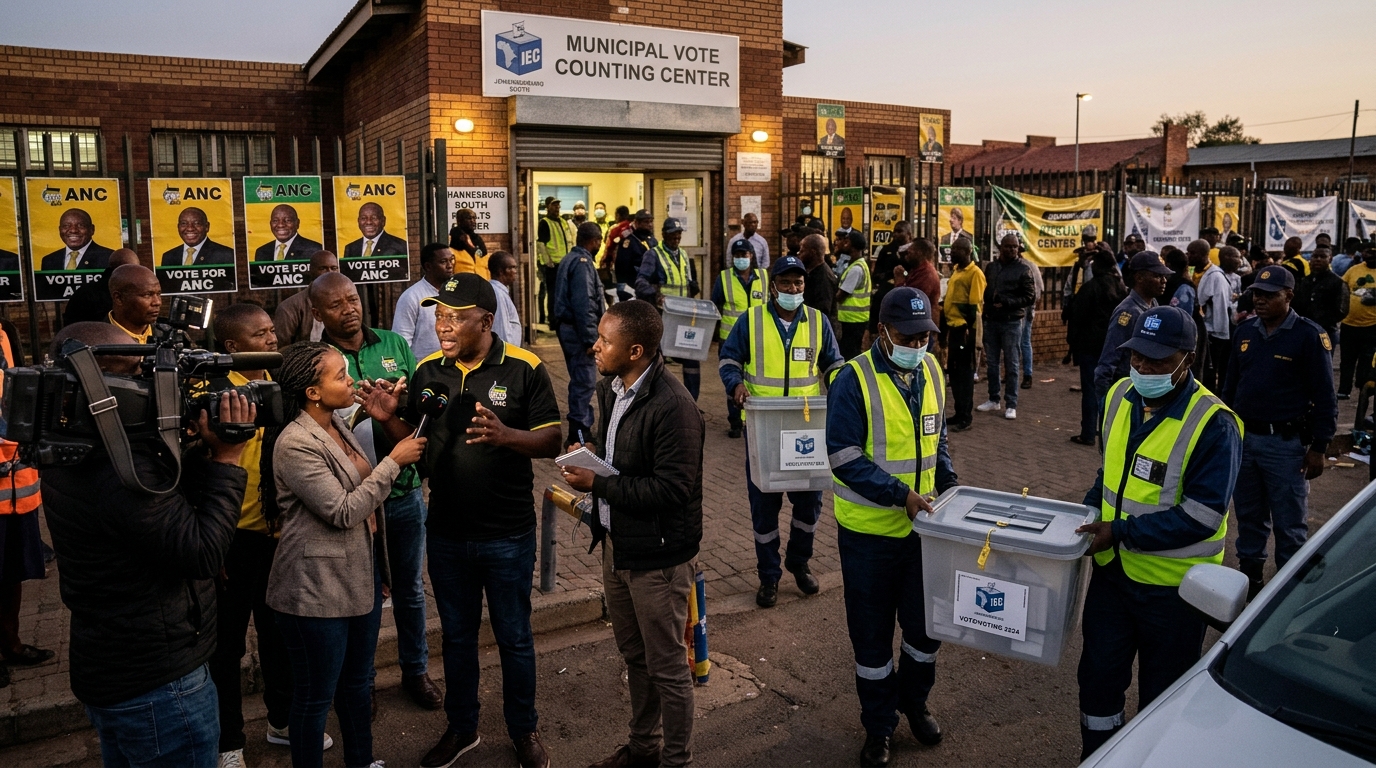
South Africa’s latest municipal vote has opened a new political test for markets after the African National Congress took a significant hit, according to an Investing.com report citing election results and the prospect of difficult coalition talks.
For investors, the immediate significance is less about local councils themselves and more about what the result could signal for political cohesion, fiscal execution and the path of reforms in one of Africa’s most closely watched economies. Coalition bargaining can reshape local power quickly, but it can also feed into national expectations when the governing party appears weaker than before.
Why markets care about a local vote
South African politics matters well beyond domestic headlines because the country’s assets often serve as a broader proxy for emerging-market risk. The rand, local bonds and Johannesburg-listed shares can all react when elections imply greater policy uncertainty or slower decision-making.
According to Investing.com, the ANC’s weak showing has set up tough coalition negotiations. That matters because coalition arrangements can be unstable, especially when they bring together parties with different priorities on spending, public services, energy policy or local governance.
Markets generally prefer predictable policy implementation. When election outcomes make governance more fragmented, traders often begin to focus on whether infrastructure plans will stall, whether municipal finances will deteriorate further, and whether relations between national and local authorities will become more strained.
Coalition talks could become the real market event
The headline result is important, but the negotiations that follow may matter more. Coalition talks can reveal which parties are willing to compromise and which policy demands are likely to shape local administrations.
That process may be closely watched for clues on several issues:
- Service delivery and municipal finances: Local governments play a direct role in utilities, transport and basic public services.
- Infrastructure execution: Delays or political conflict at municipal level can complicate broader investment plans.
- Business confidence: Investors often look at local governance as a sign of administrative capacity.
- Currency sensitivity: The rand can be vulnerable when domestic politics adds to global emerging-market volatility.
Because South Africa already faces structural economic challenges, a weaker political mandate can amplify market concerns even if no immediate national policy shift follows. In that sense, coalition talks may become a referendum on governability rather than ideology alone.
What this could mean for the rand
In foreign-exchange markets, political uncertainty does not always produce a straight-line reaction. Global drivers such as U.S. rates, commodity prices and broader risk appetite still dominate day-to-day trading. But local politics can affect how sharply the rand responds when external conditions worsen.
If investors conclude that coalition negotiations will be prolonged or unstable, the currency could become more sensitive to negative global news. On the other hand, if talks produce workable local governments quickly, the market impact may prove limited.
That is why political developments like this often function as a risk multiplier. They may not determine direction on their own, but they can affect how investors price South African assets relative to peers.
A broader signal for emerging markets
The result also fits a wider theme across emerging markets: political fragmentation is becoming a more relevant variable for investors. Where governing parties lose support, markets often shift from focusing on a single leadership agenda to assessing the mechanics of coalition-building, legal constraints and implementation risk.
For global investors, South Africa remains important not only because of its domestic economy but also because it influences sentiment toward African and emerging-market exposure more broadly. Election outcomes that raise doubts about policy continuity can therefore carry significance beyond the country itself.
At this stage, the available reporting supports a cautious conclusion: the vote has increased political complexity, and coalition negotiations are now the key development to watch, according to Investing.com.
What to watch next
The next phase will center on how quickly local coalitions are formed, whether they appear durable and whether political bargaining begins to affect confidence in broader governance. Investors are likely to monitor any signs that local instability could spill into fiscal management, infrastructure delivery or national reform momentum.
Neutral outlook: The vote result adds a fresh layer of political uncertainty, but the market impact will depend on whether coalition talks produce workable administrations or deepen concerns about policy execution.
MarketPro reports are AI-assisted analyses of publicly reported market news. Not investment advice.