Binance Freeze Spotlights Crypto Control Layers

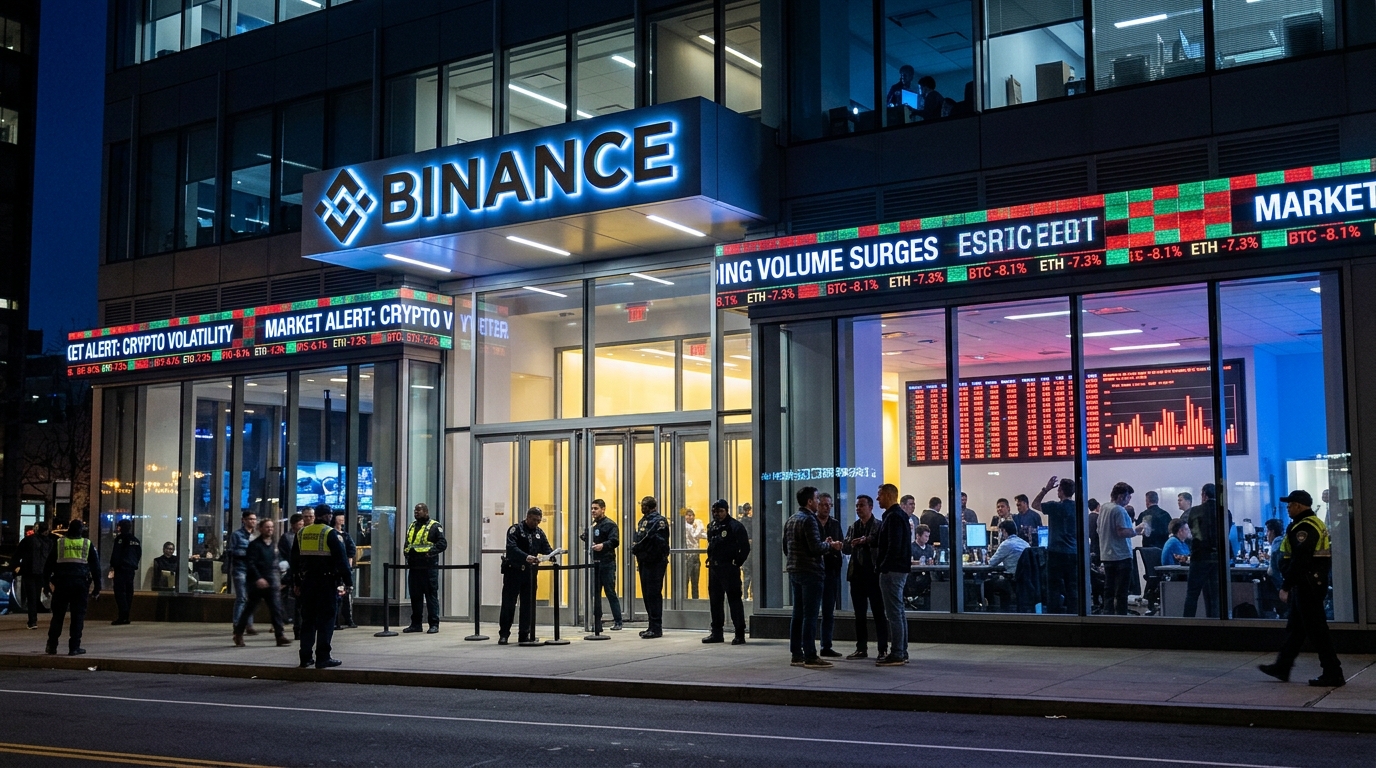
A new security incident tied to Binance is drawing attention not only because of the scale reported in headlines, but because of what the response says about who really controls risk when crypto markets come under stress.
CNBC reported that a Binance “potential security issue” led to $2.54 billion being frozen by firms including Circle and Tether. Cointelegraph separately reported that Binance said about $3 billion in crypto had been frozen in connection with the hack, while also citing Blockaid chief executive Ido Ben-Natan as saying the breach involved private-key “misuse.” The exact totals vary by source and timing, but the reports point to the same broader development: post-incident containment in crypto increasingly depends on centralized control points embedded within the ecosystem.
Why the freeze matters
The immediate market focus often lands on losses, token prices or platform reputational damage. But the stronger structural takeaway from today’s coverage is that major intermediaries still play a decisive role in limiting the spread of damage. When issuers such as Circle and Tether can freeze assets, they act as a backstop that resembles compliance and recovery mechanisms in traditional finance more than the fully decentralized ideal often associated with digital assets.
That creates a two-sided market interpretation. On one hand, the ability to immobilize funds can reduce contagion and may reassure institutions that emergency controls exist. On the other hand, it underlines how much of crypto’s functional risk management sits with centralized entities rather than autonomous protocols alone.
Infrastructure, not just price action
Cointelegraph reported that the incident rattled markets, with BNB falling 8% and Bitcoin nearing $77,000. But price moves tell only part of the story. The more durable market consequence may be renewed scrutiny of wallet security, key management, issuer intervention powers and platform-level incident response.
That framing is reinforced by other crypto headlines in the same wire set. Cointelegraph reported that Polymarket suspended trading amid reports of user funds being drained. It also reported that a tampered Ledger issue had been reported in Singapore a month before it became widely known. Even though these are separate stories, together they suggest markets are revisiting a broader question: where exactly are the weakest links in crypto infrastructure, and how quickly can operators contain them?
What this says about stablecoins
The involvement of Circle and Tether is especially notable because it highlights the growing importance of stablecoins as operational infrastructure, not merely settlement instruments. Their role in freezing funds demonstrates that they are also part of the market’s emergency-control architecture.
For policymakers, institutions and sophisticated traders, that is likely to keep stablecoin governance in the spotlight. The practical ability to halt or isolate suspicious flows may be viewed as a sign of maturing market controls. At the same time, it reinforces longstanding debates around censorship risk, legal jurisdiction and concentration of power.
Security incidents are becoming market-structure tests
- Private-key security remains a critical vulnerability if the Blockaid explanation cited by Cointelegraph is borne out.
- Stablecoin issuers are now central crisis-response actors, not passive plumbing.
- Institutional adoption debates may increasingly hinge on controllability rather than decentralization alone.
The key point is that this is not just a Binance story. It is a live test of how crypto markets function when trust breaks down and fast intervention is required. The ability to freeze billions may be interpreted as evidence of resilience, but it also highlights the hybrid nature of the system crypto has become.
Neutral outlook: Near-term attention is likely to stay on forensic details and frozen-fund totals, while the broader market continues to assess whether stronger control layers make crypto safer, or simply more dependent on centralized gatekeepers.
MarketPro reports are AI-assisted analyses of publicly reported market news. Not investment advice.