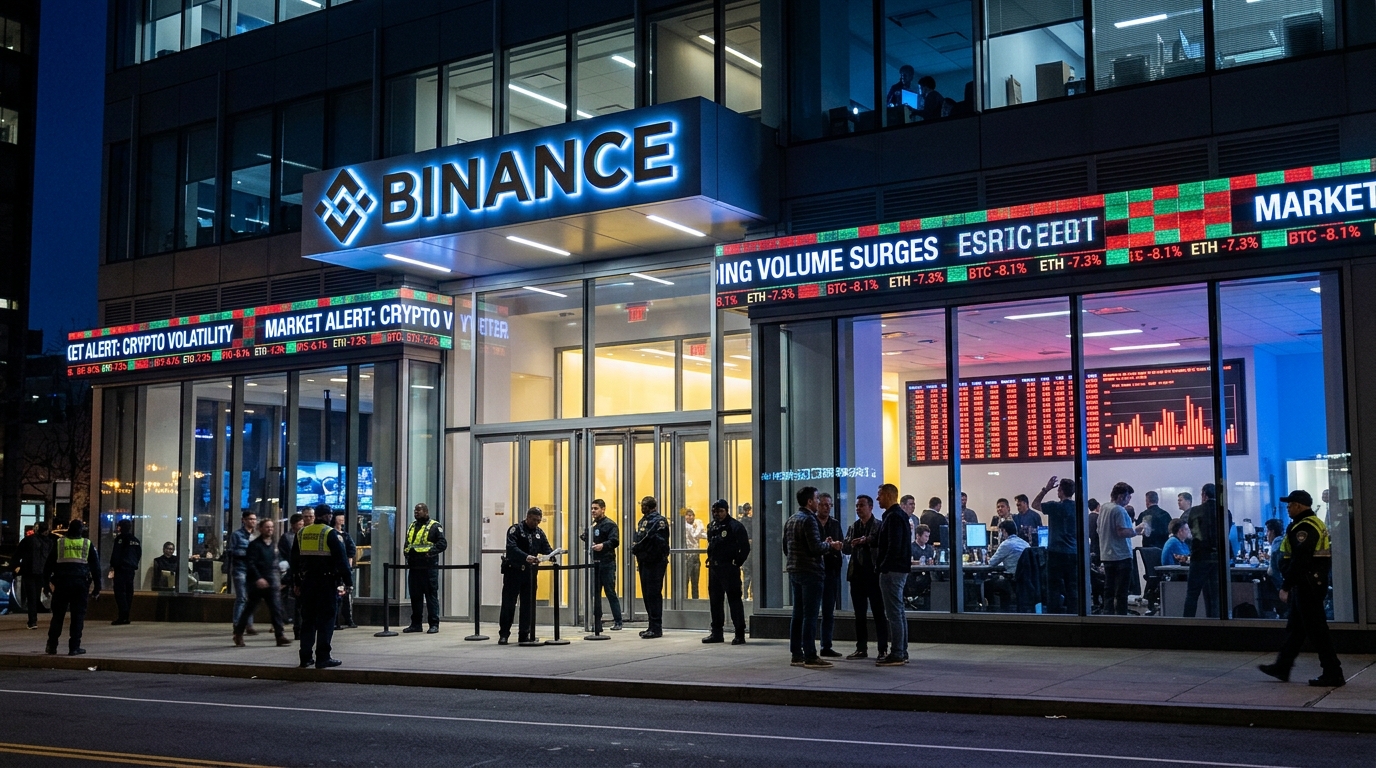
Binance Hack Puts Crypto Custody and Market Structure in Focus

A reported $6.3 billion hack tied to Binance is quickly becoming a market-structure story as much as a security incident, with traders, exchanges and policymakers likely to focus on custody controls, operational safeguards and where liquidity may migrate next.
According to CNBC, the incident is being described as the biggest crypto hack on record, while Cointelegraph reported that Binance pointed to an engineer’s hacked laptop in explaining the breach. Cointelegraph also reported that the attack has been linked to North Korea’s TraderTraitor group, though attribution in cyber incidents can evolve as investigations continue.
The scale alone makes the episode significant for markets. Crypto prices reacted immediately, according to Cointelegraph, which said BNB fell 8% while Bitcoin moved near $77,000 as the hack rattled sentiment. That early price action suggests investors are not treating the event as an isolated technical failure, but as a broader reminder of concentrated operational risk in digital-asset infrastructure.
Why this matters beyond Binance
Large exchange breaches often trigger two parallel reassessments. The first is counterparty risk: users and institutions re-examine where assets are held, how key internal systems are protected and what operational dependencies sit behind an exchange’s public interface. The second is market plumbing: traders ask whether centralized venues remain the preferred source of liquidity when trust is shaken.
That second issue is already surfacing in coverage. Cointelegraph cited Standard Chartered as saying the breach could accelerate a shift toward decentralized exchanges, or DEXs. While that does not guarantee a structural migration, it shows how quickly a security story can become a debate about venue design, transparency and settlement risk.
For market participants, the distinction matters. Centralized exchanges tend to offer deeper liquidity, faster execution and familiar account structures. But they also concentrate operational control. DEXs, by contrast, can reduce some custody dependencies while introducing different risks around smart contracts, liquidity fragmentation and user error.
Security, concentration and confidence
According to CNBC, Binance has been working to contain the fallout. In the near term, the market focus is likely to remain on three issues: whether customer assets were directly affected, whether withdrawals or transfers face disruption and whether other platforms tighten internal controls in response.
Cointelegraph’s additional reporting around a previously reported tampered Ledger issue in Singapore and a separate suspension of trading on Polymarket amid reports of drained user funds reinforced a broader theme already familiar to crypto investors: operational trust remains uneven across the ecosystem.
That does not mean every incident is connected, and the available headlines do not support drawing that conclusion. But taken together, the reports highlight how quickly confidence can become a sector-wide concern when security weaknesses emerge at high-profile venues or products.
Potential policy and institutional ripple effects
If the reported link to North Korea holds up, the implications could reach beyond markets. State-linked cyber activity in crypto has previously intensified scrutiny on sanctions enforcement, anti-money-laundering systems and exchange compliance controls. A breach of this size may renew pressure for tighter monitoring of wallet activity, vendor access and employee-device security.
Institutional investors may be watching even more closely. Over the past two years, one of crypto’s central investment arguments has been that market infrastructure is gradually maturing. A record-scale breach challenges that narrative, even if the long-term result is stronger controls.
There is also a revenue and business-model angle. If users move assets off exchanges or spread activity across more venues, trading volumes and fee pools could become more fragmented. That could affect not just Binance but the competitive balance across centralized and decentralized platforms.
Cross-asset significance
This story also matters for broader risk appetite. Large crypto dislocations can spill into sentiment around high-beta technology trades, listed crypto-linked equities and digital-asset infrastructure providers. In periods when investors are already reassessing AI spending, earnings quality and capital discipline across technology, another shock in a speculative corner of markets can reinforce caution.
For now, the facts supported by current reporting are straightforward: CNBC says Binance is working to contain the fallout from what it described as the biggest crypto hack ever, and Cointelegraph says the incident has been tied to TraderTraitor and has already shaken prices. The deeper questions — around custody design, regulatory response and lasting shifts in trading behavior — are likely to shape the next phase.
Neutral outlook: The immediate market reaction centers on confidence and controls. The longer-term significance will depend on how Binance contains the breach and whether users materially change where and how they hold and trade crypto assets.
MarketPro reports are AI-assisted analyses of publicly reported market news. Not investment advice.