BOE Tokenized Collateral Review Extends Market Plumbing Shift
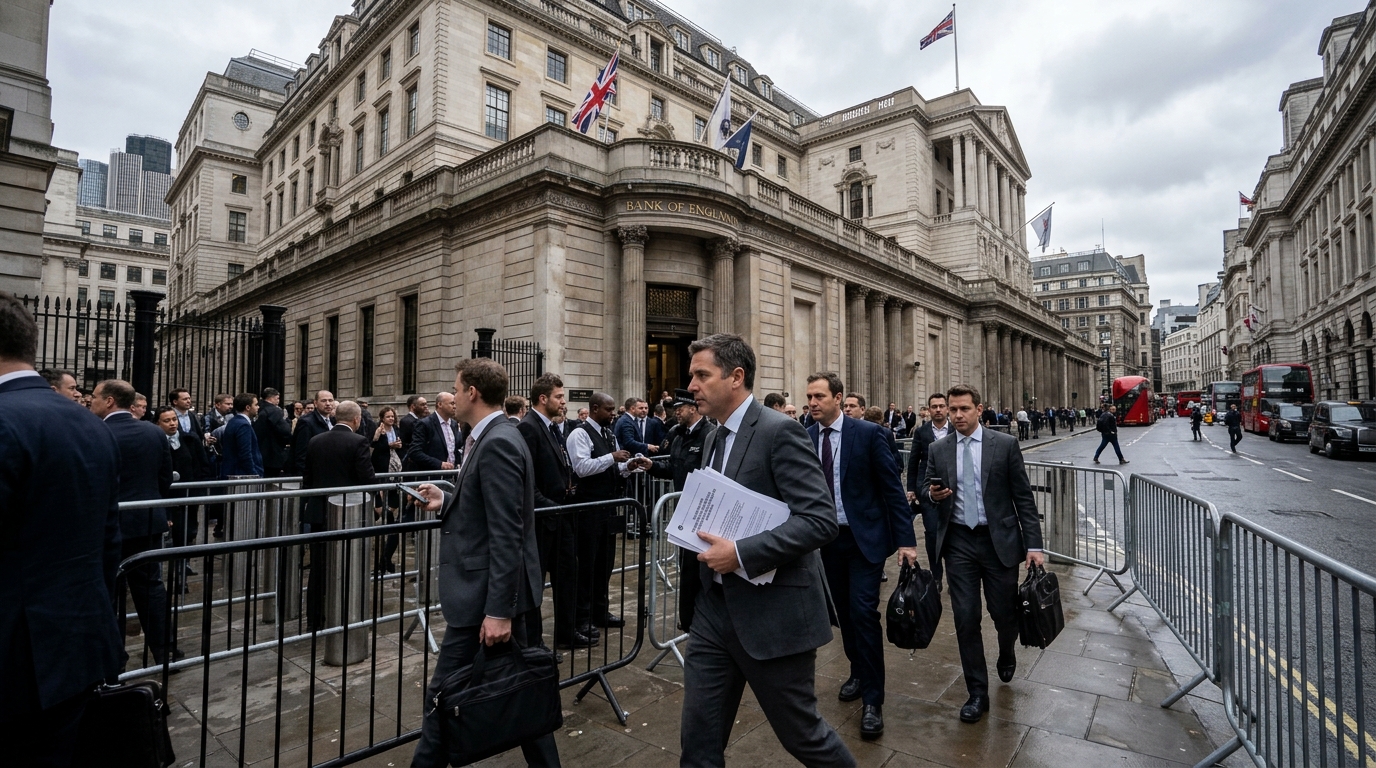
The Bank of England has opened a consultation on tokenized collateral for clearing, according to Cointelegraph, a development that points to a more structural phase of digital-asset adoption: less about speculative tokens, and more about the core machinery that supports financial markets.
For global investors, this matters because collateral is central to how modern markets function. It underpins clearing, risk management and the smooth settlement of trades. When a major central bank begins formally consulting on tokenized collateral, it suggests that digital ledger-based infrastructure is being considered within the framework of mainstream financial stability rather than only as a niche innovation topic.
Why collateral is more important than the headline may suggest
Collateral is the high-quality asset posted to reduce counterparty risk in transactions. In clearing systems, it helps absorb shocks if one party fails to meet obligations. Any attempt to tokenize that process raises fundamental questions about legal certainty, settlement design, liquidity access, operational resilience and interoperability with existing market systems.
That is why the Bank of England consultation stands out. A central bank does not open this sort of review lightly. It indicates official interest in whether tokenization could make collateral management more efficient while preserving the safeguards expected in regulated clearing environments.
According to Cointelegraph, the focus is specifically on tokenized collateral for clearing. That narrows the story away from retail crypto enthusiasm and toward institutional market structure — an area with potentially wider long-term consequences for banks, clearing houses, dealers and large asset managers.
What markets may read into the consultation
First, the consultation may be taken as another sign that tokenization is moving deeper into established finance. This is not the same as endorsing any single cryptoasset. Instead, it reflects interest in whether distributed-ledger tools can support existing financial functions more efficiently or transparently.
Second, it matters for regulation and standards. If central banks and supervisors engage with tokenized collateral, firms across the financial system may need to prepare for future operating models that combine traditional securities, cash management and programmable settlement tools.
Third, it could shape competitive dynamics in market infrastructure. Exchanges, custodians, settlement providers and fintech platforms are all trying to position themselves around tokenized assets. A Bank of England consultation adds policy weight to a conversation that has often been led by private-sector pilots.
Why this is a global markets story, not just a crypto story
Readers interested in rates, FX and broader liquidity conditions should still care about this development. Collateral sits at the center of secured funding markets and derivatives clearing. Changes in how it is mobilized or transferred can eventually affect balance-sheet efficiency, margin processes and the functioning of key trading venues.
That does not mean immediate change is guaranteed. A consultation is a fact-finding and policy-development step, not a final rule. But in market terms, consultations can still be significant because they reveal where regulators are willing to spend time and institutional attention.
The story also fits a broader pattern. Across jurisdictions, policymakers and financial institutions have been exploring tokenization in areas such as bonds, funds, deposits and collateral. The Bank of England’s move adds to that momentum by bringing a systemically important official institution into a highly technical but consequential part of the discussion.
Main issues likely to matter in the consultation
- Legal treatment: whether tokenized collateral has clear enforceability in stress events.
- Operational resilience: how systems perform under volume, outages or cyber risk.
- Interoperability: whether tokenized processes connect smoothly with existing clearing rails.
- Liquidity access: whether assets can be mobilized quickly when margin demands rise.
According to Cointelegraph, the consultation is now open. For markets, the significance lies less in near-term price action and more in what this says about the direction of financial infrastructure policy in a major global center.
Neutral outlook: The key question is whether the consultation leads to a clearer framework for using tokenized collateral in regulated clearing without weakening the legal and operational standards that traditional market infrastructure requires.
MarketPro reports are AI-assisted analyses of publicly reported market news. Not investment advice.