Euro Zone Q3 Growth Slows as France Contracts
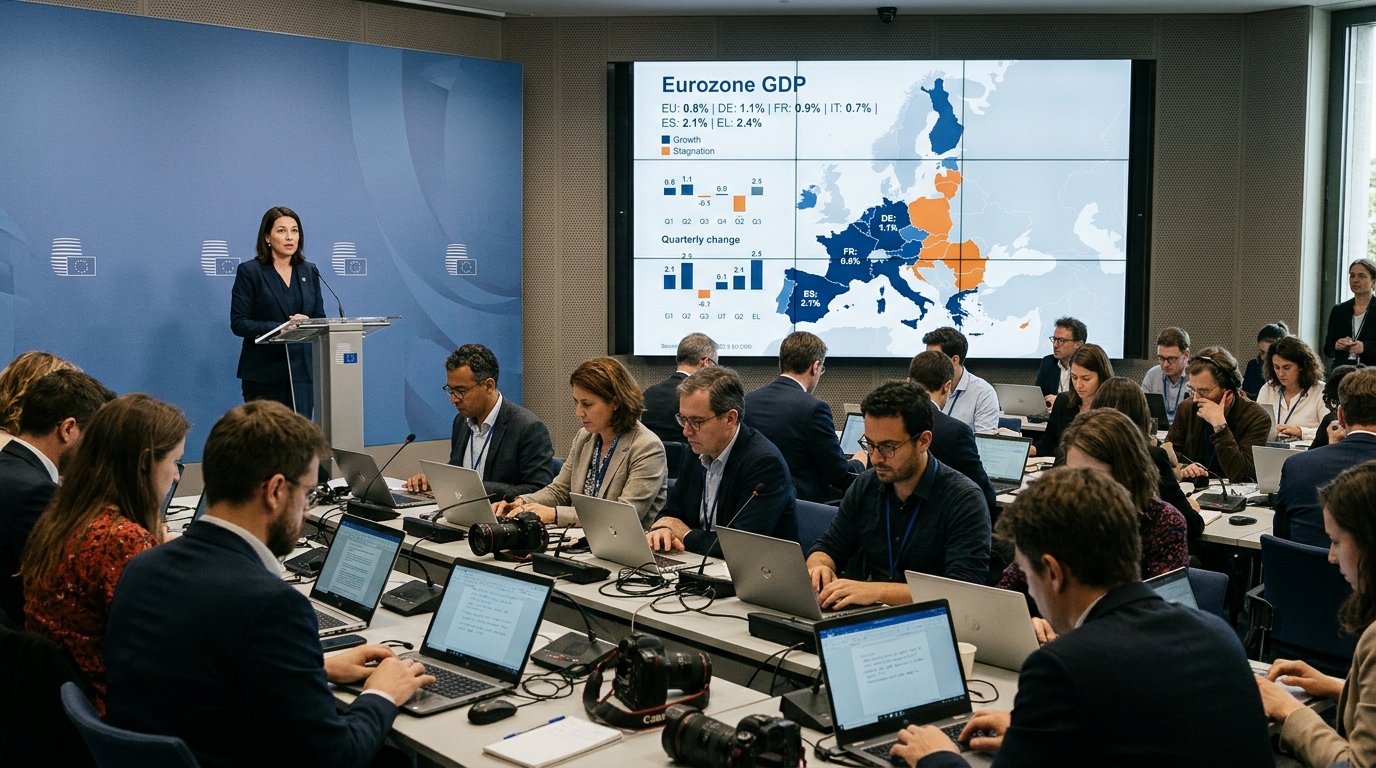
The euro zone returned to the center of currency-market attention after fresh third-quarter growth data pointed to a slower expansion and renewed weakness in one of the bloc’s biggest economies. CNBC reported that the euro zone economy slowed to 0.4% growth in the third quarter, with France contracting. Investing.com separately reported that the eurozone grew 1.3% year on year in the third quarter, giving markets both a quarterly and annual view of the region’s momentum.
Taken together, the reports suggest that Europe’s growth backdrop remains soft rather than collapsing outright. For foreign-exchange markets, that distinction matters. A deceleration to 0.4% quarter-on-quarter growth indicates the bloc is still expanding, but not at a pace that would clearly ease concerns about weak domestic demand, industrial strain and uneven performance across member states.
Why the France contraction matters
France is the euro zone’s second-largest economy, so a contraction there tends to carry weight well beyond its borders. According to the CNBC report, the French downturn was a notable drag on the broader bloc’s third-quarter reading. That adds to a pattern investors have watched closely: headline euro-area data can appear stable, while underlying country performance remains fragmented.
When major economies diverge, the euro can face a more complicated fundamental backdrop. Currency traders often look not only at aggregate growth but also at whether the expansion is broad-based enough to support business confidence, investment and consumer demand. A bloc that is growing modestly while a core member contracts can still leave questions about durability.
Forex markets may focus on policy implications
The latest GDP figures arrive as investors continue to weigh how much room European policymakers have to respond to weaker activity. While today’s headlines did not provide a fresh policy decision, softer growth can influence expectations for the direction of interest-rate settings, liquidity conditions and broader financial conditions.
That is particularly relevant for the euro’s standing against other major currencies. In foreign exchange, growth differentials often matter alongside rate differentials. If the euro zone underperforms peers on activity, the single currency can come under pressure, especially when investors see stronger relative momentum elsewhere.
At the same time, the year-on-year growth figure cited by Investing.com shows the economy is still larger than it was a year earlier. That may help temper the most negative interpretations of the quarterly slowdown. Markets will likely distinguish between a loss of momentum and a full downturn.
What investors may read into the data
Several takeaways stand out from the dual reports by CNBC and Investing.com:
- Growth slowed but remained positive on a quarterly basis for the euro zone overall.
- France’s contraction matters disproportionately because of its size within the currency union.
- The annual growth rate of 1.3% suggests the region is not yet in a broad-based recession based on these headline figures alone.
- The euro’s reaction may depend on relative performance against the U.S. and other major economies, not just the euro-area number in isolation.
For broader markets, the data may also reinforce an existing theme: Europe is still struggling to generate a convincingly strong expansion after a period marked by energy shocks, manufacturing softness and political uncertainty in parts of the bloc.
A market story bigger than one data point
Quarterly GDP releases rarely settle the macro debate on their own. But this set of numbers is important because it sharpens the picture of a euro-area economy that appears to be moving forward unevenly. France’s contraction adds a cautionary signal just as investors are looking for evidence that the region can sustain growth without renewed stress.
According to CNBC and Investing.com reports, the latest figures do not point to a sudden break, but they do underscore a softer growth environment for the euro zone. For currency markets, that keeps the focus on whether incoming data can stabilize sentiment around the euro in the weeks ahead.
Neutral outlook: The euro zone remains in growth territory, but the slowdown and France’s contraction suggest forex markets may keep treating the euro as sensitive to incoming macro and policy signals.
MarketPro reports are AI-assisted analyses of publicly reported market news. Not investment advice.