Global Markets Daily Brief — October 18, 2026
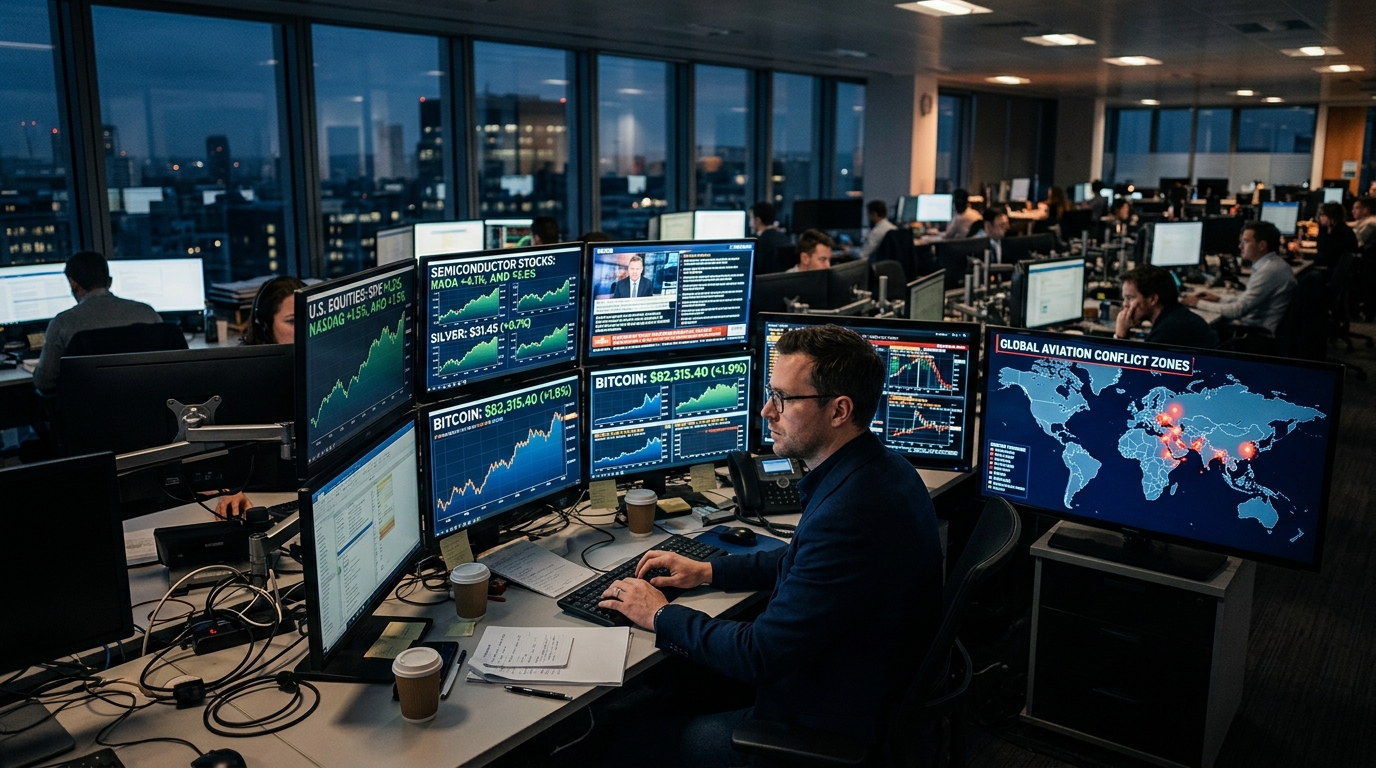
Global markets entered October 18 with investors balancing resilient pockets of corporate strength against persistent geopolitical and macro uncertainty. Based on reports from CNBC, MarketWatch and Cointelegraph, the day’s cross-asset picture was defined by defensive equity leadership, continued confidence in semiconductor demand, signs of economic caution from commodities, and a relatively steady crypto market.
Stocks: defensive leadership and selective confidence
In equities, Berkshire Hathaway stood out as a relative safe haven. CNBC reported that Berkshire shares rallied to their highest level since Warren Buffett said he would step down as chief executive, even as the broader market sold off. That divergence suggested investors were still favoring large, cash-generative businesses with defensive characteristics.
CNBC also highlighted Berkshire’s backing of a software consolidator, describing it as a significant vote of confidence. Taken together, the Berkshire-related headlines pointed to an important market theme: investors remain willing to reward businesses tied to durable cash flow and disciplined capital allocation, even as risk appetite elsewhere looks more selective.
Elsewhere in technology, MarketWatch said Microsoft, Shopify and several other AI-linked names were among favored Wall Street earnings plays. That reinforced a familiar pattern in 2026 trading, where interest in artificial intelligence remains strong, but increasingly concentrated in companies that can show a clearer path from AI spending to revenue or margin support.
Economy: semiconductors remain a key support
One of the most market-relevant macro signals came from Asia. CNBC reported that South Korea’s finance minister said the semiconductor market should remain solid at least through next year. Because South Korea sits near the center of global chip supply chains, official confidence from Seoul carries weight across global equity, trade and currency markets.
The comment matters beyond chipmakers alone. Semiconductor demand is often treated as a read-through for industrial production, data-center investment and consumer electronics activity. A steady chip outlook can help support broader expectations for export-driven economies in Asia and for technology capital spending in the United States and Europe.
At the same time, some headlines pointed in the opposite direction. MarketWatch reported that silver’s sharp drop from a record high could hint at an economic slowdown. While that view is only one interpretation, it underscored that investors are still parsing mixed signals between resilient technology demand and softer expectations for growth-sensitive materials.
Commodities and geopolitics: risk remains in the background
Geopolitical developments stayed firmly on the radar. CNBC reported that airport attacks had put aviation in the crosshairs of geopolitical conflicts. While the headline did not quantify market fallout, aviation security risks can feed into airline sentiment, insurance costs, travel demand assumptions and energy-market sensitivity.
In energy-related news, Investing.com cited comments from Venezuela’s acting president saying the country expects nearly $76 billion in oil investment over five years. That is a longer-term supply-side headline rather than an immediate market mover, but it added to the broader discussion around global energy capacity and producer ambitions.
Meanwhile, CNBC reported that former President Donald Trump waived broad new Russia sanctions, drawing criticism from Ukrainian President Volodymyr Zelenskyy. Because this development has already been covered separately by MarketPro, it mainly serves here as part of the wider geopolitical backdrop that investors continue to monitor for implications across commodities, currencies and regional risk appetite.
Crypto and FX: steady bitcoin, policy still central
In digital assets, Cointelegraph reported that bitcoin steadied around $82,000 after Federal Reserve figure Kevin Warsh avoided signaling support for further rate hikes. The move suggested crypto traders remain highly sensitive to shifts in rate expectations, even when policy signals are indirect.
Cointelegraph also reported that Fidelity saw resilience in Solana, while noting that some areas still require observation. That points to a still-selective tone in crypto, where investors may be willing to hold exposure to large tokens but are paying closer attention to ecosystem quality and use-case durability.
On currencies, there were no major standalone forex headlines in the wire list, but several of the day’s stories had clear FX relevance. The South Korea semiconductor outlook matters for the won and other Asia-linked currencies, while any shift in geopolitical risk tied to Russia, Ukraine or the Middle East can quickly spill into dollar demand and haven positioning.
What the market picture suggests
The broad market message on October 18 was not one of uniform risk-on optimism. Instead, it was a picture of selective confidence. Investors appeared comfortable rewarding defensive U.S. conglomerates and maintaining exposure to favored technology themes, especially where semiconductor demand still looks firm. But caution remained visible through geopolitical headlines, mixed commodity signals and continued sensitivity to interest-rate implications in crypto and foreign exchange.
According to CNBC, MarketWatch and Cointelegraph reports, the clearest near-term support for global sentiment came from resilient corporate quality and a stable chip outlook. The clearest constraints remained geopolitics and uncertainty over how long growth can stay firm across regions.
Neutral outlook: Markets appear to be entering the new session with a selective rather than broad-based risk appetite, with semiconductors, defensive equities and rate-sensitive assets likely to remain central to positioning.
MarketPro reports are AI-assisted analyses of publicly reported market news. Not investment advice.