Global Markets Daily Brief — October 30, 2026
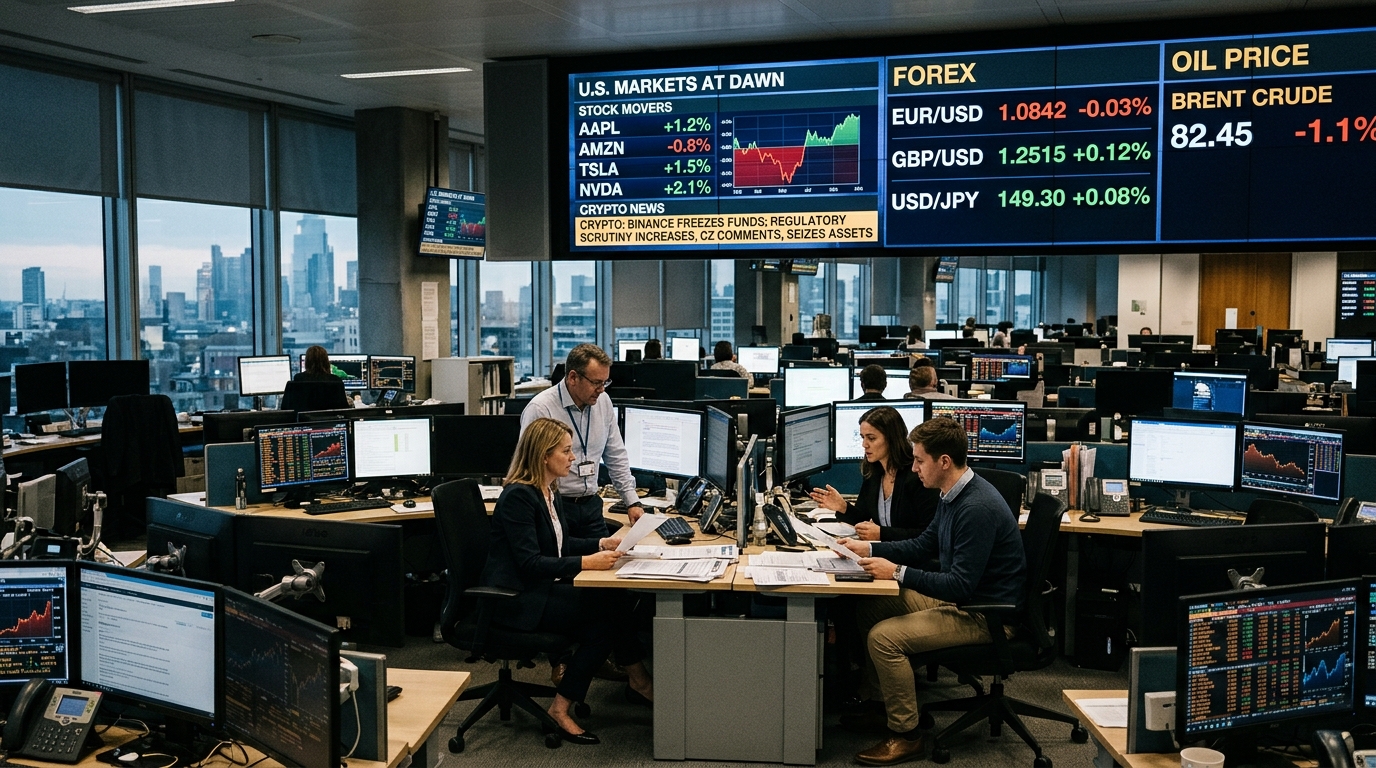
Global markets opened the day with investors balancing three themes visible across the wire: pressure on major technology and semiconductor shares, fresh scrutiny of crypto-market controls after the Binance security incident, and continued focus on how large corporate balance sheets are funding the buildout of artificial intelligence infrastructure.
In equities, the heaviest attention fell on U.S. technology names. CNBC reported that Amazon posted negative free cash flow of $42.4 billion while keeping its 2026 capital-expenditure plan unchanged, and MarketWatch separately said Amazon shares fell even as management pointed to a stronger cloud outlook. The combination suggests markets are still weighing whether aggressive infrastructure spending can translate into earnings support quickly enough for investors.
Chip stocks were also under pressure. CNBC reported that Intel shares plunged 21% after the company blamed a PC slowdown for weak guidance, while MarketWatch also highlighted that the stock was heading toward its worst drop in roughly two years. ServiceNow was another notable decliner after earnings, with CNBC reporting a 27% slide as results revived fears around AI-related disruption.
In corporate funding, CNBC reported that Microsoft plans to raise $25 billion in debt as it continues its AI buildout. Taken together with Amazon’s capex stance, the day’s headlines reinforce that investors are still parsing the financing and payoff timeline of the current AI investment cycle.
Crypto markets were shaped by operational and counterparty questions rather than only price moves. CNBC reported that Binance’s “potential security issue” led to $2.54 billion being frozen by firms including Circle and Tether. Cointelegraph reported that Binance said roughly $3 billion in crypto had been frozen in connection with the hack and cited Blockaid’s chief executive as saying the breach involved private-key “misuse.” Even where figures differ by source and timing, both reports point to the same broad conclusion: stablecoin issuers and other intermediaries remain central to emergency risk containment in digital-asset markets.
Cointelegraph also reported that the incident rattled crypto prices, with BNB falling and Bitcoin nearing $77,000, while separate reports pointed to strains elsewhere in market plumbing, including suspended trading on Polymarket amid reports of user funds being drained. For readers focused on market structure, that extends the story beyond a single platform and back toward infrastructure resilience.
Cross-asset signals remain uneven
There were no major standalone foreign-exchange or commodities headlines in today’s wire package, which itself is informative: macro trading attention appears concentrated on equity leadership, crypto controls and company-specific capital allocation. Reader data has repeatedly shown strong interest in cross-asset framing, and today’s setup still supports that approach even without a fresh central-bank decision or a headline oil move.
For foreign exchange, the implication is indirect. Large U.S. technology financing needs, AI capex commitments and widening performance gaps among major listed companies can influence broader dollar sentiment through risk appetite and Treasury-market expectations, but today’s wires do not support a stronger directional claim. On commodities, there is similarly no new direct catalyst in the supplied headlines.
What markets appear to be pricing
- AI spending remains a market driver, but investors are demanding clearer evidence of returns.
- Semiconductor and enterprise-software guidance still matters as much as headline revenue growth.
- Crypto risk controls are increasingly part of the investment case, especially when stablecoin issuers are called on to freeze funds after an incident.
The day’s market picture is therefore less about one macro shock than about stress-testing the infrastructure behind two major trades: mega-cap AI expansion and the institutionalization of crypto markets.
Neutral outlook: Investors are likely to keep focusing on whether heavy technology spending, weak pockets of end demand and crypto-control mechanisms can coexist without creating broader cross-asset instability.
MarketPro reports are AI-assisted analyses of publicly reported market news. Not investment advice.