IMF-World Bank Meetings Put Rates and Debt Back in Focus
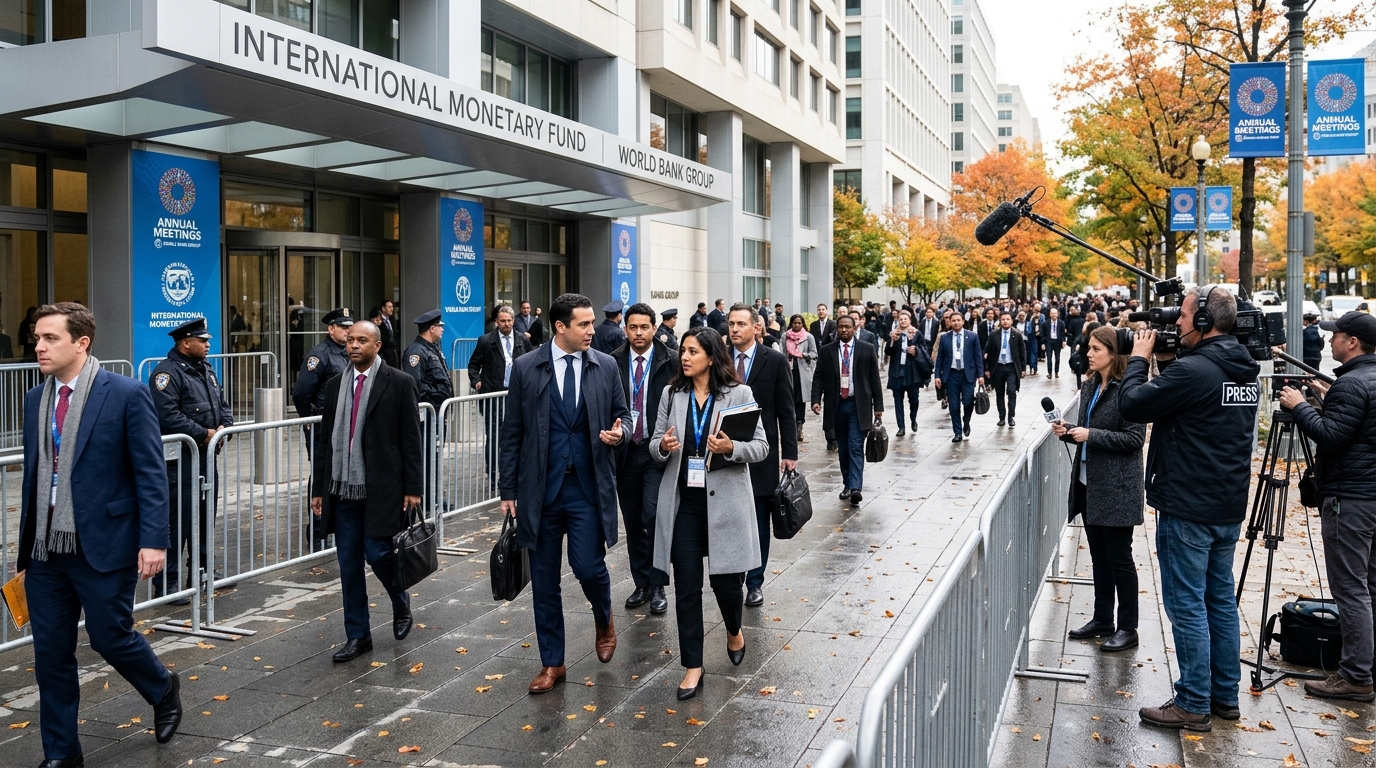
Global investors are again being pushed to weigh a familiar but still unsettled mix: sticky inflation risks, high interest rates and rising pressure on public finances. That was one of the clearest market messages from the latest IMF-World Bank meetings, according to a CNBC report highlighting three major takeaways from the gathering.
While the meetings did not produce a single market-moving policy announcement, they mattered because they reinforced the backdrop against which central banks, bond markets and currencies are now trading. For investors, the significance lies less in one headline than in the signal that policymakers still see the global economy navigating a narrow path between slower growth and the need to keep inflation contained.
Why the meetings matter to markets
The IMF-World Bank meetings often serve as a checkpoint for how officials view the balance between growth, inflation and financial stability. According to CNBC, the latest discussions centered on the durability of inflation pressures, the constraints facing governments with stretched budgets and the uneven resilience of major economies.
That matters across asset classes. Bond investors are watching whether governments will face higher funding costs for longer. Equity investors are recalibrating how much support lower rates may provide if central banks remain cautious. Currency traders are focused on relative growth and rate expectations, which remain a key driver for the U.S. dollar and major developed-market exchange rates.
Rates may stay restrictive for longer
A central theme from the meetings was that policymakers are not yet ready to declare victory over inflation. According to CNBC, officials emphasized that price pressures may still require vigilance even as growth momentum cools in parts of the world economy.
For markets, that keeps the “higher for longer” rates narrative alive. If central banks remain wary of easing too quickly, government bond yields may stay sensitive to incoming inflation and labor-market data. Rate-cut expectations have already been a major source of volatility this year, and the meetings appear to have reinforced the idea that easier policy cannot be assumed.
This is particularly relevant for rate-sensitive sectors, including technology and real estate, but the broader effect is macro-wide: tighter financial conditions can influence everything from consumer borrowing to corporate refinancing.
Debt concerns remain in the background — and sometimes the foreground
Another key market implication from the meetings is the continued focus on sovereign debt burdens. According to CNBC, debt sustainability remained an important topic as countries confront elevated borrowing costs and slower fiscal adjustment.
That is especially important in an environment where bond investors are increasingly scrutinizing governments’ spending paths. Higher debt-service costs can crowd out policy flexibility and leave markets more exposed to political shocks or growth disappointments. In practical terms, that can translate into wider spreads for riskier sovereign borrowers, pressure on local currencies and spillover into bank funding conditions.
The issue is not limited to emerging markets. Developed economies are also dealing with the consequences of larger deficits and heavier refinancing needs, themes that have become more visible in recent bond-market swings.
Growth is holding up unevenly
The meetings also underscored that global growth remains uneven rather than uniformly weak or strong, according to CNBC. That unevenness is itself a market driver. It means investors are less likely to get a synchronized global policy response and more likely to see divergence in interest-rate paths, sector performance and currency trends.
For example, a region with resilient domestic demand and firmer inflation may keep rates higher than peers, supporting its currency but weighing on local equities. Elsewhere, softer activity could revive hopes for rate relief but also raise earnings concerns.
That fragmented backdrop tends to reward selectivity rather than broad market conviction.
Cross-asset implications
- Bonds: Ongoing sensitivity to inflation, issuance and debt sustainability.
- Stocks: Valuations remain vulnerable if rate-cut hopes are pushed further out.
- Currencies: Relative growth and policy divergence continue to matter.
- Commodities: Demand expectations remain tied to whether global growth can stabilize without reigniting inflation.
The broader takeaway from the IMF-World Bank meetings is that markets are still trading a world where inflation risks have faded from their peak but not disappeared, and where fiscal pressures are becoming harder to ignore. According to CNBC, those twin themes remained central in Washington.
Neutral outlook: Markets are likely to keep reacting to incoming inflation, growth and government financing signals, with the meetings reinforcing a cautious global macro stance rather than signaling a clean turning point.
MarketPro reports are AI-assisted analyses of publicly reported market news. Not investment advice.