Oil risk stays in focus after Gulf of Oman vessel action
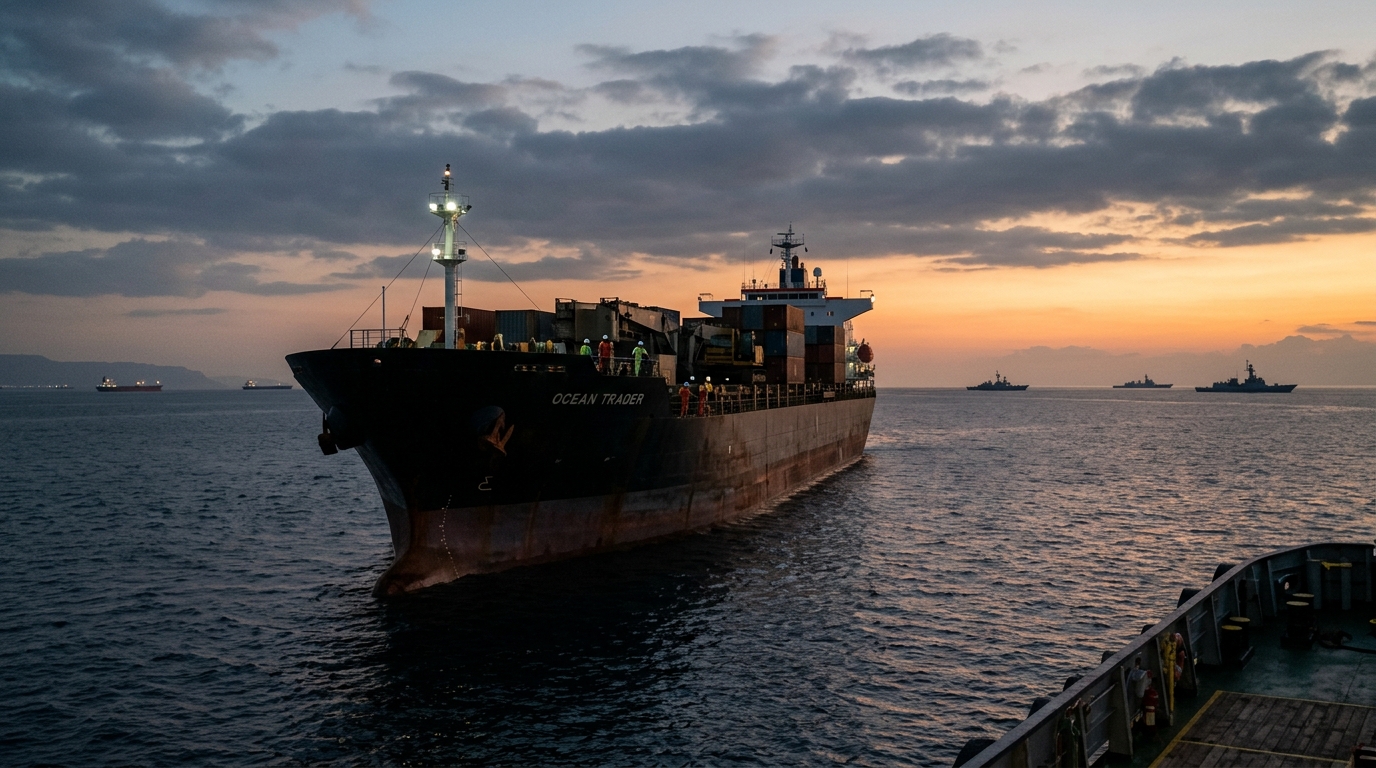
Oil traders are still being forced to price geopolitics into the market outlook after two fresh regional developments pointed to continued tension around Gulf shipping and Middle East security.
According to Investing.com reports, the U.S. military said it disabled a cargo vessel in the Gulf of Oman, with one headline describing the ship as attempting to breach an Iran blockade. In a separate development, Investing.com also reported that Saudi Arabia lifted alerts in an oil-producing region after a Houthi missile was intercepted.
Taken together, those headlines do not confirm an immediate supply disruption, but they do reinforce a familiar market pattern: even when barrels keep flowing, security incidents around key shipping routes can raise the risk premium embedded in crude prices.
Why the Gulf of Oman matters to oil markets
The Gulf of Oman sits next to one of the world’s most strategically important maritime corridors. Any sign of military intervention, vessel disruption or missile activity in the broader region tends to matter well beyond the immediate incident because traders watch for knock-on effects on tanker traffic, insurance costs and regional energy infrastructure.
The latest vessel action reported by Investing.com is important less for what is already known about lost supply — which the headline does not establish — and more for what it suggests about operating conditions in nearby waters. If shippers perceive greater risk, costs can rise across freight, security and insurance even without a confirmed outage.
Saudi alert change may ease one part of the picture
At the same time, the Saudi development points in the other direction. According to Investing.com, Saudi Arabia lifted alerts in an oil region after a Houthi missile was intercepted. That suggests the immediate threat level in that specific area may have eased, at least temporarily.
For oil markets, that nuance matters. A lifted alert can help limit fears of a broader interruption to production or export operations. But the fact that an interception was needed at all is also a reminder that the region remains vulnerable to sudden security events.
What markets are likely to watch next
From here, the market focus is likely to remain on three questions:
- Shipping continuity: whether commercial traffic in and around the Gulf of Oman proceeds normally.
- Energy infrastructure security: whether missile or drone threats spill over toward producing or export facilities.
- Escalation risk: whether military actions remain isolated or start to form a broader regional pattern.
This matters not only for crude but also for refined products and broader inflation-sensitive assets. Geopolitical oil moves often ripple into transportation costs, inflation expectations and risk sentiment across global markets.
Market context still favors caution
Recent reader interest on MarketPro has shown strong demand for cross-asset and geopolitics-driven coverage, and this story fits that pattern because it connects oil directly to shipping security and regional military developments.
Still, discipline is important. Based on the available headlines, there is no support for declaring a supply shock, a sustained production outage or a major rerouting of energy flows. What can be said is narrower and still market-relevant: the latest events keep Middle East security risk elevated, and that alone can be enough to keep traders cautious.
In practical terms, crude markets tend to react not just to confirmed losses of supply but to the probability of disruption. Incidents involving vessels, missiles or regional alerts can therefore influence price behavior before any physical shortage appears.
Why this is a commodities story, not just a security story
For investors and businesses tracking energy costs, the significance is straightforward. Oil is highly sensitive to chokepoint risk, and the Gulf region remains central to global supply expectations. Even limited incidents can affect sentiment because they force the market to reassess how resilient shipping lanes and production hubs really are.
According to Investing.com reports, both the U.S. vessel action and the Saudi alert decision emerged against that backdrop. One headline points to active military enforcement at sea; the other shows a threat response tied to energy-producing territory. Together, they underline why crude remains vulnerable to sudden geopolitical repricing.
Neutral outlook: Unless further disruptions are confirmed, the immediate effect may remain centered on risk premium rather than physical supply loss, but oil markets are likely to stay highly sensitive to any new shipping or missile-related headlines.
MarketPro reports are AI-assisted analyses of publicly reported market news. Not investment advice.