PepsiCo Job Cuts Put Consumer Demand Pressures Back in Focus
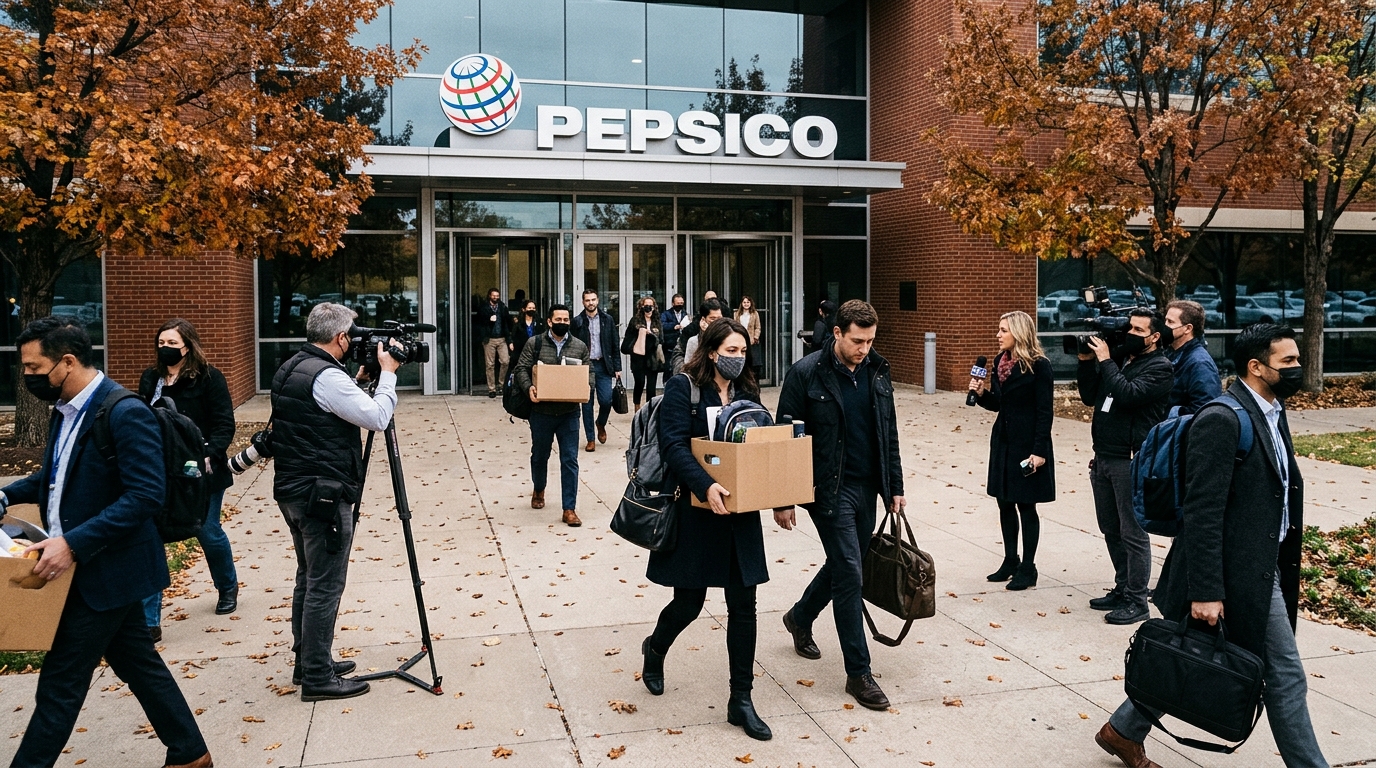
PepsiCo's plan to cut about 1,000 jobs is more than a company-specific restructuring story. According to CNBC, the workforce reduction comes as the group's North American business struggles, making it a closely watched signal for investors tracking consumer demand, pricing power and the health of defensive sectors.
Because PepsiCo is one of the largest global food and beverage companies, changes in its staffing and cost structure often attract market attention beyond the stock itself. The company sits near the intersection of household spending, retailer negotiations, commodity inputs and margin management, so any sign of strain can shape how investors view the broader consumer landscape.
Why this matters beyond one company
PepsiCo has long been seen as a bellwether for staple consumption. Its products reach a wide range of income groups and channels, from grocery stores to convenience retail and food service. When such a company moves to reduce headcount in a major regional business, markets typically read it as a sign that growth is proving harder to sustain or that prior pricing actions are becoming more difficult to absorb.
CNBC reported that the cuts are tied to struggles in North America. That regional focus matters because North America is central to many large consumer companies' earnings mix and often offers a read-through on broader U.S. spending patterns. Investors have been trying to assess whether households are becoming more selective after an extended period of elevated prices and higher borrowing costs.
Defensive stocks are still being tested
Consumer staples have often been treated as defensive holdings during volatile periods, but that does not make them immune to pressure. If volumes slow while costs remain sticky, even large branded companies can face a tougher balance between protecting margins and preserving demand.
Job cuts can therefore signal a pivot toward efficiency after a period in which revenue growth may have leaned more heavily on pricing than on unit expansion. That theme has mattered across the sector, where investors increasingly want evidence that companies can hold market share and sustain profitability without relying indefinitely on higher shelf prices.
What investors may infer from the move
PepsiCo's restructuring plan may be interpreted in several ways. First, it could indicate that management sees enough softness in the operating backdrop to justify preemptive cost action. Second, it may suggest that the company wants to protect margins as growth in its North American business becomes less certain. Third, it may reinforce the idea that even high-quality staple names are having to adapt to a more demanding consumer environment.
The announcement also arrives at a moment when markets remain highly sensitive to signs of labor-market and spending shifts. Corporate job reductions do not always point to broad economic weakness, but when they come from large, diversified household-name companies, they often feed into wider debates about whether consumers are trading down, cutting discretionary purchases or pushing back against price increases.
Sector read-across to watch
For the wider market, the read-through may extend to other packaged-food and beverage groups. Investors will likely pay closer attention to upcoming management commentary across the staple sector for signs of similar North American demand issues, distribution changes or cost-control measures.
The development could also sharpen focus on retail partners and on suppliers exposed to beverage, snack and packaged-food volumes. If PepsiCo's move reflects a wider regional pattern rather than an isolated business adjustment, the implications could reach further across the consumer supply chain.
A bellwether story in a macro-sensitive market
Reader interest on MarketPro has consistently favored macro and cross-asset coverage, but major bellwether corporate stories also perform when they help explain broader cycles. PepsiCo fits that pattern: this is not simply a company staffing announcement, but a fresh data point on how a global staple giant is responding to conditions in one of its most important markets.
According to CNBC, the company is cutting about 1,000 jobs as its North American business struggles. That leaves investors with a practical question: is this a one-company reset, or another sign that the post-inflation consumer environment is becoming tougher for even the largest branded players?
Neutral outlook: The market focus will now shift to whether PepsiCo frames the cuts as a targeted efficiency move or as part of a broader response to slower North American demand trends.
MarketPro reports are AI-assisted analyses of publicly reported market news. Not investment advice.