SpaceX-Qualcomm deal puts satellite mobile race in focus
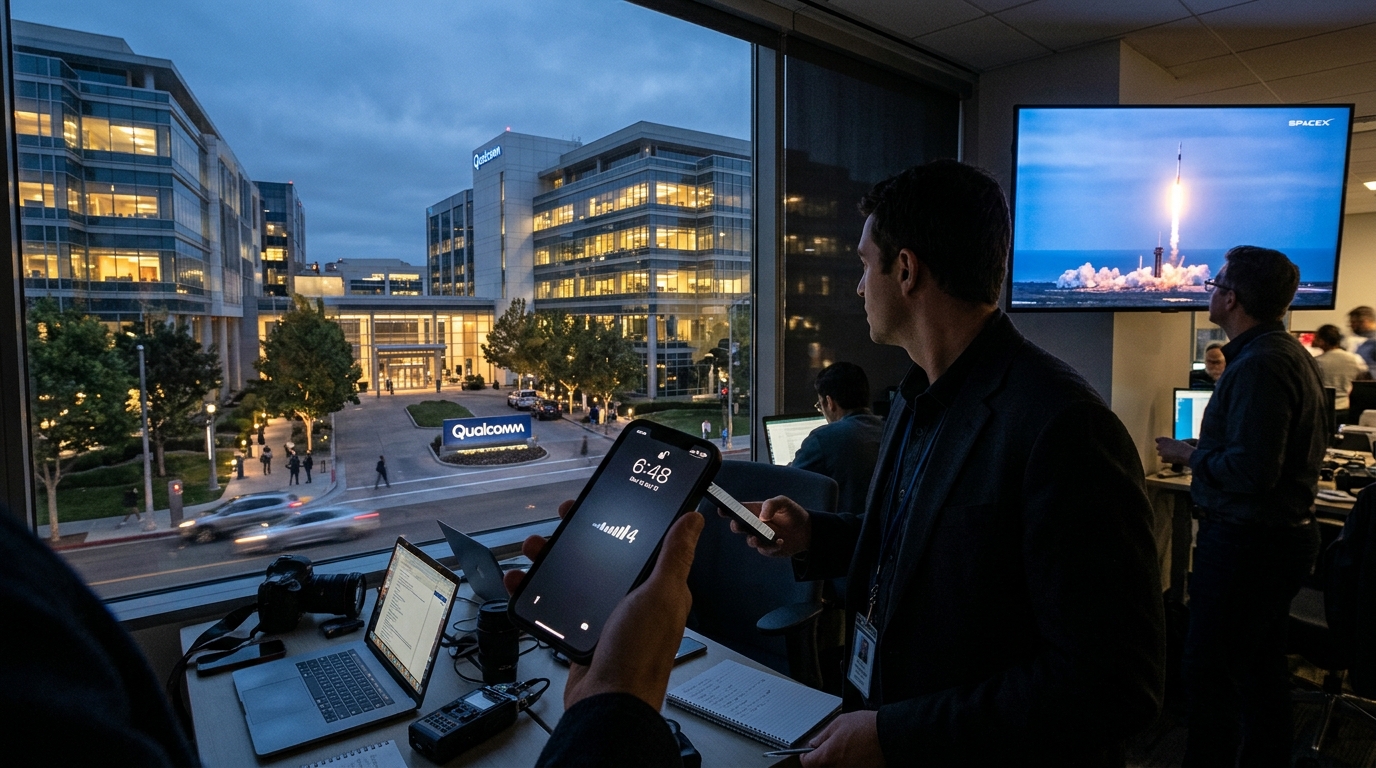
SpaceX has signed a deal with Qualcomm to provide network technology for U.S. mobile service, according to CNBC, in a development that puts fresh attention on the fast-evolving market for satellite-enabled connectivity. The agreement links one of the most closely watched private space companies with a major mobile-chip and wireless-technology group, giving investors a new angle on how telecom infrastructure and semiconductor assets may intersect.
The news also arrives as Qualcomm shares have lagged parts of the broader semiconductor rally. MarketWatch separately highlighted the question of whether a SpaceX partnership could change that narrative, suggesting the market sees strategic relevance even if the immediate financial impact is not yet clear.
Why this partnership matters
The significance of the deal lies in what it says about the next stage of mobile service. Traditional telecom networks rely heavily on terrestrial towers and dense infrastructure, but the industry has increasingly explored satellite support to extend coverage, improve resilience and reach users in harder-to-serve areas. By bringing Qualcomm network technology into a U.S. mobile-service effort with SpaceX, the agreement points to deeper convergence between wireless chips, network standards and low-Earth-orbit satellite systems.
For investors, this is important because it broadens the discussion around connectivity beyond smartphone unit cycles. Qualcomm is best known for mobile semiconductors and communications intellectual property, but the company has also sought to emphasize the wider value of its wireless technology stack. A partnership tied to mobile service infrastructure could reinforce that strategic message.
Implications for Qualcomm
According to CNBC, the deal centers on network technology for U.S. mobile service, not simply a branding arrangement. That distinction matters because it suggests Qualcomm’s role could sit closer to enabling the service architecture. While neither CNBC nor MarketWatch, based on the headlines provided, detailed financial terms or timing, the announcement still offers a potentially important positioning benefit for Qualcomm.
Semiconductor investors have recently favored companies with direct exposure to artificial intelligence data centers, leaving some wireless-focused names under pressure or relatively overlooked. MarketWatch noted that Qualcomm had sat out much of the chip rally. Against that backdrop, the SpaceX deal may be interpreted less as an immediate earnings driver and more as a strategic reminder that non-AI semiconductor stories can still create new market interest when they tap into large platform shifts.
Broader market context: telecom, chips and space
The announcement also highlights how market categories are overlapping. What once looked like separate industries — telecom services, semiconductor design and commercial space — now increasingly influence each other. Satellite connectivity has become a competitive battleground not only for communications providers but also for hardware makers and network-technology suppliers.
That could matter for valuations over time if investors begin assigning more weight to companies that help build hybrid terrestrial-satellite ecosystems. It may also intensify scrutiny of which firms own the key standards, radios, modems and software layers that make such systems viable at scale.
For SpaceX, the agreement adds to the company’s expanding role in connectivity infrastructure. For Qualcomm, it may provide a clearer answer to investors asking how its core wireless expertise can remain central as the communications landscape evolves.
What remains unknown
Despite the strategic interest, several questions appear unresolved based on the available reporting. The headlines do not specify revenue contribution, deployment timing, exclusivity or how quickly the arrangement could translate into commercial service gains. That limits how far markets can reasonably push the stock impact from a single announcement.
Investors will likely look for follow-up disclosures on implementation, partner ecosystem details and whether the arrangement expands Qualcomm’s role in future satellite-to-device or satellite-assisted network offerings.
Main takeaways from the reports
- SpaceX signed a deal with Qualcomm to provide network technology for U.S. mobile service, according to CNBC.
- The agreement highlights growing convergence between satellite systems and terrestrial mobile networks.
- Qualcomm’s stock story could broaden beyond the recent AI-centered semiconductor trade, as MarketWatch suggested.
- Financial impact is still unclear based on the information available in the headlines.
Neutral outlook: The SpaceX-Qualcomm tie-up looks strategically meaningful for wireless and telecom markets, but investors will likely need more operational detail before judging its longer-term effect on earnings or sector valuations.
MarketPro reports are AI-assisted analyses of publicly reported market news. Not investment advice.