Chevron Earnings Beat Highlights Diesel Margin Strength
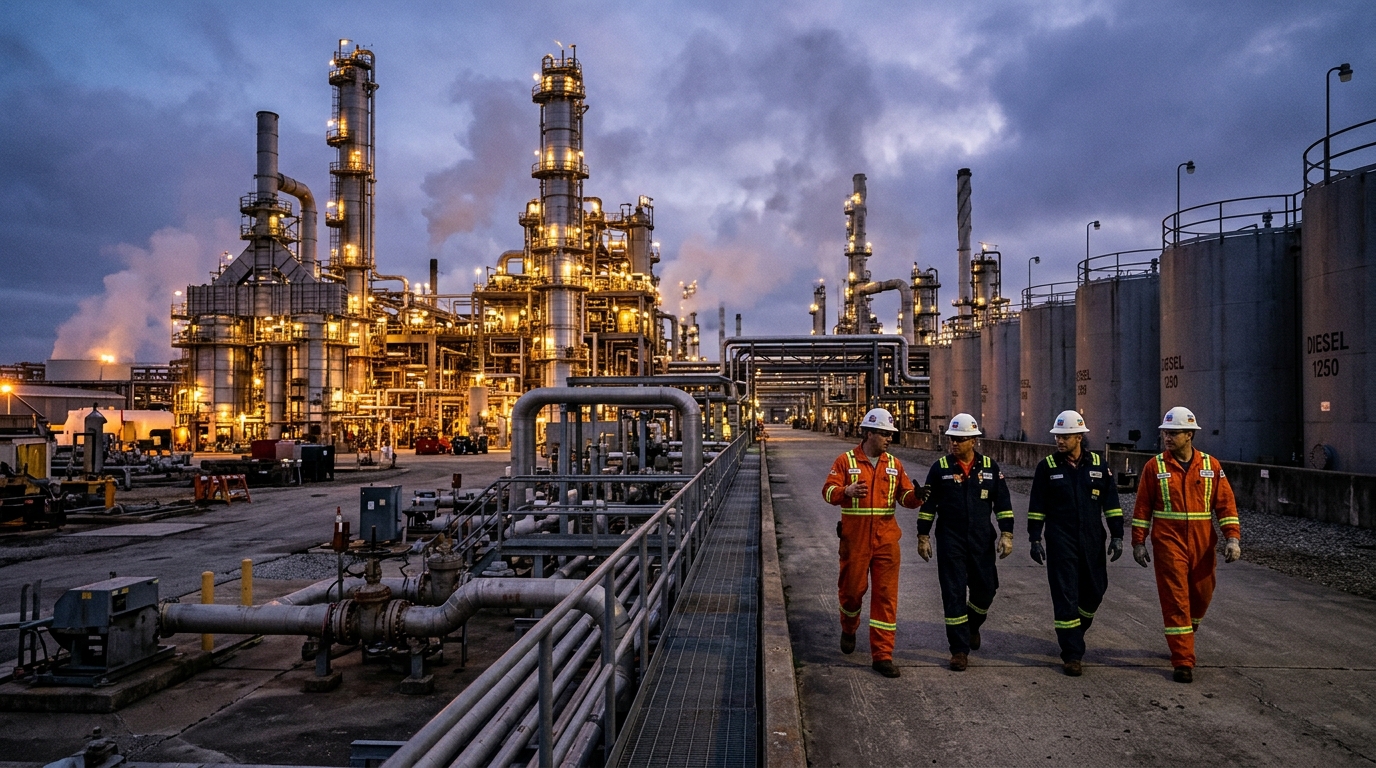
Chevron’s latest results put refining economics back in the spotlight after the company beat earnings expectations as refining profits soared on high diesel fuel prices, according to CNBC. In commodity markets, that is a notable signal because it shows how downstream performance can offset or reshape the earnings picture even when broader oil-market narratives shift from week to week.
The headline matters beyond one company. Diesel is a key fuel for freight, industry and parts of the broader supply chain, so stronger diesel pricing often says something about product-market tightness, refinery economics and the relative balance between crude input costs and refined-product selling prices.
Why diesel matters to the market
Crude oil typically dominates energy headlines, but refined products can be just as important for corporate results and for how investors interpret the state of the market. Chevron’s beat, as described by CNBC, was driven by refining profits linked to high diesel fuel prices. That suggests the margin between buying crude and selling refined products remained supportive for at least part of the quarter.
For commodities watchers, this is a reminder that the oil complex is not one market but several interconnected ones. Crude supply, refinery capacity, product inventories and end-user demand each influence profitability in different ways. When diesel prices stay elevated, refiners can benefit even if upstream conditions are mixed.
Refining margins are back in focus
Refining margins have become a recurring point of attention whenever fuel markets tighten. High diesel prices can reflect several possible conditions, including constrained refining output, stronger transport or industrial demand, or logistical frictions in moving product to end markets. The provided headline does not specify which factor dominated, so the firm conclusion supported by the report is narrower: stronger diesel pricing lifted Chevron’s refining profits.
That distinction is important. It avoids overstating what one earnings release can tell us about the entire global oil market. Still, when a major integrated energy company beats expectations on downstream strength, investors often read it as evidence that product markets remain an essential driver of sector performance.
Implications for energy equities and commodities
Chevron’s results may shape market thinking in a few ways:
- Integrated models can prove resilient when refining helps offset weakness elsewhere in the chain.
- Diesel pricing remains strategically important for understanding earnings in the energy sector.
- Commodity analysis should look beyond crude benchmarks and include refined-product dynamics.
- Refinery profitability can influence sentiment toward both energy shares and broader fuel-market expectations.
In practical terms, this means investors and market participants may pay closer attention to product cracks and refinery commentary in upcoming energy earnings. A move in diesel prices is not just a fuel story; it can feed through to margins, inflation discussions and transport-sector costs.
What today’s Chevron report does and does not say
According to CNBC, Chevron’s earnings beat was tied to soaring refining profits on high diesel fuel prices. That supports a straightforward market interpretation: downstream strength was a meaningful contributor to the quarter.
However, the headline alone does not establish a new long-term trend for crude prices, global demand or sector-wide earnings. It also does not by itself indicate whether high diesel prices will persist. Those questions will depend on future refinery runs, seasonal demand, inventories and geopolitical developments affecting energy flows.
Even so, the result is relevant because it reinforces a theme often missed in headline oil coverage: refined fuels can drive performance as much as, or more than, the direction of crude alone.
A useful signal for the broader energy complex
Chevron’s quarter is a reminder that commodity markets are often won or lost in the spread between raw inputs and usable fuels. In that sense, today’s earnings report is not only a company story but also a market-structure story inside the oil complex. If diesel remains relatively tight, refiners and integrated majors may continue to draw support from downstream operations.
According to CNBC, Chevron’s earnings beat was powered by refining profits as high diesel prices boosted margins. That makes the report a significant read-through for commodities markets, especially for investors trying to gauge whether fuel-market tightness is still supporting energy-sector profitability.
Neutral outlook: The Chevron update keeps attention on diesel and refining margins, with future market reaction likely to depend on whether product-price strength proves durable.
MarketPro reports are AI-assisted analyses of publicly reported market news. Not investment advice.