Paramount settlement clears path for Warner Bros. deal
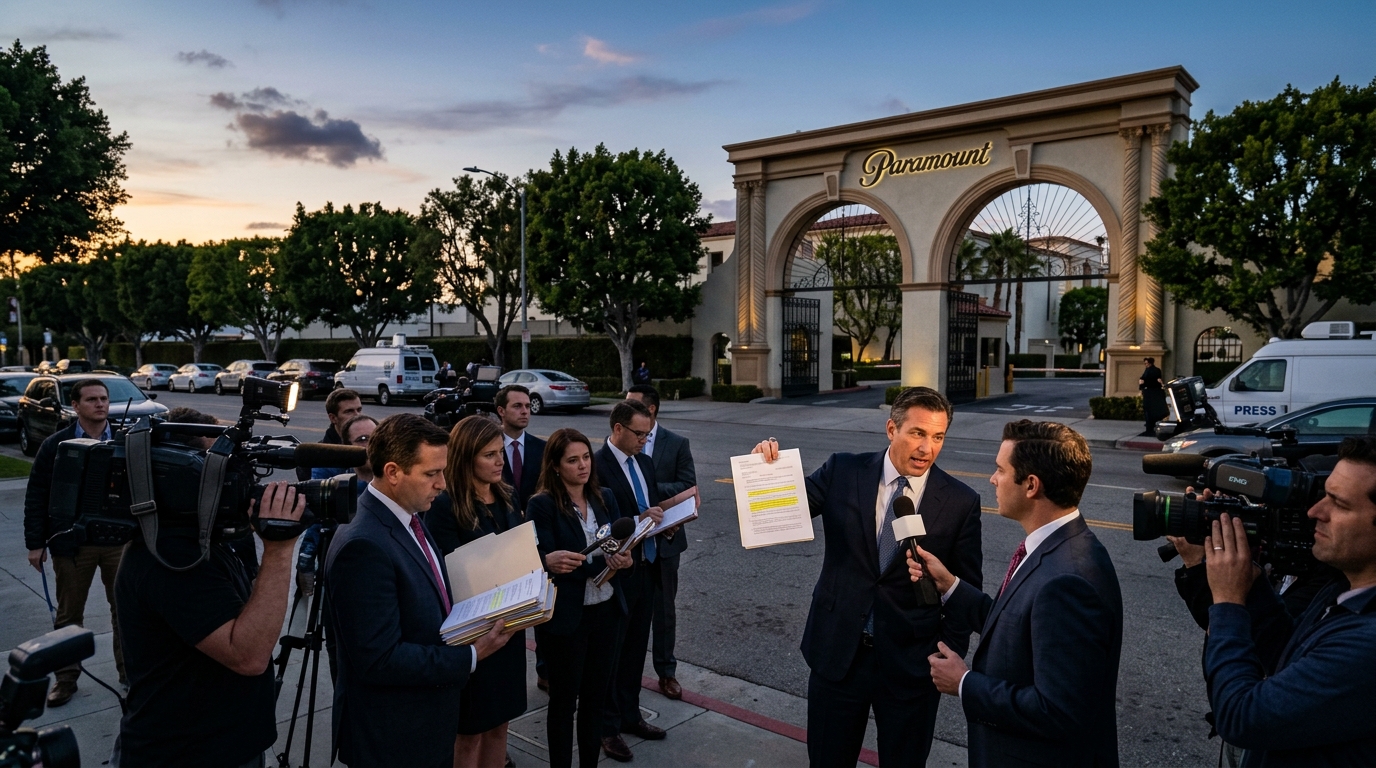
Paramount’s path toward a transaction involving Warner Bros. moved forward after litigation was settled, reducing a key overhang for one of the most closely watched media-sector deals on the wire.
CNBC reported that Paramount and state attorneys general settled a lawsuit, allowing the Warner Bros. merger to proceed. Investing.com separately reported that Paramount won the way for the Warner Bros. takeover after settling state and union lawsuits. With the same core development reflected in two outlets, the story stands out as one of the better-supported corporate items in today’s headlines.
Why the settlement matters
For investors, legal and regulatory uncertainty can be as important as valuation or strategy. In this case, the settlement appears to remove at least one meaningful procedural barrier to the deal. That does not necessarily mean all strategic or operational questions have been resolved, but it does change the immediate risk profile around timing and completion.
Media mergers have often faced skepticism not only from regulators, but also from labor groups, local officials and political stakeholders concerned about concentration, employment and content distribution. According to Investing.com’s headline, union lawsuits were also part of the dispute mix, suggesting the challenge extended beyond a narrow antitrust argument.
When a company settles with multiple challengers, investors typically read that as a sign that management wants to reduce uncertainty and keep focus on execution. That can be especially important in the current media environment, where traditional entertainment companies are under pressure to prove that scale can still deliver meaningful advantages.
A sector still searching for durable economics
Even with a legal hurdle lowered, the larger investment case for consolidation in media remains complex. The sector has spent years navigating the transition from legacy television economics to streaming, while also managing ad-market swings, content spending and audience fragmentation.
Supporters of large-scale combinations often argue that bigger content libraries, broader distribution and cost efficiencies can improve competitiveness. Critics, however, question whether combining legacy assets truly solves the deeper challenges facing the business model.
Today’s wire headlines do not provide new financial terms, synergy targets or management commentary. As a result, the market takeaway is less about forecasting the outcome of the combined business and more about recognizing that one important source of uncertainty has eased.
Why markets care beyond media
The story also matters because it reflects a wider dealmaking theme. Investors have been trying to determine whether regulatory and political pressures will continue to constrain large corporate transactions or whether companies can still push through complex combinations by negotiating settlements and concessions.
A cleared path for a high-profile entertainment deal may not set a universal precedent, but it does signal that legal obstacles are not always permanent. In sectors under structural pressure, that can encourage boards and investors to revisit consolidation as a strategic option.
There is also a leadership dimension. Yahoo Finance separately reported that David Ellison is considering Nashville alongside Austin as a future home for Paramount. That headline points to ongoing strategic planning and future-shape questions around the company, although it is distinct from the settlement itself and should be treated as a separate development.
Key issues investors may watch next
- Completion risk: whether any additional legal or regulatory steps remain.
- Integration planning: how quickly management shifts from litigation defense to execution.
- Cost discipline: whether the deal is presented as a scale play, a restructuring story or both.
- Sector read-through: whether other media companies pursue similar combinations or asset reshuffling.
For now, the importance of the settlement is straightforward: it appears to remove a barrier that had the potential to delay or derail the transaction. In a sector where uncertainty has often overshadowed strategy, that alone is material.
Neutral outlook: The settlement improves deal visibility, but investors will likely need more detail on structure, strategy and execution before drawing firmer conclusions about the longer-term implications for Paramount, Warner Bros. or the broader media landscape.
MarketPro reports are AI-assisted analyses of publicly reported market news. Not investment advice.