U.S.-China Talks Spotlight Market Access for Citi, Mastercard
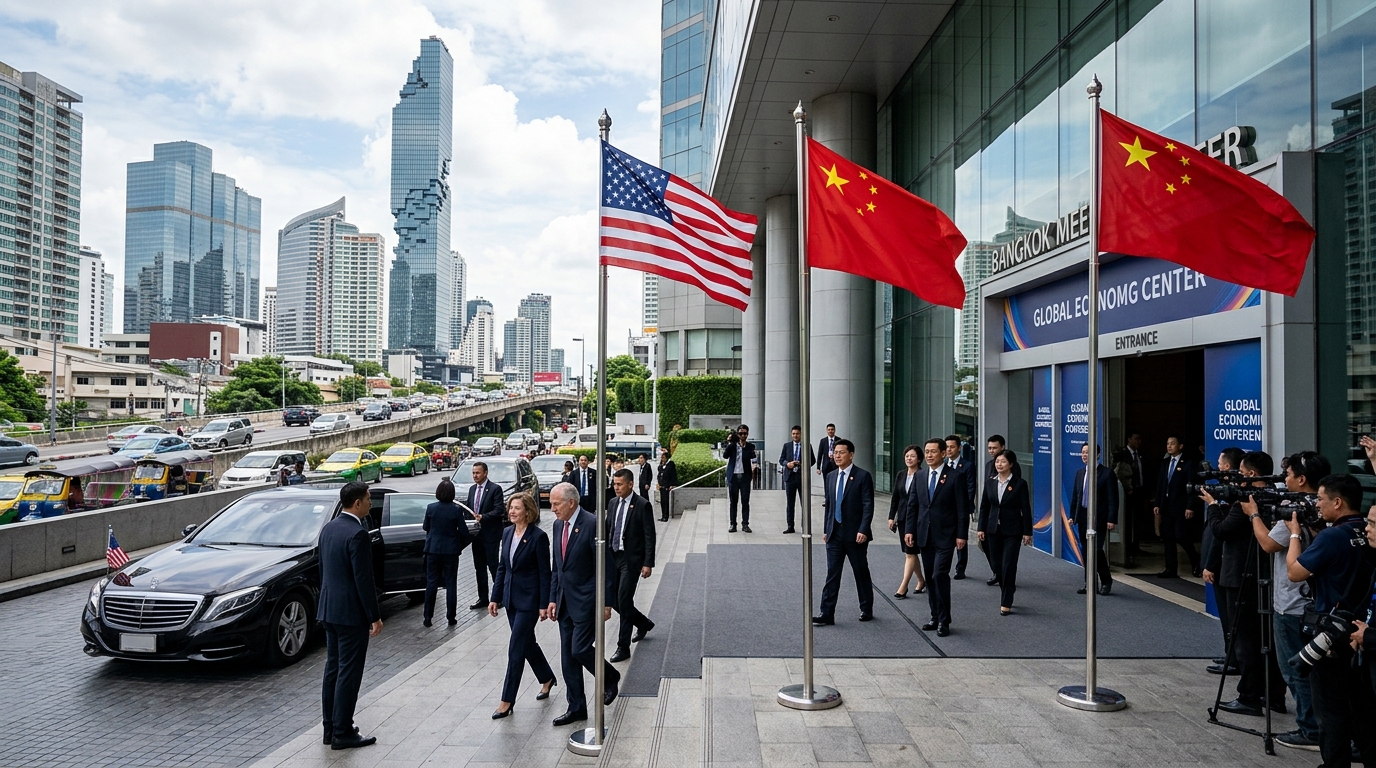
Market access for foreign financial firms moved back into focus after U.S. officials raised the cases of Mastercard and Citigroup with China during bilateral talks in Bangkok.
According to a CNBC report citing an official, the U.S. pressed China on market access for the two companies during the discussions. The headline does not specify any policy breakthrough or agreement, but it is still notable for investors because it shows financial-services access remains an active issue in the U.S.-China relationship.
Why this matters for markets
For global investors, the significance lies less in a single meeting and more in what it says about the operating environment for foreign banks and payments companies in China. Market access, licensing, regulatory approvals and competitive treatment can all affect long-term revenue opportunities for international firms trying to expand in large overseas markets.
Mastercard and Citigroup are both emblematic names in that discussion, though in different ways. Mastercard represents cross-border payments and network expansion, while Citigroup stands for global banking and broader financial-services participation. When both are raised in the same diplomatic setting, it signals that access concerns cut across multiple segments of finance.
A financial story with geopolitical weight
This development also sits at the intersection of business and diplomacy. U.S.-China talks often influence market sentiment even when no immediate deal is announced, because they shape expectations around regulation, market openness and the treatment of foreign firms.
Bangkok as the venue adds an international-policy dimension, but the direct relevance for markets comes from the named companies and the sector involved. Investors often look at such discussions as indicators of whether bilateral engagement is becoming more pragmatic in specific commercial areas, or whether longstanding barriers remain unresolved.
At a time when markets are already balancing multiple macro signals — including policy uncertainty in Japan and mixed risk sentiment across Asian equities, according to Investing.com — developments affecting cross-border finance can attract outsized attention.
What investors may infer from the headline
The available information is limited, so caution is warranted. Still, several implications stand out:
- No clear resolution yet: The headline says the U.S. pressed China, not that new access was granted.
- Financial access remains strategic: The issue was important enough to be raised in bilateral talks.
- Company-specific relevance: Mastercard and Citigroup were explicitly named, making the story material for financial-sector watchers.
- Broader read-through: Other foreign financial institutions may view the talks as a signal about the policy climate.
Why stocks could care even without immediate action
Equity markets often react not just to earnings and rates, but to changes in addressable markets and regulatory visibility. For multinational financial firms, access to China can influence growth expectations, strategic planning and cost structures tied to compliance and market entry.
That does not mean today’s headline changes forecasts on its own. But it does keep alive a key theme for global financial stocks: geopolitics and regulation can materially affect business opportunity, particularly in major international markets.
For now, the story appears to be one of continued pressure rather than resolution. Investors will likely watch for any follow-up from officials, regulators or the companies involved before drawing firmer conclusions.
Neutral outlook: The Bangkok talks do not yet point to a policy breakthrough, but they reinforce that market access for foreign financial firms in China remains a live issue for cross-border finance and sector sentiment.
MarketPro reports are AI-assisted analyses of publicly reported market news. Not investment advice.