US Treasury Targets MEXC in New Crypto Enforcement Push
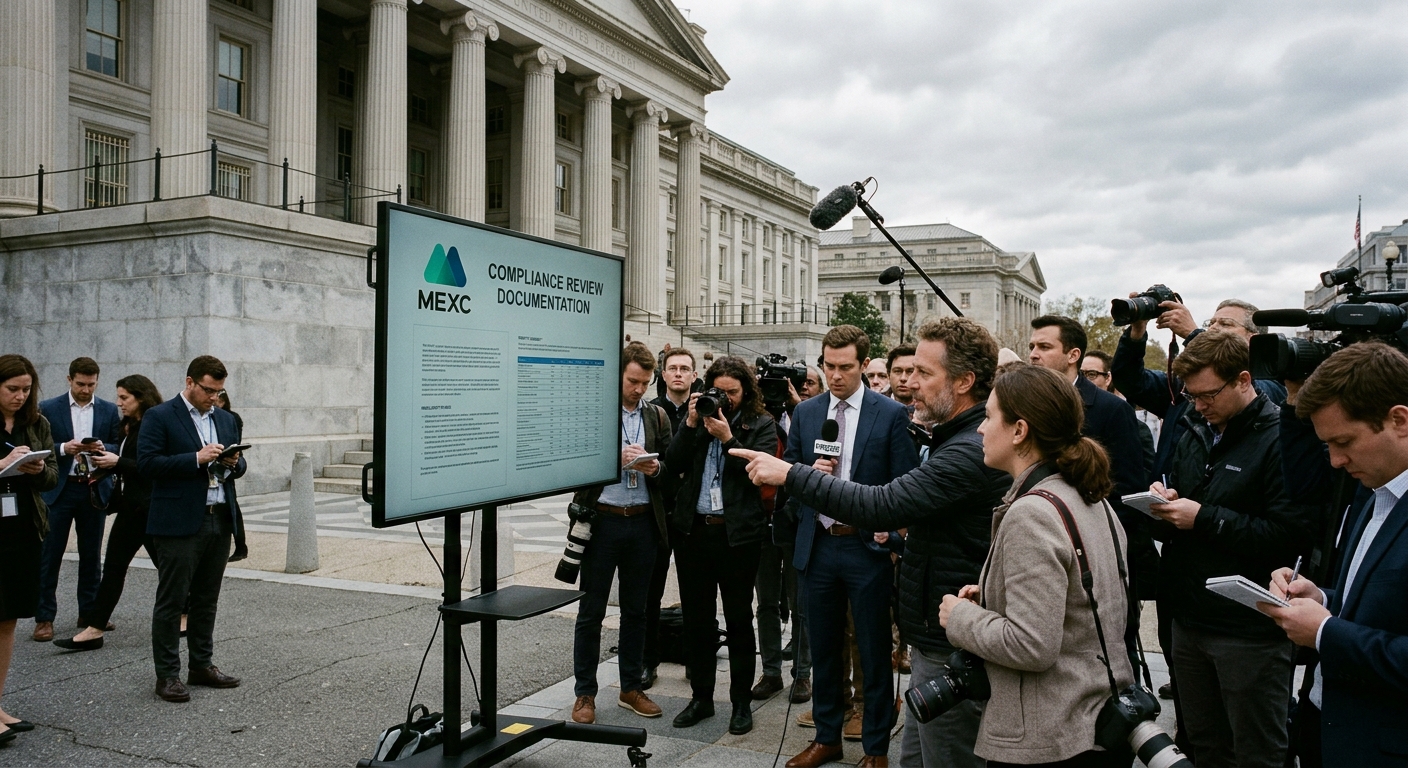
The U.S. Treasury’s move to cut off crypto exchange MEXC over alleged illicit transactions is one of the clearest new enforcement developments on the digital-asset wires today. According to a Cointelegraph report, Treasury alleged roughly $16 billion in illicit transactions tied to the platform, a claim that immediately puts anti-money-laundering controls, exchange access and cross-border compliance back at the center of the crypto market conversation.
While the headline does not provide the full legal mechanics of the action, the practical market significance is straightforward: when U.S. authorities target a major exchange or trading venue, traders, counterparties and service providers often reassess exposure quickly. That can affect liquidity, banking access, token listings and confidence across the broader sector, even when the action is directed at a specific firm rather than the market as a whole.
Why this matters beyond one exchange
Crypto investors have spent much of this year balancing two competing realities. On one side, the asset class has pushed further into mainstream finance. On the other, regulators have continued to scrutinize the plumbing that supports trading, custody and payments. The MEXC action matters because it speaks to market structure, not just price action.
Enforcement moves of this type can ripple outward in several ways:
- Counterparty risk: Market participants may review relationships with exchanges, brokers and payment channels.
- Compliance costs: Platforms may face pressure to strengthen know-your-customer and monitoring systems.
- Jurisdictional fragmentation: The gap between local operating rules and U.S. enforcement expectations can widen.
- Liquidity shifts: Users may move activity toward larger or more tightly regulated venues.
That makes this more than a company-specific legal story. It is also a signal about the direction of crypto oversight at a time when investors are already digesting policy uncertainty in multiple regions.
A distinct development from other recent crypto stories
This story stands apart from recent market coverage focused on falling token prices, election-linked crypto policy speculation and exchange security incidents. It is also different from previously covered reporting on Nigeria’s tightening crypto rules. Here, the focus is a fresh U.S. enforcement action with potential implications for how global exchanges manage access to dollar-linked financial channels and compliance expectations.
That distinction is important for markets. Price declines and hacks can unsettle sentiment, but direct action from U.S. authorities can alter operating conditions more fundamentally. Firms that rely on international client flows, stablecoin rails or institutional relationships tend to watch these developments closely.
What the market will watch next
Several questions now follow from the Treasury action, based on the limited headline-level information currently available.
1. Scope of restrictions
Investors and industry participants will want to know whether the measure primarily affects U.S. touchpoints, banking relationships or broader access to financial infrastructure.
2. Response from counterparties
Exchanges, market makers and payment firms often react quickly to elevated regulatory risk. Any sign of suspended services, delistings or tighter onboarding would be closely watched.
3. Spillover to broader policy debate
Enforcement cases can shape legislative and regulatory discussions. In practice, such actions often become examples cited in arguments for either stricter oversight or clearer rules.
Regulation remains a market variable
The immediate takeaway is not necessarily that the entire crypto market faces a new systemic shock. Rather, it is that regulatory and enforcement risk remains an active market variable alongside prices, rates and macro sentiment. For a sector that still depends heavily on trust in trading venues and payment rails, actions against a prominent exchange can have effects that outlast a single news cycle.
According to Cointelegraph, Treasury’s allegations involve a very large volume of purported illicit transactions. Even without drawing conclusions beyond the headline, that scale alone is likely to keep attention fixed on compliance standards and on how policymakers distinguish between innovation and financial-crime risk.
Neutral outlook: The next meaningful signal will be whether the Treasury action stays contained to MEXC or prompts broader changes in exchange operations, counterparties and U.S.-linked compliance practices across the crypto market.
MarketPro reports are AI-assisted analyses of publicly reported market news. Not investment advice.