Asian chip stocks slide as U.S. AI rout spreads
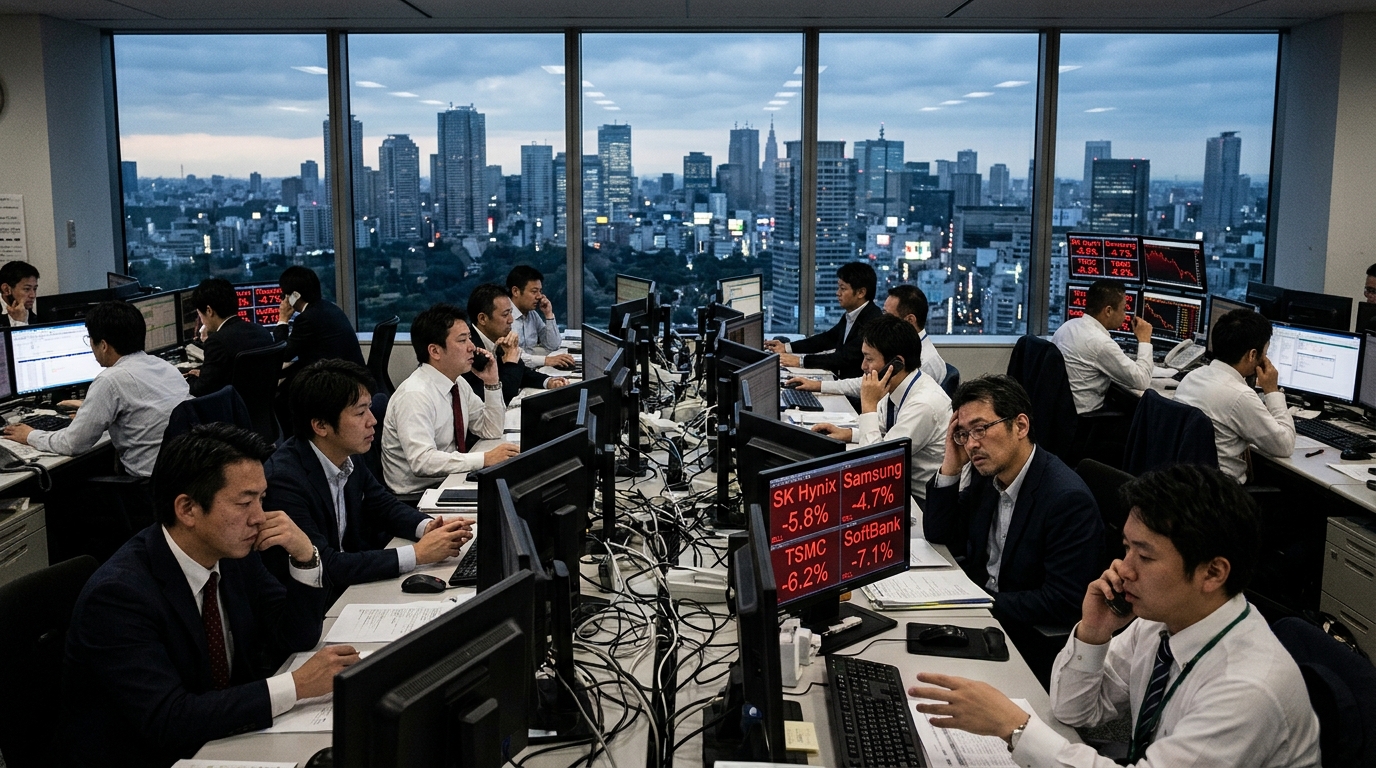
Asian semiconductor and technology shares came under renewed pressure after a steep U.S. market decline rippled across the region, reinforcing concerns that the AI-driven equity boom has entered a more fragile phase. According to CNBC, the Nasdaq selloff battered Asian chip stocks, sending shares of SK Hynix, Samsung Electronics, SoftBank and TSMC lower.
The move was supported by multiple regional follow-ups. Investing.com separately reported sharp declines in SK Hynix, TSMC and Samsung Electronics, while it also said Japan’s Nikkei was nearing bear-market territory as the AI rout weighed on valuations. MarketWatch, looking back at Wall Street, said tech stocks suffered their worst day since 2020 as the carnage reached the AI trade.
Why the selloff spread so quickly
The regional reaction underlines how tightly Asian chipmakers are linked to U.S. technology sentiment. Many of the biggest names in Asia sit at the center of the global AI supply chain, from memory and foundry production to investment exposure through conglomerates and venture holdings. When U.S. investors reassess the earnings power or valuation of AI leaders, the effects tend to spill over quickly into Asian benchmarks.
CNBC’s headline pointed to losses across both pure semiconductor names and adjacent tech exposure, including SoftBank. That matters because it suggests the market move was not isolated to one business model or one national market. Instead, investors appeared to be reducing broad exposure to the AI theme.
Wall Street sets the tone
The regional pressure followed a severe U.S. drawdown in the largest technology companies. CNBC said the Magnificent 7 lost roughly $1 trillion during Thursday’s plunge, showing how concentrated the selling was in the companies that have carried much of the market’s recent advance. MarketWatch added that Wall Street was debating whether the move represented a routine correction or something more significant for the wider stock market.
That distinction is especially important for Asia. If the retreat proves to be a short-lived reset in stretched U.S. mega-cap valuations, semiconductor shares may find support once investors regain confidence in AI-related spending. But if the market is starting a deeper rethink of how much future growth is already priced into the sector, supply-chain names could remain exposed.
Pressure points for chip investors
The current selloff raises several near-term questions for the semiconductor space:
- Valuation sensitivity: AI-linked chip names have been among the market’s strongest performers, leaving them vulnerable when sentiment turns.
- Demand expectations: Investors may be reassessing the pace and durability of AI infrastructure spending.
- Index impact: Heavyweight technology names can drag broader regional benchmarks lower, as seen in Japan.
- Contagion risk: Selling in U.S. mega-caps often transmits quickly to suppliers and ecosystem partners in Asia.
A broader repricing of the AI trade
The headlines also point to a wider market narrative beyond one day’s weakness. MarketWatch explicitly framed the rout as reaching the AI trade, while CNBC tied the Asian losses directly to the Nasdaq slump. That combination suggests investors are focusing not only on company-specific news but on the sustainability of a market theme that has dominated global equities.
There was no single cross-verified catalyst in the supplied headlines explaining all of the declines in Asia. But the common thread across CNBC, MarketWatch and Investing.com coverage is clear: a U.S.-led technology drawdown spread through the semiconductor complex and hit risk appetite across key Asian markets.
What to watch next
The next test may come from whether U.S. markets stabilize after the selloff and whether upcoming macro data changes the tone on growth and rates. Semiconductor stocks remain highly sensitive to both factors because AI spending depends on confidence in future corporate investment as well as financing conditions.
A short neutral outlook: Asian chip shares are likely to remain closely tied to Wall Street’s ability to steady the AI trade, with sentiment rather than company-specific fundamentals driving the immediate direction.
MarketPro reports are AI-assisted analyses of publicly reported market news. Not investment advice.