Bank of Korea Hold Keeps Asia Rates and Won in Focus
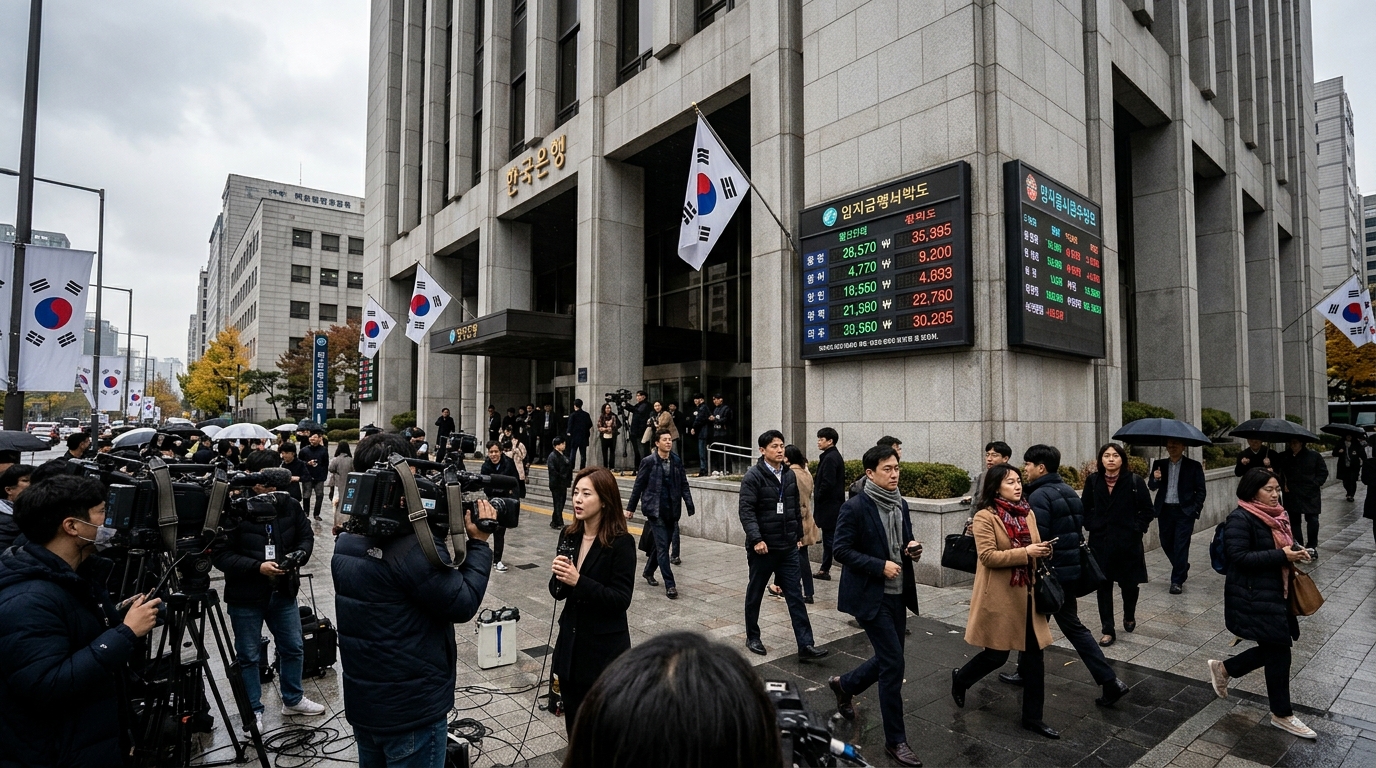
The Bank of Korea’s decision to leave interest rates unchanged is one of the clearest policy signals in Asia today, with implications for the Korean won, regional rate expectations and the broader market debate over growth versus inflation.
CNBC reported that the Bank of Korea held rates after President Lee called for boosting housing supply. Investing.com separately reported that the central bank held rates as expected after back-to-back hikes. Because the decision is confirmed across multiple outlets, it stands as a well-supported macro development rather than a single-source interpretation.
Why the hold matters now
A pause following consecutive hikes suggests the central bank is weighing whether previous tightening is still working through the economy. It does not necessarily mean inflation concerns have disappeared, but it can indicate that policymakers see rising risks in pushing too far, too fast.
The additional political backdrop is important. According to CNBC, the decision came after President Lee called for a boost in housing supply. That does not mean the central bank is targeting property construction directly, but it does underline how housing costs, domestic demand and financial conditions are interacting in the policy debate.
For currency markets, this kind of pause often matters because traders compare not just a country’s inflation profile, but also the likely future gap between its policy rates and those of major peers. If one central bank pauses while others remain more hawkish, the currency can come under pressure. If the pause is already priced in and growth stability improves, the currency reaction may be more muted.
Housing, inflation and currency are linked
South Korea’s policy mix is being watched closely because housing is economically and politically sensitive. A government push to expand supply can, over time, ease one structural source of price pressure. But in the near term, central bankers still have to judge whether borrowing conditions are tight enough to cool inflation without causing unnecessary strain in interest-sensitive sectors.
That is where foreign exchange enters the picture. A weaker won can raise import costs, adding inflation pressure through energy and food channels. A firmer won can help on imported inflation, but may weigh on exports if global demand is already under pressure. In practice, the Bank of Korea must navigate both domestic conditions and external financial trends.
Regional implications for Asia markets
The Korean decision also contributes to a wider Asia story. Investors are trying to determine whether the region is entering a phase in which central banks become more selective and data-dependent after periods of tightening. South Korea often attracts close attention because it is deeply integrated into global trade, manufacturing supply chains and technology cycles.
That makes the rate hold relevant beyond local bond markets. A steady policy stance can affect equity valuations, bank funding expectations and cross-border capital flows. It may also influence how investors read other Asian central banks that face similar pressures: still-elevated price risks on one side, and uneven growth on the other.
What markets may watch next
With the rate decision now out, attention is likely to turn to how officials describe the balance of risks in coming days. Markets typically focus on whether a hold is presented as a true pause, a temporary step before more tightening, or the start of a more prolonged wait-and-see phase. The current wire headlines do not provide that additional guidance, so it would be premature to assign a stronger policy path.
Investors will also keep watching external forces. Bond-yield moves, oil-price behavior and the performance of the U.S. dollar all shape the backdrop for Asian currencies. If global yields stay elevated or commodity inflation remains stubborn, central banks may find it harder to pivot toward a looser stance even if domestic growth cools.
A disciplined signal rather than a dramatic shift
At this stage, the Bank of Korea’s move looks less like a turning point and more like a disciplined pause in a complicated environment. The decision acknowledges prior tightening, preserves flexibility and leaves room for policymakers to react as new inflation, housing and growth data emerge.
For forex markets, that combination usually means the conversation shifts from the headline decision itself to relative policy direction and communication. The won’s broader path will depend not only on Seoul, but also on global yield trends, energy prices and the next signals from major central banks.
Neutral outlook: The Bank of Korea’s hold keeps policy optionality intact, with markets likely to focus next on inflation trends, housing conditions and how the won responds to global rate and commodity moves, according to CNBC and Investing.com reports.
MarketPro reports are AI-assisted analyses of publicly reported market news. Not investment advice.