Dollar steady, oil softer as Fed hold ripples outward
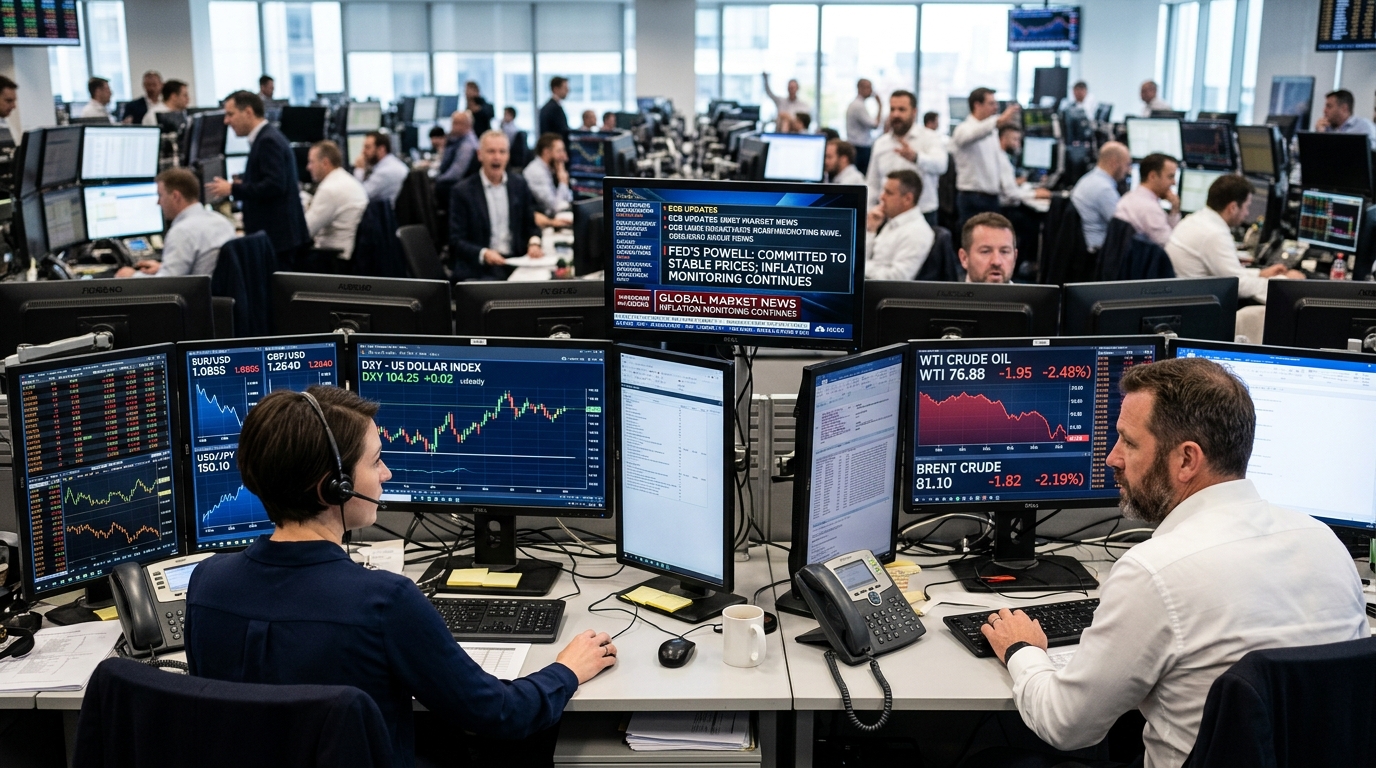
The Federal Reserve’s latest decision rippled well beyond U.S. interest-rate markets, helping shape a steadier dollar, softer oil prices and continued pressure on bitcoin. While equities focused heavily on Big Tech earnings, the broader cross-asset story was that policy uncertainty remained high even after the Fed left rates unchanged.
According to Investing.com, the dollar was steady after the Fed hold left the future rate path murky. CNBC separately reported that the 10-year Treasury yield crept higher even as the Fed kept rates the same. Taken together, those headlines suggest investors did not read the Fed pause as a clear signal that financial conditions will ease quickly.
Why the dollar stayed firm
A steady dollar after a hold can reflect a market that still sees U.S. rates as relatively supportive, especially if the central bank’s tone is cautious rather than clearly dovish. That appears broadly consistent with other headlines on the wire. CNBC reported commentary around the Fed decision, including a hawkish interpretation from some observers, while Cointelegraph said analysts viewed the Fed’s hawkish hold as keeping pressure on bitcoin.
The key point is not that the dollar surged — it did not, based on the headline from Investing.com — but that it avoided a weaker reaction despite no rate increase. That matters for global markets because a firm dollar can reinforce tighter financial conditions, particularly when long-term Treasury yields are also edging higher.
Oil fell even with geopolitical risk still in view
In commodities, Investing.com reported that oil prices fell as peace hopes offset fears of growing Middle East conflict. That creates an interesting contrast with the rates backdrop. Ordinarily, persistent geopolitical tensions can support crude, but the headline indicates that hopes for de-escalation were strong enough to outweigh conflict concerns during the session.
This matters for macro watchers because softer oil can affect inflation expectations at the margin, even if the move is driven by geopolitics rather than demand weakness. With the Fed still navigating an uncertain inflation path, any sustained easing in energy prices could eventually matter for how markets interpret the policy outlook. For now, though, the wires support only a simpler conclusion: oil weakened because peace hopes had the upper hand on the day.
Crypto remained sensitive to the same macro forces
Bitcoin offered another cross-asset read on the Fed backdrop. According to Cointelegraph, the Fed’s hawkish hold kept pressure on bitcoin, and the token’s price bounce was rejected at its 50-day trend line ahead of the policy decision and earnings. Those headlines align with the broader picture in rates and currencies: a market not yet ready to price easier liquidity conditions.
That connection is increasingly important. Bitcoin is often discussed as a separate asset class, but on days dominated by central-bank signals and Treasury moves, it can trade much more like a macro-sensitive risk asset. The combination of steady dollar conditions and firmer long-end yields appears to have limited crypto’s ability to recover.
A cross-market reading of the session
- Forex: The dollar held steady, implying that the Fed hold did not materially weaken support for the currency.
- Rates: Higher 10-year yields pointed to ongoing uncertainty about inflation and the policy path.
- Commodities: Oil fell as peace hopes outweighed fears of broader Middle East conflict.
- Crypto: Bitcoin stayed under pressure as traders absorbed the Fed’s tone and broader market caution.
For global investors, the significance of the day was in the linkage between markets. The Fed did not change rates, but that was not enough to ease the bond market. The bond market’s tone helped keep the dollar stable. At the same time, geopolitics pushed oil lower rather than higher, and crypto remained constrained by the same macro conditions affecting other risk assets.
Neutral outlook: Near-term attention is likely to stay on whether Treasury yields continue rising, whether the dollar remains resilient without further Fed tightening, and whether oil’s peace-driven pullback proves durable enough to influence broader inflation sentiment.
MarketPro reports are AI-assisted analyses of publicly reported market news. Not investment advice.