Stellantis surge and airfare jump test consumer outlook
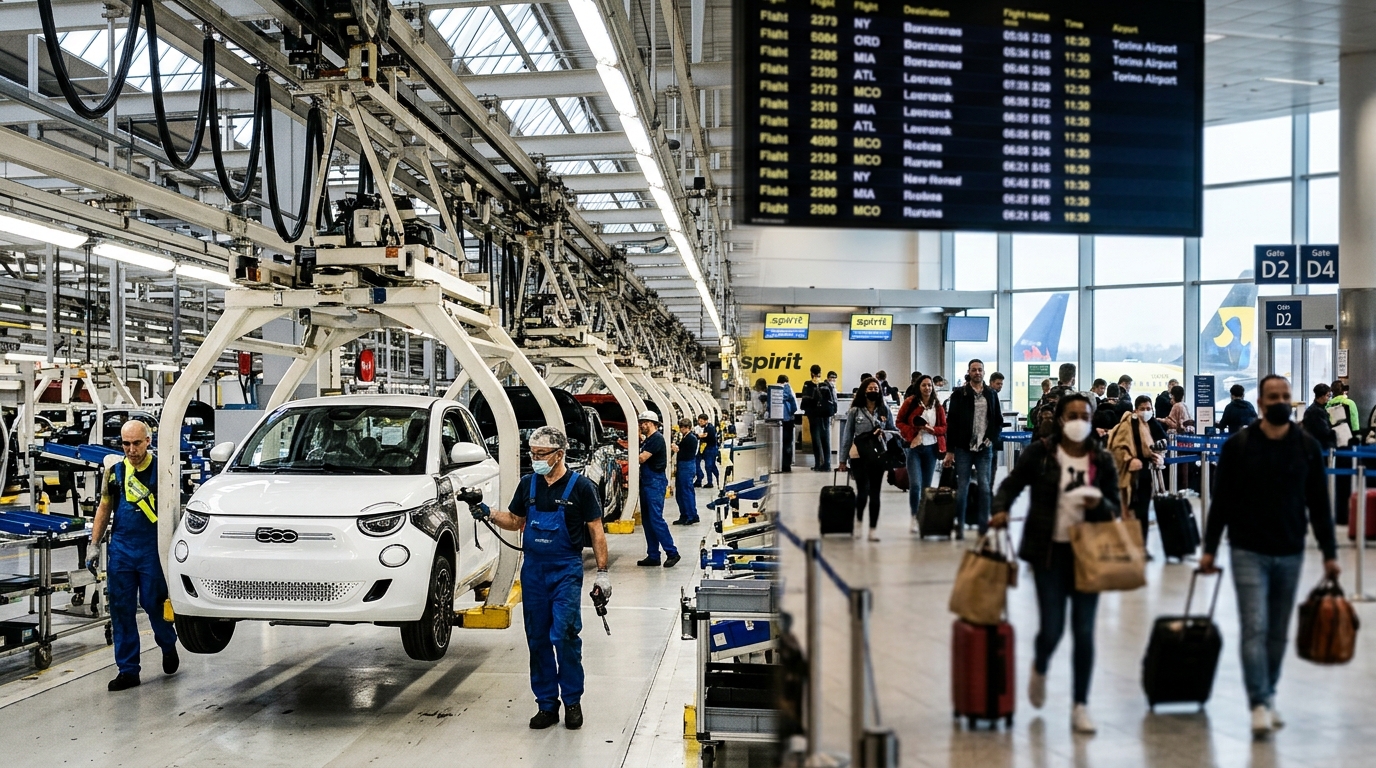
Two CNBC headlines offered a useful read on the consumer economy from different angles on Thursday: Stellantis shares rose 12% as the automaker’s turnaround plan and cost cuts gained traction, while America’s largest budget airline reported a 71% jump in airfare, according to CNBC reports. Together, the stories suggest companies tied to discretionary spending are still finding ways to improve pricing or margins, even as the market remains sensitive to whether consumers can absorb higher costs.
These are very different industries, but both sit close to household budgets. Autos represent a large-ticket purchase often linked to financing conditions and confidence, while budget airline fares are an immediate test of travel demand and price sensitivity. When both sectors generate strong market reactions or notable pricing headlines at the same time, investors tend to read them as clues about the broader consumption backdrop.
Stellantis gives Europe’s auto sector a lift
According to CNBC, Stellantis stock climbed 12% as investors responded positively to the company’s turnaround plan and cost cuts. The headline indicates that the market is rewarding execution and efficiency, particularly in a sector that has faced heavy scrutiny over demand, pricing, electric-vehicle strategy and competition.
The significance goes beyond one session’s share move. European and global automakers have been under pressure to prove they can defend profitability while managing slower growth in some regions, high capital needs and uneven EV adoption. A favorable reaction to cost-cutting traction suggests investors still see room for operational improvement to support earnings resilience even without a broad sector re-rating.
Because the headline specifically cites the turnaround plan gaining traction, the market signal is less about a sudden macro rebound and more about company-level delivery. That distinction matters. In an uncertain growth environment, stocks can still outperform if management persuades investors that margins, inventories or product positioning are improving.
Budget airfare surge points to pricing power — or pressure
The airline headline tells a different but related story. CNBC reported that America’s largest budget airline posted a 71% jump in airfare. On its face, that is a striking number, especially in a segment associated with price-conscious consumers.
For markets, the key question is whether such a jump reflects strong demand, constrained capacity, shifting route economics, or some combination of all three. The headline alone does not provide a full breakdown, so caution is warranted. Still, it clearly suggests that low-cost travel is no longer insulated from broader inflation and cost-recovery pressures.
If discount carriers can push through sharply higher fares, that may imply travelers are still willing to spend on experiences despite tighter budgets elsewhere. On the other hand, it could also raise concerns about how long that pricing can hold before demand starts to soften. Budget travel often acts as a real-time indicator of lower- and middle-income consumer resilience, so the market may watch follow-up commentary closely.
What the two stories say together
Viewed together, the Stellantis and airline headlines support a broader market theme: investors are rewarding signs of pricing power and cost discipline, but they are still looking for proof that demand remains intact.
That combination has become central across many sectors. Where consumers continue spending, companies may preserve margins through higher prices. Where demand weakens, cost cuts and restructuring become more important. The Stellantis reaction fits the second pattern more directly, while the airfare story leans toward the first.
There is also a geographic angle. Stellantis provides a read on global manufacturing and the European auto complex, while the airfare report offers a U.S. consumer and services-sector signal. For readers focused on cross-asset themes, that makes the pairing especially relevant: one headline speaks to industrial equity sentiment, the other to inflation-sensitive consumer services.
Why this matters beyond the sectors involved
Autos and airlines influence more than their own share prices. They can shape expectations around household purchasing power, financing conditions, wage sensitivity and even central-bank interpretation of underlying demand. Higher travel prices can feed debate about services inflation, while successful cost-cutting at manufacturers can affect sentiment toward cyclicals more broadly.
Still, the available wire headlines do not establish that either development represents a lasting trend. CNBC’s reporting supports a clear market move in Stellantis and a sharp airfare increase at a major budget airline, but not a definitive conclusion about the entire consumer economy. Broader confirmation would likely require additional data from other automakers, carriers and official spending indicators.
Neutral outlook: according to CNBC reports, the latest signals from autos and budget travel suggest consumer-linked sectors are still showing pockets of resilience, though markets will need more evidence to judge whether pricing strength and turnaround gains can be sustained.
MarketPro reports are AI-assisted analyses of publicly reported market news. Not investment advice.