Barclays Job Cuts Put AI Cost Savings in Market Focus
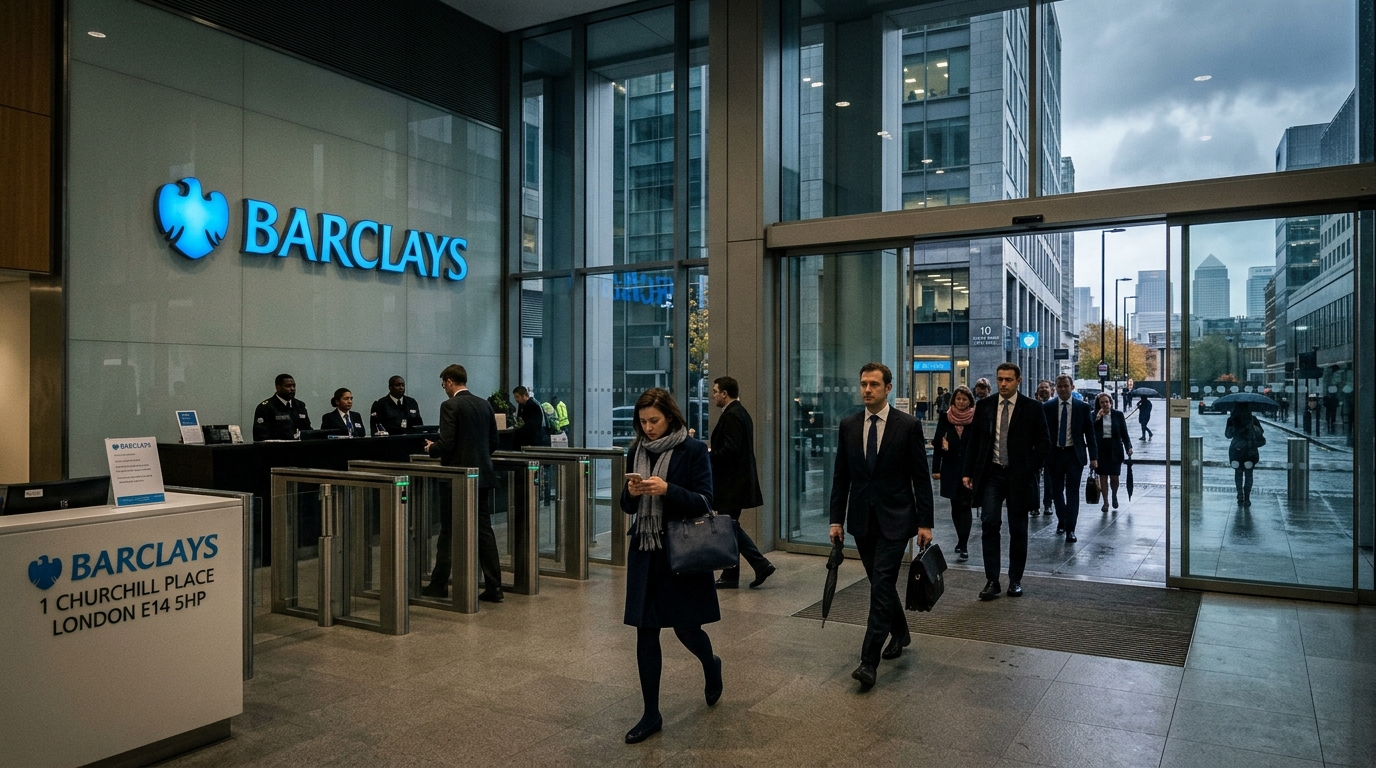
Barclays' reported plan to cut 5,000 jobs is putting fresh attention on how large banks are trying to turn artificial intelligence into measurable cost savings, while also raising questions about execution risk, staffing, and the broader labor impact across the financial sector.
According to a CNBC report, Barclays is set to slash 5,000 roles in an AI-driven efficiency push. A separate MarketWatch report also highlighted the cuts, framing them alongside wider debate over whether AI will replace workers and noting comments from the Federal Reserve on automation's implications for employment. That cross-source confirmation makes the development one of the clearest bank-sector stories on the wire today.
Why the market is paying attention
For investors, layoffs at a global bank are not just a labor story. They are also a signal about margins, spending discipline and management confidence in new technology. Banks have spent heavily on digital systems for years, but the current AI cycle has raised pressure to show faster payback.
In that context, Barclays' move suggests management sees enough scope to remove costs from support functions, operations or overlapping workflows. Even without detailed guidance on where reductions will fall, the headline alone is relevant because European and U.S. lenders alike are under pressure to improve efficiency while dealing with uneven capital-markets activity, regulatory demands and changing rate expectations.
The timing matters as well. Investors have become more selective about AI stories. In technology, markets have rewarded companies that can point to real demand or monetization. In financials, the test is different: can AI lower headcount, speed compliance, improve customer service or reduce error rates without creating new risk?
AI enthusiasm meets old banking constraints
Banks are well positioned to automate repetitive tasks, document handling, coding assistance and some customer-facing workflows. But financial institutions also operate in one of the most regulated parts of the economy. That means the path from experimentation to meaningful savings is often slower than in less regulated industries.
According to MarketWatch, the Barclays announcement also intersects with a broader policy discussion about AI and jobs. That makes this more than a single-company restructuring story. It adds to evidence that employers are starting to present AI not only as a growth tool, but as a reason to redesign workforces.
For markets, this creates a two-track interpretation:
- Positive: lower operating expenses could support profitability if implementation goes smoothly.
- Negative: restructuring charges, morale issues, regulatory scrutiny or weaker service could offset some of the expected benefit.
Because neither CNBC nor MarketWatch provided a detailed breakdown of the affected divisions in the headlines supplied, investors may remain focused on future management commentary for signs of how targeted the cuts are and how quickly savings could emerge.
A read-through for the wider banking sector
The Barclays plan may also influence sentiment toward other banks pursuing similar strategies. The logic is straightforward: if one major lender is willing to announce large cuts tied to efficiency and AI, peers may face stronger market pressure to demonstrate comparable discipline.
This does not automatically mean a sector-wide wave will follow at the same scale. Different institutions have different technology budgets, business mixes and labor structures. Still, the headline reinforces the idea that AI adoption in banking is moving from pilot programs toward board-level cost decisions.
That matters for equity investors because bank valuations often respond to expectations around expense control as much as revenue growth. In slower-growth environments, cost reduction can become a central part of the investment case.
What investors will likely watch next
- Management guidance: whether Barclays gives clearer savings targets or timelines.
- Restructuring costs: whether near-term charges dilute the benefit.
- Operational impact: whether customer service, risk controls or compliance functions are affected.
- Peer response: whether other banks announce similar AI-linked workforce changes.
The Barclays story stands out because it combines a concrete corporate action with a theme markets are actively trying to price: when, and how, AI moves from promise to profit. According to CNBC and MarketWatch reports, Barclays has now put that question directly in front of investors.
Neutral outlook: The reported cuts may strengthen Barclays' efficiency narrative, but markets will likely wait for clearer evidence on savings, execution and any broader read-through for bank employment and sector profitability.
MarketPro reports are AI-assisted analyses of publicly reported market news. Not investment advice.