Boeing Loss Narrows as 737 Max Output Stays in Focus
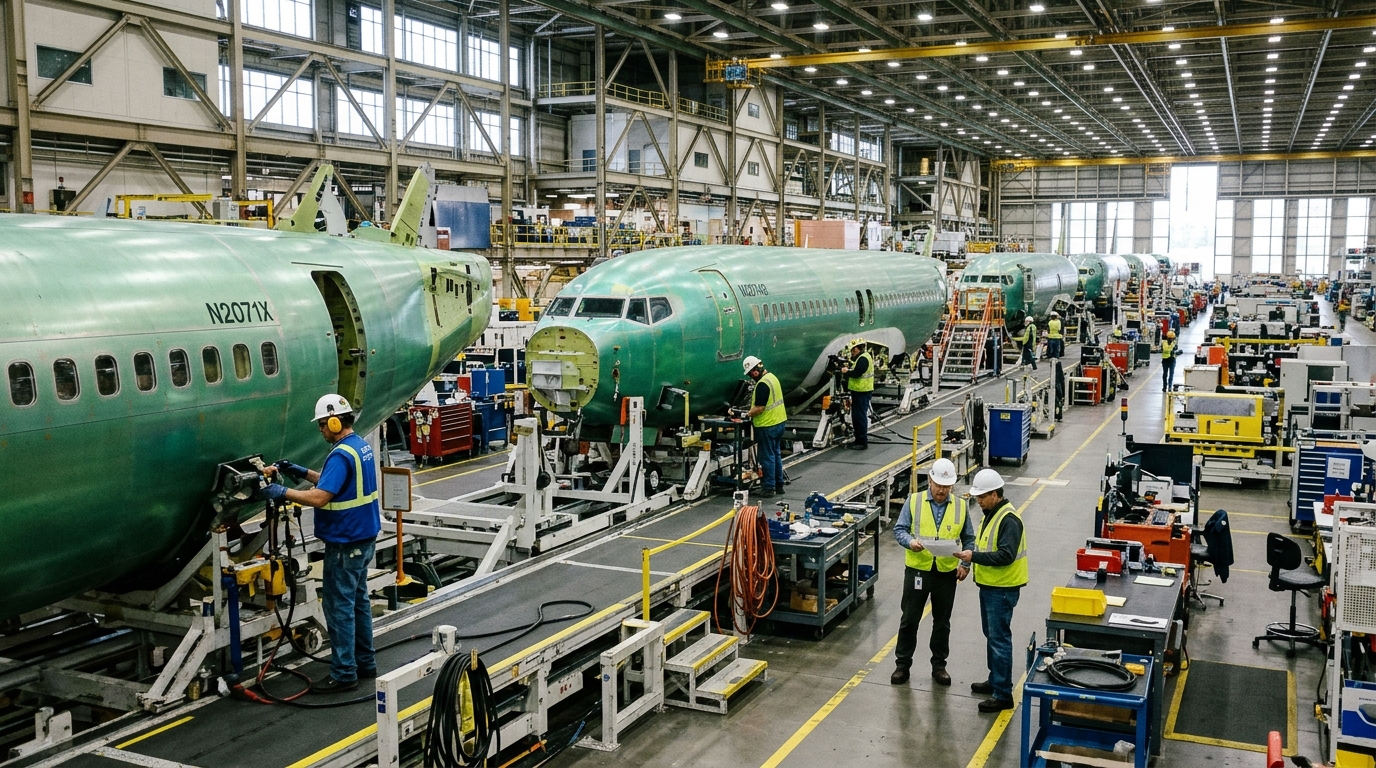
Boeing’s latest quarterly update kept investor attention on a familiar tension: improving results in some parts of the business, but persistent scrutiny over commercial aircraft production.
According to CNBC, Boeing narrowed its third-quarter loss as defense sales rose. But the report also said the central question for markets remains whether the company can make sustained progress on 737 Max production. Investing.com separately reported that Boeing is not expected to reach its 737 production target until early 2027, reinforcing the idea that the manufacturing recovery may take longer than investors had hoped.
Defense helps, but commercial delivery pace still matters most
The quarter’s narrower loss suggests Boeing is getting some support from parts of the business outside commercial jets. That matters because defense and services can help stabilize results while the company works through its better-known production and certification challenges.
Still, Boeing’s equity story continues to hinge largely on commercial aircraft output. The 737 Max remains the company’s most important narrow-body program, and it is closely watched because production volume affects deliveries, cash generation and supply-chain confidence.
Even when earnings improve on paper, markets tend to look through near-term accounting gains if production targets appear vulnerable. That appears to be the case again here. CNBC’s report emphasized that investor focus remains squarely on 737 Max production, while Investing.com’s timeline for reaching the target points to a more extended recovery path.
Why the production timeline matters to markets
For industrial companies such as Boeing, production rates are not just an operational detail. They shape revenue recognition, working capital and broader supplier economics.
If Boeing takes longer to reach desired output, several implications follow:
- Deliveries may remain constrained, limiting the speed of top-line recovery.
- Cash flow improvement could be delayed, since aircraft makers typically benefit when planes are delivered rather than simply built.
- Suppliers face a longer wait for steadier order visibility, affecting sentiment across the aerospace chain.
- Airline customers may continue planning cautiously if delivery timing remains uncertain.
That is why even a narrower quarterly loss does not necessarily settle the bigger debate around execution. Investors have been looking for evidence that Boeing can translate stabilization into a durable production ramp, not just a better quarter in isolation.
Aerospace read-through extends beyond one company
Boeing’s results matter beyond its own shares because they offer a read-through for industrial demand, aircraft supply chains and airline fleet planning. Commercial aerospace has been one of the most closely followed recovery stories in global manufacturing, and Boeing remains central to that theme.
A prolonged path to output targets could keep attention on bottlenecks across labor, components and quality control. It may also influence expectations for peers and suppliers tied to aircraft build rates.
At the same time, the improvement in defense sales is a reminder that Boeing is not solely a single-program story. A stronger defense performance can provide some offset when commercial execution remains uneven. But for equity markets, the valuation debate still tends to come back to narrow-body production reliability.
What investors are likely to watch next
After this update, several signposts are likely to matter more than the headline loss figure itself:
- Whether Boeing can demonstrate consistent 737 Max output progress
- Any updates on production targets and timing
- Signs of improving delivery momentum
- Whether defense strength can continue to cushion volatility elsewhere
For now, the earnings report appears to have offered some evidence of stabilization, but not enough to remove doubts about the pace of recovery. According to CNBC and Investing.com reports, the market’s core question remains unchanged: how quickly Boeing can translate operational repair into a sustainable production ramp.
Neutral outlook: Boeing’s quarter showed some improvement, but the stock’s broader market narrative is still likely to be driven by execution on 737 Max output rather than by one quarter’s earnings headline.
MarketPro reports are AI-assisted analyses of publicly reported market news. Not investment advice.