China stocks hit bear market as CSI 300 rout deepens
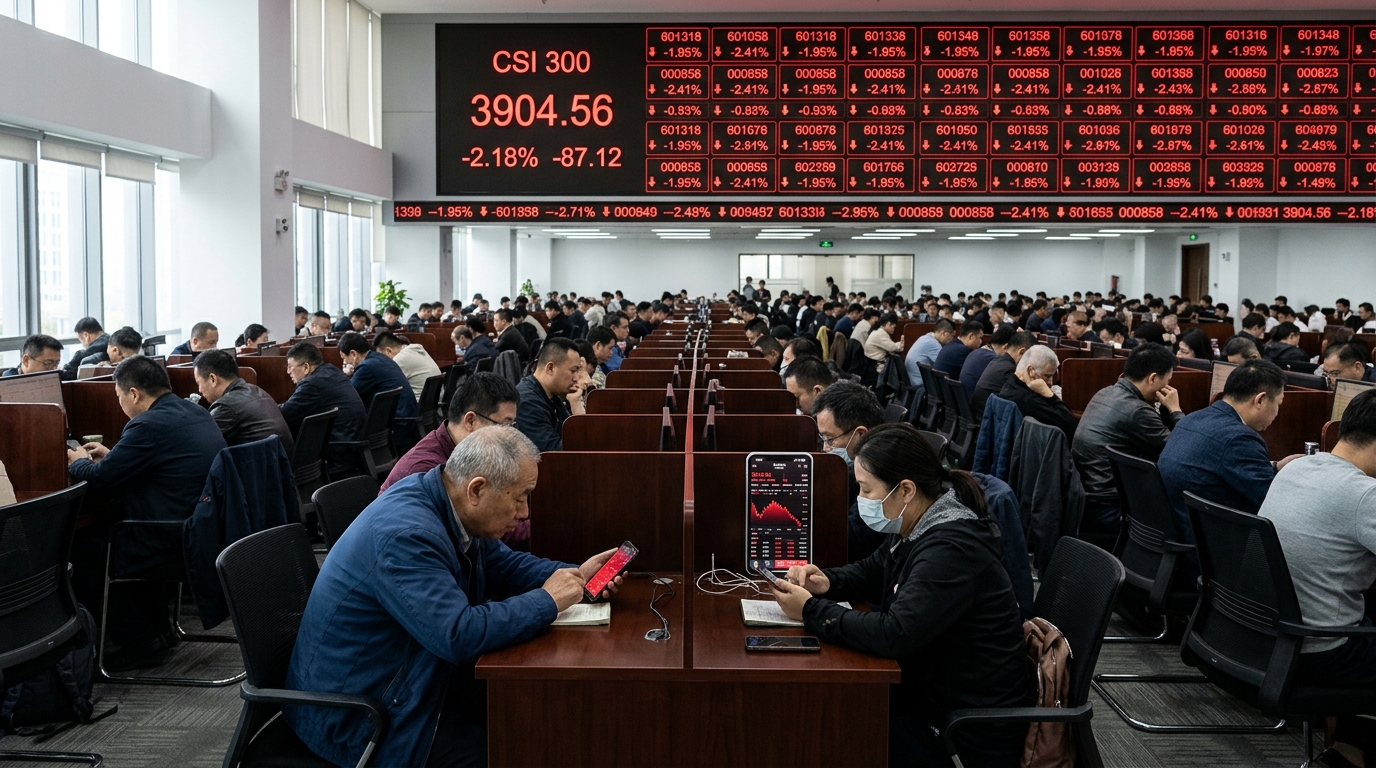
China’s stock market has fallen back into bear territory, with CNBC reporting that the CSI 300 extended its losing streak to 10 weeks. The move marks a significant setback for investors hoping that earlier support measures and selective foreign inflows would stabilize sentiment in mainland equities.
The decline is notable on its own, but it becomes more important when viewed alongside another CNBC headline showing that sovereign wealth fund investments in China and Hong Kong surged 190% after a bruising slump. Together, the two reports suggest a split picture: long-horizon institutional money may be re-engaging with the region, but public equity markets are still struggling to regain momentum.
A bear market signal from a key benchmark
The CSI 300 is widely watched because it tracks large-cap stocks listed in Shanghai and Shenzhen and is often used as a broad gauge of mainland market sentiment. According to CNBC, the index’s 10-week rout has now pushed it into bear territory, a term generally used to describe a drop of 20% or more from a recent high.
That matters for global investors because China remains deeply tied to broader emerging-market allocations, commodity demand expectations and regional supply-chain sentiment. When the CSI 300 enters a prolonged slide, it can affect not only domestic confidence but also the appetite for risk across Asia more broadly.
Why the weakness stands out now
The timing is important. Markets have spent much of the year debating whether Chinese assets had become cheap enough to attract new capital. CNBC’s separate report on sovereign wealth funds suggests some institutional investors have indeed increased exposure to China and Hong Kong after a difficult period.
But sovereign wealth fund allocations and listed market performance do not always move together in the short term. Large state-backed investors often have multi-year horizons and may target strategic sectors or private opportunities that do not immediately lift broad indexes. Public markets, by contrast, react more quickly to weak earnings expectations, growth concerns, policy uncertainty and fragile retail sentiment.
The latest drop in the CSI 300 therefore suggests that bargain-hunting by some long-term investors has not yet been enough to reverse the broader market trend.
What investors are likely weighing
Based on the headlines provided, several pressures appear to be shaping the current mood around Chinese assets:
- Growth concerns: A prolonged equity decline often reflects doubts about the strength and durability of the economic recovery.
- Policy effectiveness: Markets may be questioning whether support measures are sufficient to stabilize corporate profits and investor confidence.
- Capital allocation divergence: Strategic inflows from sovereign wealth funds can coexist with ongoing weakness in publicly traded equities.
This combination can produce a difficult market environment in which valuations look more attractive over time, but near-term sentiment remains poor.
Regional and global implications
A weaker Chinese stock market can ripple into other asset classes. Industrial commodities, luxury-goods names, Asian exporters and emerging-market funds often respond to shifts in China expectations. Investors may also compare China’s equity performance with opportunities elsewhere in Asia, especially in markets benefiting from technology spending, AI infrastructure demand or domestic policy support.
At the same time, the divergence between falling stock benchmarks and rising sovereign wealth fund interest could become an important theme. If strategic capital keeps moving in while listed shares remain under pressure, global managers may begin asking whether the public market selloff reflects temporary pessimism or a deeper structural challenge.
What to watch next
The next signals will likely come from whether the selloff broadens further, whether policymakers respond more forcefully, and whether foreign institutional participation expands beyond selective allocations. The 10-week losing streak reported by CNBC gives the current downturn unusual persistence, which means a simple one-day rebound may not be enough to change the tone.
For now, the combination of a bear-market benchmark and a rise in sovereign wealth interest presents a more nuanced story than a straightforward capitulation. Some investors appear to be positioning for long-term opportunity, but the listed market is still sending a cautionary message.
Neutral outlook: China’s equity weakness remains the dominant near-term signal, while increased sovereign wealth fund activity suggests that longer-term conviction has not disappeared. Markets will look for clearer evidence that policy support and growth expectations are starting to align.
MarketPro reports are AI-assisted analyses of publicly reported market news. Not investment advice.