Costco Delivery Push Shows Consumer Convenience Still Wins
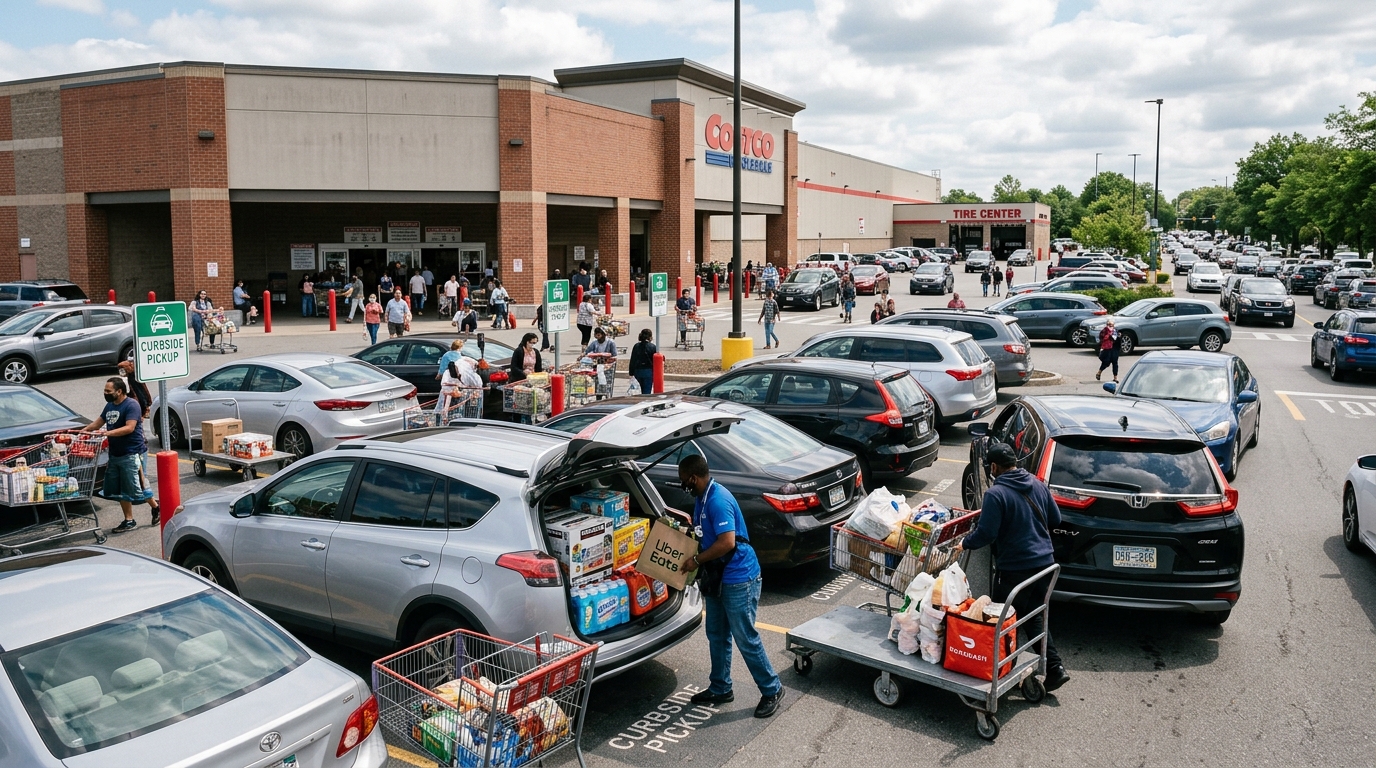
Costco’s decision to expand ultra-fast delivery through DoorDash and Uber is a reminder that even in an environment of weak consumer sentiment, major retailers are still spending to make shopping faster and easier. According to Yahoo Finance, the warehouse club is broadening its delivery partnership footprint with the two delivery platforms, extending a convenience model that has become increasingly important in U.S. retail competition.
For investors, the significance is less about a single delivery feature and more about what it says regarding consumer behavior and margin strategy. When large retailers invest in faster fulfillment, they are responding to evidence that convenience remains a durable factor in how households choose where to spend.
Why this matters beyond Costco
Retail competition has increasingly shifted from price and inventory alone toward a three-part equation: price, availability and speed. Costco has long been associated with value, membership loyalty and bulk shopping. Adding more rapid delivery options through established gig-economy platforms suggests the company sees enough demand for immediate or near-immediate access to justify expanding the model.
That is notable because it comes on the same day that CNBC reported U.S. consumer sentiment remains weak despite what it described as a solid economy. In other words, households may feel pessimistic, but large companies are still acting as though service levels and convenience upgrades can win real spending.
This does not prove that consumers are broadly healthy, nor does it show that delivery economics are easy. But it does indicate that leading retailers believe shoppers remain active enough to compete for in increasingly sophisticated ways.
DoorDash and Uber gain another institutional partner use case
For DoorDash and Uber, the Costco expansion offers another example of how platform delivery services are moving deeper into mainstream retail infrastructure. These companies are no longer only associated with restaurant delivery; they are increasingly embedded in grocery, general merchandise and same-day household purchasing.
That matters for the market because investors often assess platform businesses on their ability to expand beyond their original use cases. Partnerships with a major retailer like Costco can strengthen the case that last-mile delivery is becoming a normalized utility for commerce rather than a niche convenience service.
At the same time, delivery expansion always raises operational and profitability questions. Fast delivery can improve customer engagement, but it can also increase complexity around labor, routing, order batching and fees. The headline as reported by Yahoo Finance does not provide financial targets or expected revenue impact, so any conclusions about profit effects would be premature.
A retail signal in a cautious economy
The broader market angle is that companies are still allocating resources toward customer capture. That tends to support the view that business leaders see enough resilience in the consumer environment to keep investing, even when confidence surveys are soft.
It also suggests that the line between e-commerce and physical retail keeps fading. Costco’s warehouse model is physical by design, yet the delivery relationship with DoorDash and Uber turns that footprint into a distributed fulfillment network. For large retailers, this can help defend relevance against online-first rivals while extending convenience to members who may not want to make every shopping trip in person.
What investors may watch next
Without verified performance data, the immediate market read is thematic rather than numerical. Investors may look for several follow-up indicators over time:
- Customer adoption: whether fast delivery becomes a meaningful engagement tool for Costco members.
- Platform dependence: how much retailers rely on third-party delivery operators versus internal logistics.
- Competitive response: whether rivals escalate their own speed and convenience offerings.
- Margin discipline: whether convenience investments can scale without materially undermining profitability.
According to Yahoo Finance, Costco is expanding rather than testing the concept in isolation, which implies a degree of confidence in demand. Even so, the headline alone does not establish the financial payoff.
A neutral outlook: Costco’s move reinforces that convenience remains a central battleground in retail, and markets will likely judge the strategy on whether stronger customer loyalty outweighs the cost of faster fulfillment.
MarketPro reports are AI-assisted analyses of publicly reported market news. Not investment advice.