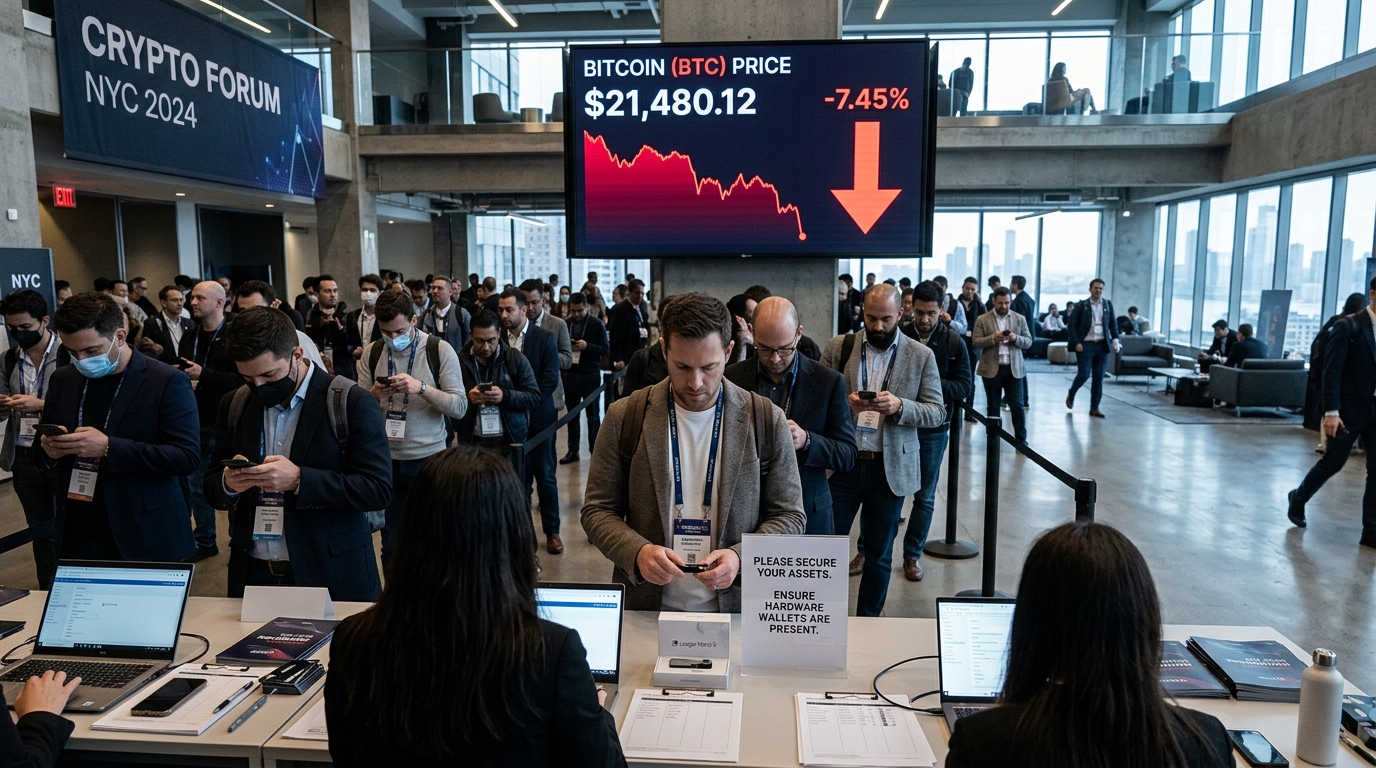
Crypto Story Shifts Toward Institutions and Security

The crypto market narrative is being shaped less by headline price moves and more by a combination of institutional experimentation, enforcement activity and renewed security concerns.
Among the most notable developments, Cointelegraph reported that HSBC and Ant Digital tested AI-agent payments using tokenized deposits. In a separate report, Cointelegraph said the U.S. plans to seize $1 billion in crypto linked to Iran this week, attributing the statement to Scott Bessent. Another Cointelegraph headline said Ledger is investigating fund losses linked to a Southeast Asian reseller and has warned users.
Taken together, these stories suggest that the digital-asset sector is still evolving on two very different tracks: deeper integration with mainstream financial infrastructure, and continued exposure to operational, legal and compliance risk.
Tokenized finance keeps advancing
The HSBC-Ant Digital test stands out because it connects crypto-adjacent infrastructure with established financial institutions. Tokenized deposits differ from more speculative areas of the market because they are usually framed around payments, settlement efficiency and programmable finance rather than volatile trading activity.
Even without detailed transaction metrics in the headline, the involvement of major financial firms matters. It indicates that experimentation with blockchain-based payment rails and digitized liabilities is continuing within regulated or semi-regulated frameworks. For markets, that can be more important over time than short-term token price swings because it speaks to whether distributed-ledger technology is finding practical institutional uses.
Enforcement remains a live risk
At the same time, the headline on a planned U.S. seizure of crypto linked to Iran shows that state scrutiny of digital assets remains intense. Enforcement stories can affect sentiment even when they are targeted and fact-specific, because they reinforce the idea that digital-asset networks are part of broader geopolitical and sanctions enforcement efforts.
That matters for institutional adoption. Banks, asset managers and payment companies may continue building tokenized systems, but they do so in an environment where compliance expectations remain high and politically sensitive use cases draw rapid official attention.
Security and distribution weaknesses are still unresolved
The Ledger-related report adds another layer. According to Cointelegraph, the company is investigating losses tied to a Southeast Asian reseller. Even without a full accounting of the incident in the wire headline, the story underscores a recurring issue in crypto markets: user risk often extends beyond core protocol design to distribution channels, counterparties and basic operational trust.
For the sector, this is important because wallet brands and custody tools play a foundational role in adoption. If users become uncertain about how products are sold, initialized or supported, confidence can be affected far beyond any single reseller case.
What today’s mix says about the market
Today’s crypto headlines imply that digital assets are maturing unevenly. One part of the sector is moving toward institutional payments, tokenized deposits and integration with established finance. Another part remains vulnerable to law-enforcement action, supply-chain weaknesses and user-protection concerns.
That split helps explain why crypto coverage increasingly overlaps with banking, compliance and technology infrastructure rather than existing solely in a speculative corner of markets.
Signals worth watching
- Institutional pilots: whether tokenized deposit tests expand into larger commercial use cases.
- Regulatory posture: whether enforcement actions stay targeted or broaden into wider sector pressure.
- Custody trust: whether wallet and reseller incidents lead to stronger controls and disclosures.
- Market perception: whether investors treat institutional blockchain projects as distinct from token speculation.
Neutral outlook: According to Cointelegraph reports, crypto’s direction today is being set less by trading enthusiasm than by the balance between institutional infrastructure progress and persistent legal and security challenges.
MarketPro reports are AI-assisted analyses of publicly reported market news. Not investment advice.