EU-China trade ties face crunch point as Brussels seeks reset
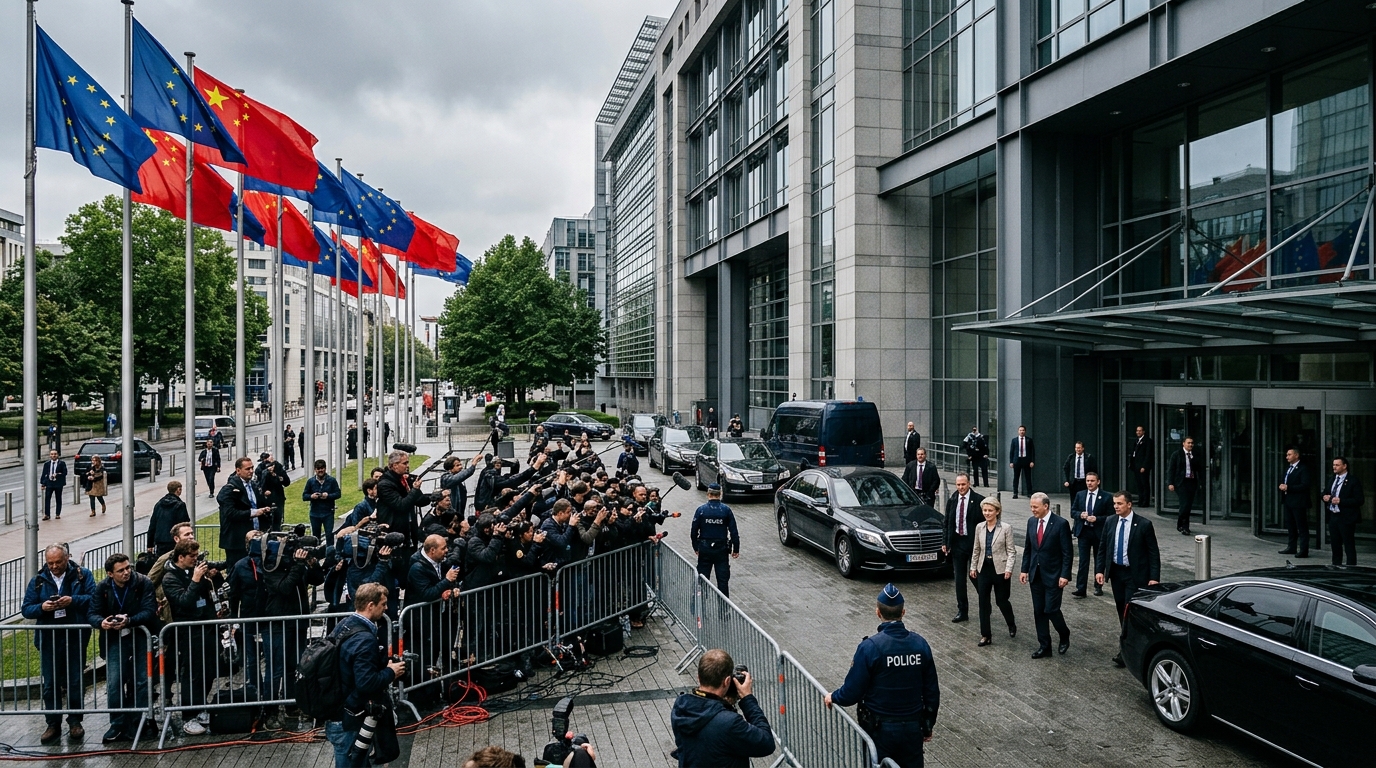
Trade relations between the European Union and China appear to be entering a more difficult phase, with Brussels pressing for what Investing.com described as a push for “rebalancing” in the bilateral economic relationship. While the headline offers limited operational detail, the framing matters for global markets because EU-China trade is central to manufacturing supply chains, industrial competition and the broader outlook for world growth.
The development stands out because it adds a fresh trade-policy risk at a time when investors are already monitoring weaker global growth signals and geopolitical disruptions. A renewed focus on rebalancing suggests European officials are becoming more assertive about market access, industrial policy, or trade asymmetries. Even without a formal policy announcement in the available wire items, that shift alone can influence sentiment around exporters, industrial inputs and multinational earnings.
Why markets may care
The EU and China remain deeply intertwined in goods trade, especially across machinery, autos, chemicals, clean-energy equipment and technology supply chains. If Brussels is signaling a harder line, companies with exposure to cross-border production networks may face more uncertainty over costs, sourcing and market access.
That matters beyond Europe. Any escalation in EU-China trade friction could ripple into shipping demand, commodity consumption and capital-spending plans. Investors have recently shown strong interest in macro and cross-asset stories, and this issue fits that pattern because it touches equities, industrial commodities and the broader economic outlook at once.
The headline also lands against a wider backdrop of global trade strain. Recent reader interest on MarketPro has been strongest for broad market and economy coverage, especially where sovereign and cross-border themes intersect. In that context, a potential turning point in EU-China relations is more relevant than a narrow company-specific development.
What “rebalancing” could mean
Based on the wording cited by Investing.com, Brussels appears focused on changing the terms of economic engagement rather than preserving the status quo. In practice, that can refer to efforts to reduce dependency, secure fairer competitive conditions or respond to perceived imbalances in trade flows.
Because the source headline does not specify policy tools, it would be premature to infer tariffs, quotas or formal retaliatory measures. Still, markets often react before the policy detail is complete. A tougher tone alone can affect expectations for sectors reliant on Chinese demand or on Chinese-made inputs.
Europe’s push also comes at a delicate moment for global manufacturers. Companies have spent years adapting to pandemic disruptions, energy shocks and strategic reshoring trends. Additional friction between two of the world’s largest trading blocs could reinforce a more fragmented commercial environment.
Cross-asset implications
For equities, the immediate watch points are likely to be export-heavy sectors and firms with significant China revenue exposure. For commodities, industrial metals and energy markets can become sensitive if traders believe trade frictions will alter manufacturing momentum. For currencies, any sign that trade flows or growth expectations are being repriced could filter into views on the euro and on broader risk appetite, though the available headlines do not yet establish a direct FX move.
The bigger issue is confidence. Markets tend to tolerate trade disputes better when growth is strong. They become more reactive when policy friction appears during an already fragile macro phase. That is why even a relatively sparse headline on EU-China relations can still deserve attention: it raises the possibility of another source of drag on business activity.
What to watch next
Investors will need more detail before drawing firm conclusions. Key questions include:
- Scope: whether Brussels is targeting a broad trade reset or specific sectors.
- Timing: whether talks are nearing a deadline or remain exploratory.
- Response: whether Chinese officials signal compromise or resistance.
- Spillover: whether companies begin warning about sourcing, sales or capital spending.
For now, the headline from Investing.com is best read as an early warning that one of the world’s most important commercial relationships may be entering a more contested phase. That alone is enough to keep the issue on the market’s radar.
Neutral outlook: Until policymakers provide clearer details, the market impact is likely to be driven more by tone and expectations than by immediate economic changes, but the story could become materially more important if negotiations harden.
MarketPro reports are AI-assisted analyses of publicly reported market news. Not investment advice.