Global Markets Daily Brief — October 10, 2026
Global markets entered October 10 with investors balancing sector-specific shocks against a still-fragile cross-asset backdrop. Based on the day’s wire headlines, the most visible themes were pressure on telecom shares from SpaceX-related disruption concerns, renewed scrutiny of technology demand in semiconductors and smartphones, weather-linked risks to U.S. energy supply, and a crypto market trying to absorb both regulatory and operational developments.
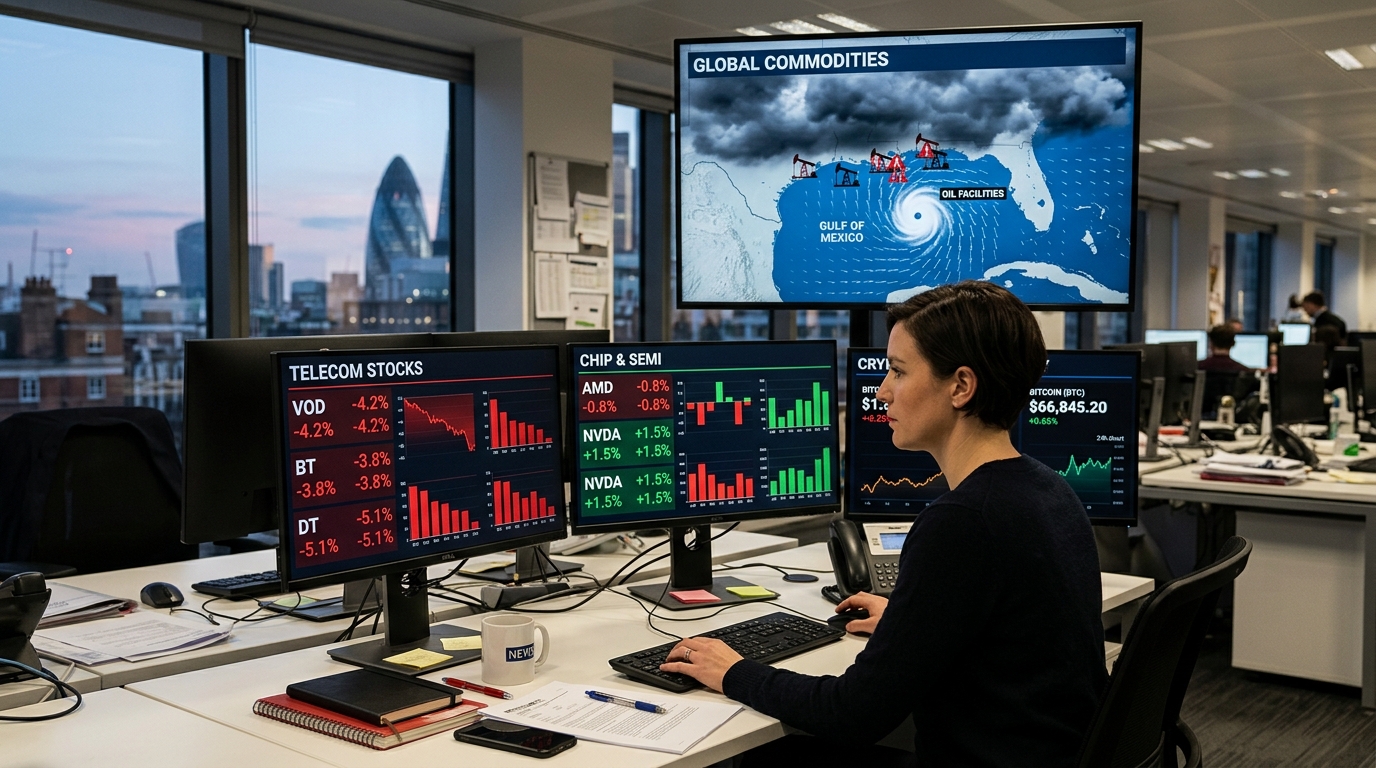
In equities, telecoms stood out as one of the clearest pressure points. CNBC reported that Verizon suffered its worst day since 2002 as SpaceX’s U.S. network plans hit cell-provider stocks, while MarketWatch separately said Wall Street was assessing the growing SpaceX threat to AT&T, Verizon and T-Mobile. Investing.com also reported that U.S. and European telecom stocks slid as a SpaceX spectrum deal rattled the sector. Taken together, those reports point to a broad repricing of competitive risk rather than an isolated one-day move in a single name.
Technology shares offered a more mixed picture. On one hand, MarketWatch said AI chip stocks were wobbling even as investors gained clarity on a key OpenAI issue, suggesting that valuation sensitivity remains high across the AI trade. On the other, CNBC highlighted two massive trades in Micron and Nvidia, underscoring how actively institutions are still positioning around semiconductor leadership. Elsewhere in big tech, MarketWatch reported that Microsoft is nearing a major milestone that reinforces its revival narrative, while it also said Apple is reportedly cutting component orders for the iPhone 18, raising questions about hardware demand.
In commodities, energy traders were watching supply risks in the Gulf of Mexico. CNBC reported that Hurricane Isaias disrupted U.S. oil production and threatened refineries. While storm-driven supply stories can be temporary, they matter because they affect both crude output and downstream fuel processing. The day’s headlines also kept diesel supply and geopolitics in view: MarketWatch reported that President Donald Trump had turned to Russia to boost global diesel supplies ahead of the midterms, while CNBC separately reported that a Trump diesel agreement with Vladimir Putin was being accused of conflicting with Russia sanctions law. Those reports show how energy markets remain entangled with policy risk.
Cross-asset signals remain mixed
Credit and household balance-sheet stress were also part of the macro background. CNBC reported that Americans’ debt problems are flashing a warning not seen since the Great Recession, while another CNBC headline said junk bonds are “flashing yellow.” Although those are different corners of the credit system, together they reinforce the idea that investors are watching financing conditions more closely even as major equity benchmarks remain driven by megacap and AI narratives.
Crypto markets, meanwhile, were shaped less by broad directional enthusiasm and more by infrastructure, legal and policy developments. Cointelegraph reported that Bitcoin was consolidating near $82,500 as the market weathered Ledger theft reports. The same outlet also reported that HSBC and Ant Digital were testing AI-agent payments using tokenized deposits, pointing to continued experimentation by established financial institutions. In U.S. policy, Cointelegraph cited CNBC in reporting that Blockchain.com is pursuing CFTC approval for prediction markets, while it also reported that New York permanently barred Celsius founder Alex Mashinsky in a fraud settlement.
What forex traders may be watching
There were no major standalone foreign-exchange headlines in the wire set, but currency markets are still likely to be influenced by the same forces moving other asset classes: energy supply concerns, telecom and technology sector repricing, and U.S. policy uncertainty around sanctions and trade-sensitive commodities. In practice, forex investors often read these developments through their implications for inflation expectations, risk appetite and rate-sensitive positioning.
Main market themes from the wires
- Telecom disruption: confirmed across CNBC, MarketWatch and Investing.com.
- Tech divergence: pressure in some AI and smartphone-linked names, but ongoing institutional activity in semiconductors.
- Energy sensitivity: storm disruption and diesel-policy headlines kept fuel markets in focus.
- Credit caution: household debt strain and junk-bond warning signs added a macro risk layer.
- Crypto transition: prices held relatively steady while regulation, security and market-structure news accumulated.
The short neutral outlook: investors appear to be navigating a market where sector shocks matter as much as macro trends, with energy, credit and competitive disruption likely to remain central near-term themes.
MarketPro reports are AI-assisted analyses of publicly reported market news. Not investment advice.