UN Trade Body Warns Global Growth to Slow in 2026
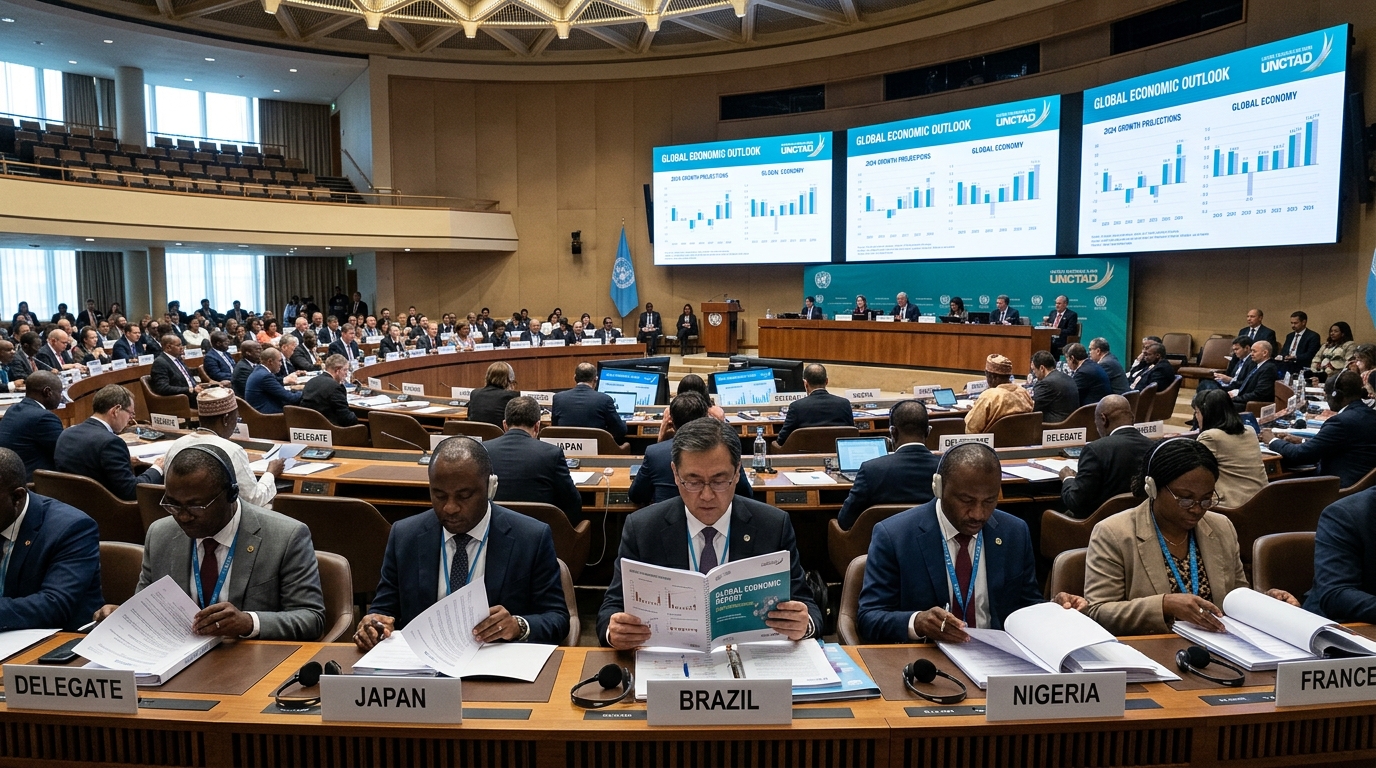
Global economic growth is expected to slow to 2.6% in 2026, according to Investing.com, citing the United Nations trade body. The forecast adds to a cautious picture for the world economy, with policymakers and investors facing a weaker expansion backdrop even as they continue to navigate inflation, trade friction and uneven regional demand.
For markets, a lower global growth forecast is more than a headline statistic. It shapes expectations for corporate earnings, commodity demand, capital flows and central-bank room to maneuver. While the new outlook does not by itself imply a recession, it points to a softer environment in which economies may find it harder to generate momentum without policy support or a rebound in trade activity.
Why the 2026 forecast matters
The world economy has been adjusting to several overlapping pressures: high financing costs in many major markets, trade fragmentation, geopolitical risk and softer manufacturing activity in some regions. A 2.6% growth figure, as reported by Investing.com from the UN trade body, suggests these headwinds are still proving difficult to overcome on a broad basis.
Slower global growth tends to matter most in three areas. First, it can pressure cyclical sectors that depend on industrial production, exports and consumer confidence. Second, it can weigh on countries that rely heavily on commodity exports if softer activity reduces raw-material demand. Third, it can reinforce caution among businesses considering cross-border investment or supply-chain expansion.
At the same time, the impact is rarely uniform. Some economies may still outperform due to domestic demand, fiscal policy or sector-specific strength, particularly in technology and services. But the aggregate message from a lower global forecast is that the external environment is becoming less supportive.
Trade and investment implications
Because the warning comes from a UN trade body, investors are likely to pay particular attention to what it may imply for trade flows and business investment. A cooler growth trajectory often coincides with weaker import demand and more selective capital spending. That can have knock-on effects for shipping, logistics, industrials and export-oriented markets.
It may also sharpen the market’s focus on policy responses. If global growth slows while inflation pressures continue to ease, central banks in some economies may have greater flexibility to support activity. But if inflation remains sticky in key regions, authorities could face a more difficult trade-off between supporting growth and preserving price stability.
In financial markets, slower world growth can strengthen demand for defensive positioning, especially in high-quality sovereign debt and less cyclical equity sectors. It can also revive concerns about earnings sensitivity in internationally exposed industries.
What investors will be watching next
- Trade data: Export and import trends will help show whether the forecast is feeding into real-economy weakness.
- Corporate guidance: Multinational companies may offer early signals on demand softness across regions.
- Commodity demand: Energy and industrial metals markets often reflect shifts in the global growth pulse.
- Policy reaction: Central-bank and fiscal responses will shape how much of the slowdown reaches asset prices.
The forecast reported by Investing.com does not settle the outlook for every region or asset class, but it does reinforce a more cautious macro backdrop at the global level. The neutral outlook is that markets may increasingly differentiate between economies and sectors that can withstand slower growth and those that remain more exposed to trade and demand weakness.
MarketPro reports are AI-assisted analyses of publicly reported market news. Not investment advice.