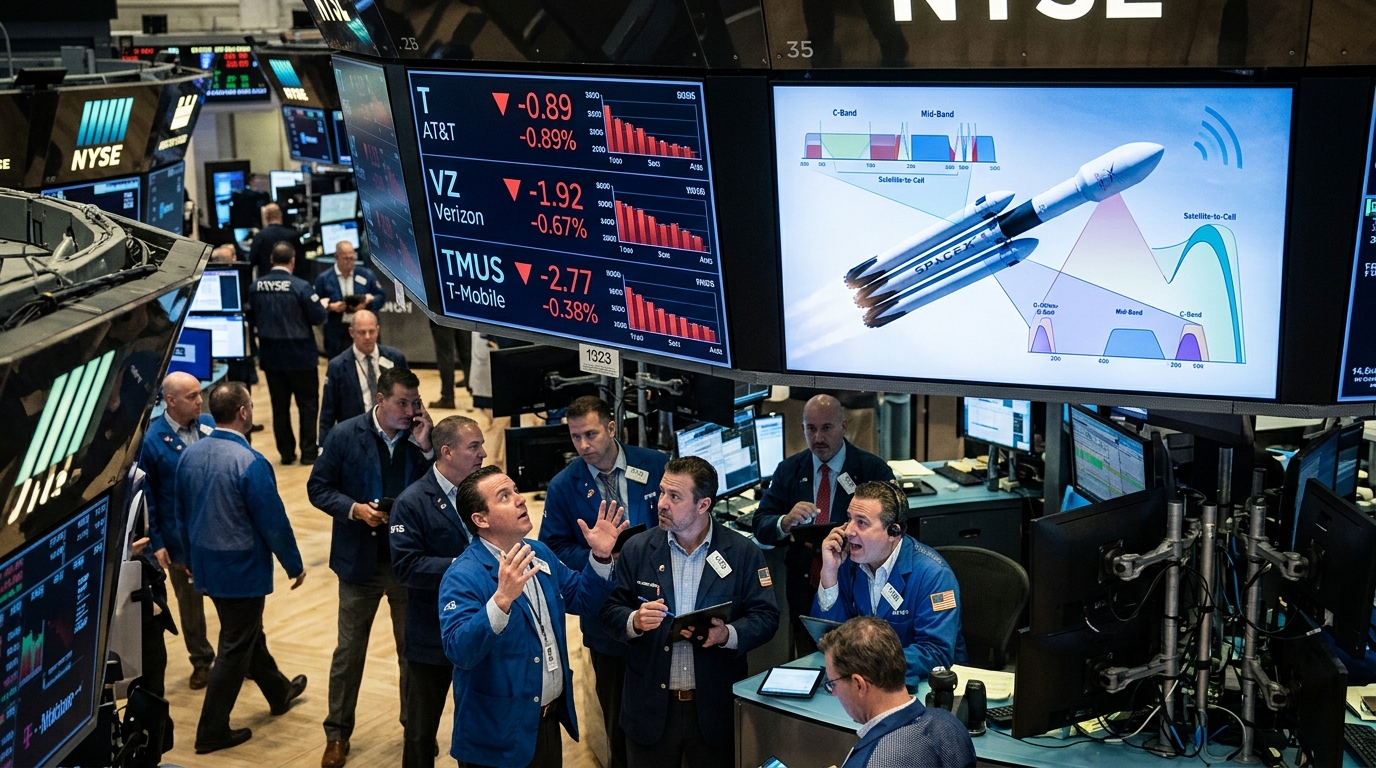
AI Stocks Slide as OpenAI Revenue Report Hits Sentiment
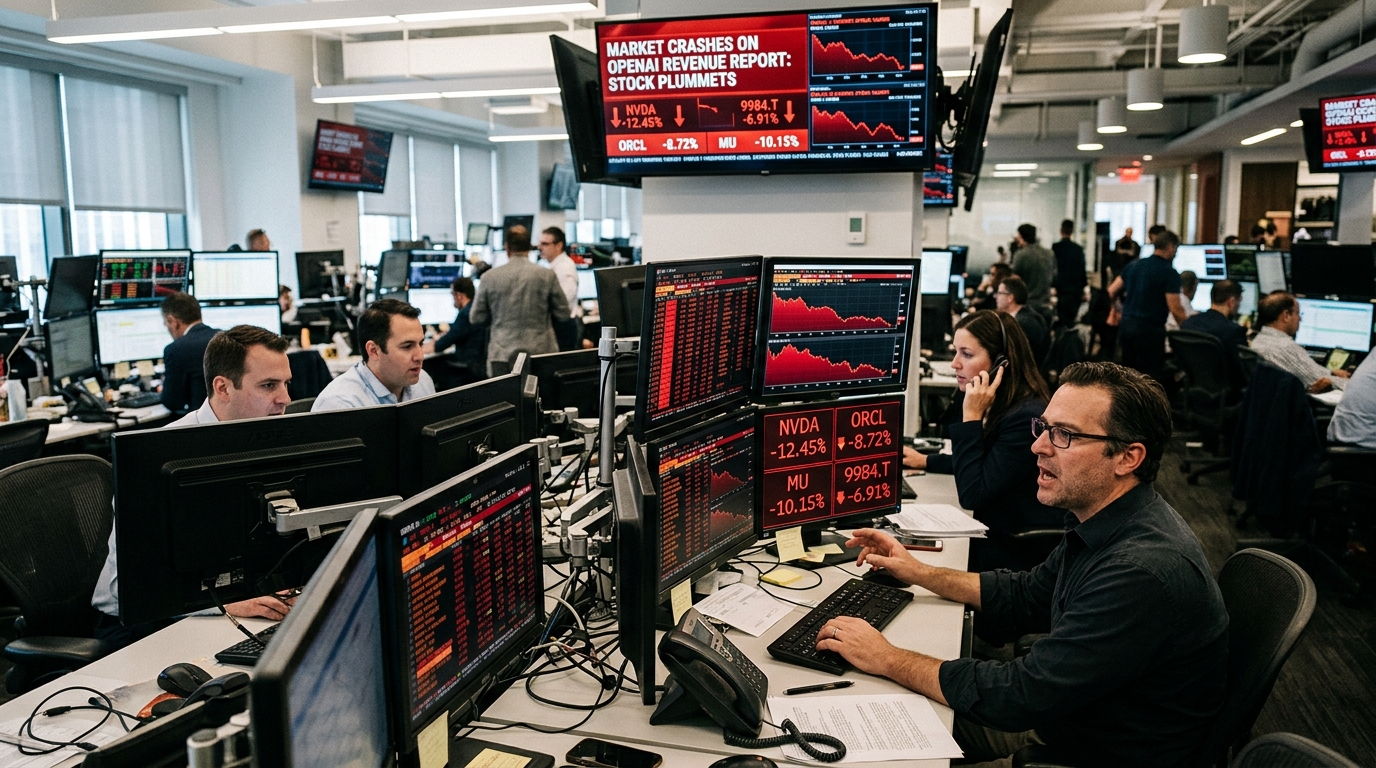
AI-linked stocks came under renewed pressure Friday, with several major names falling after investors reacted to a report about OpenAI’s revenue outlook. The move stood out because it was reflected across multiple regions and across several parts of the AI supply chain, from chipmakers to software and infrastructure names.
CNBC reported that Nvidia, Oracle, CoreWeave and other AI stocks sank on the OpenAI revenue report. MarketWatch separately said Micron, Nvidia and other AI chip stocks fell as the report caused what it described as “undue concern.” Investing.com added that SoftBank shares slid as the OpenAI revenue report dented AI optimism, and also noted steady U.S. stock futures after a Nasdaq decline linked to those concerns.
When three outlets point to the same catalyst across U.S. and Asian names, the market signal becomes harder to dismiss as normal volatility. The price action suggests investors were reassessing expectations embedded in one of the market’s strongest themes: that demand for AI products and services will remain powerful enough to support elevated valuations across a broad ecosystem of beneficiaries.
Why this hit more than one company
The reaction did not stay confined to a single stock because AI has become a tightly connected market narrative. Nvidia is often treated as a proxy for AI infrastructure demand. Oracle has been viewed as a cloud and enterprise beneficiary of AI buildout. CoreWeave is tied to AI compute demand, while Micron is connected through memory and data-center exposure. SoftBank, meanwhile, is frequently traded as a broader technology and AI-ecosystem expression.
That means a revenue-related concern around one highly visible AI platform can spill over quickly into companies seen as supplying the entire stack. The market appears to be asking whether near-term expectations had become too aggressive, especially after an extended rally in AI-linked shares globally.
MarketWatch’s framing is notable here. By saying the OpenAI report caused “undue concern,” it implied some analysts may see the reaction as disproportionate. But the fact that selling still spread suggests investors were eager to reduce exposure first and debate valuation nuance later.
Firmus withdrawal adds to the caution
The more cautious mood around AI was reinforced by another headline in the sector. CNBC reported that Nvidia-backed Australian AI firm Firmus withdrew what it called a historic IPO, citing market volatility. Investing.com likewise said Firmus scrapped a $5 billion Australian IPO on poor demand.
That second, separately sourced story matters because it broadens the issue beyond listed share performance. If a high-profile AI-linked IPO is being pulled amid volatility and weak demand, it suggests investors may be becoming more selective not only in public-market valuations but also in new issuance tied to the same theme.
IPO withdrawals are not unusual in choppy markets, but in this case the symbolism is significant. For much of the recent AI rally, investor appetite appeared deep enough to support both incumbents and new entrants. A withdrawn offering indicates the financing backdrop may no longer be uniformly supportive, at least for now.
Sentiment reset, not necessarily a thesis reversal
It is important not to overstate what the headlines prove. None of the provided reports says the long-term AI investment case has broken down. Instead, the evidence supports a narrower conclusion: the market is repricing near-term confidence after a report on OpenAI revenue unsettled assumptions, and that repricing has reached both established leaders and adjacent names.
The distinction matters. Markets often move from thematic enthusiasm to scrutiny without abandoning the core secular trend. Investors can remain positive on AI’s long-term commercial role while still questioning whether all publicly traded beneficiaries deserve the same valuation premium at the same time.
The broad spread of the declines also underscores how concentrated market leadership has become in AI-related sectors. When sentiment shifts even slightly, highly correlated names can all trade lower together regardless of differences in business models, profitability or geographic exposure.
What markets may watch next
Based strictly on the wire, the next issue is whether the current weakness remains contained to AI-linked names or starts to affect wider equity leadership. Investing.com’s note about steady U.S. stock futures hints that the broader market was not in full retreat, even as the Nasdaq-linked AI cohort absorbed fresh selling pressure.
That leaves room for two interpretations: either this is a sector-specific reset after a crowded trade became vulnerable, or it is an early sign that one of the market’s most important growth narratives is becoming less resilient to disappointment.
Neutral outlook: For now, the strongest conclusion supported by the headlines is that AI equities are undergoing a sentiment check, with the OpenAI revenue report and the Firmus IPO withdrawal reinforcing a more selective tone toward one of the market’s most crowded themes.
MarketPro reports are AI-assisted analyses of publicly reported market news. Not investment advice.