Global Markets Daily Brief — October 09, 2026
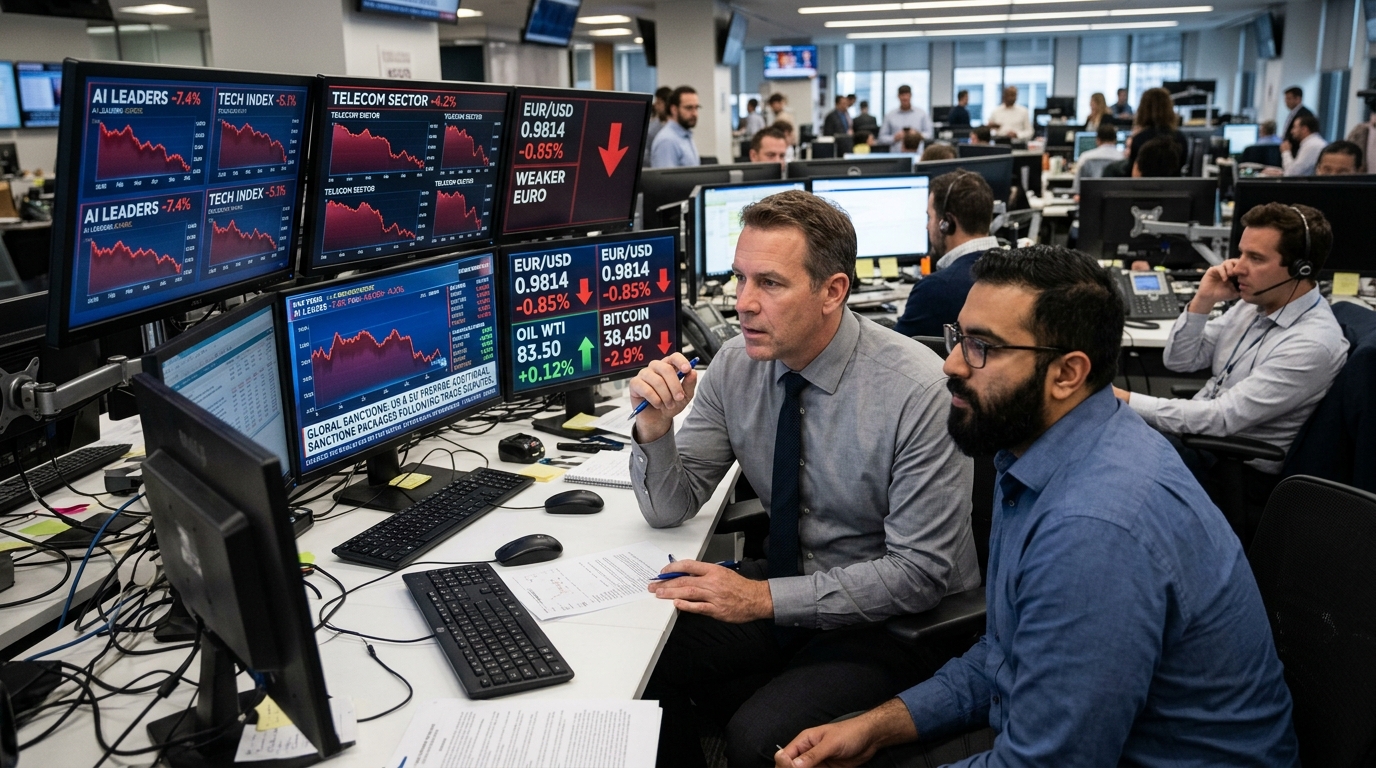
Global markets opened October 9 with a mixed but clearly risk-aware tone, as investors weighed pressure on artificial-intelligence names, a fresh competitive threat to major U.S. wireless carriers, lower Treasury yields after recent highs, and a steady stream of crypto and tokenization headlines.
Across equities, one of the clearest themes was renewed weakness in AI-linked stocks. CNBC reported that Nvidia, Oracle, CoreWeave and other AI names fell after an OpenAI revenue report unsettled sentiment, while MarketWatch separately said Micron, Nvidia and other AI chip stocks declined on the same development, describing the reaction as concern around OpenAI’s revenue trajectory. Investing.com also pointed to softer AI optimism, noting that SoftBank shares slid and U.S. stock futures were steady after a Nasdaq decline tied to the OpenAI-related headlines.
The selloff was notable because it spread beyond a single company and into the broader AI complex. That matters for global markets because AI-linked megacaps and suppliers have been central to equity leadership for an extended period. When several outlets independently frame the same catalyst as weighing on the sector, investors tend to read it as a broader sentiment reset rather than isolated profit-taking.
Telecom disruption broadens beyond a single stock move
Another important cross-market story came from telecoms. CNBC reported that a SpaceX deal to acquire spectrum licenses hit AT&T, Verizon and T-Mobile shares, and MarketWatch similarly said Starlink Mobile plans were pressuring AT&T and Verizon. Investing.com also described SpaceX as taking aim at U.S. wireless carriers through the spectrum acquisition.
That combination of reports suggests investors are treating the development as more than a routine transaction. Instead, the market appears to be repricing competitive risk for incumbent carriers if satellite-based mobile connectivity becomes more commercially relevant. Because telecom stocks are often held for defensive income and stability characteristics, a technology-led threat can ripple beyond the sector itself and affect broader positioning in lower-volatility equities.
Forex focus shifts back to the euro
In currencies, the most direct headline came from Investing.com, which said the euro was headed toward a fifth straight weekly decline, though selling pressure had slowed. There was no matching forex-specific confirmation from another outlet in the wire set, so the move should be treated cautiously. Even so, it fits a broader backdrop in which dollar strength has remained a dominant theme in recent sessions.
For macro investors, the significance is less about one day’s price action than about persistence. A multiweek euro slide, if sustained, feeds into global allocation decisions, imported inflation debates and earnings translation effects for multinational companies. With readers showing strong interest in cross-asset daily briefs, forex remains central to the market narrative even when headlines are thinner than in stocks or commodities.
Commodities and crypto stay tied to geopolitics
On the commodities side, geopolitics remained in focus. CNBC reported that the U.S. Treasury sanctioned 17 tankers linked to Iran’s so-called shadow fleet in an economic pressure campaign. In crypto, Cointelegraph said bitcoin neared a three-week low as oil moved higher on concerns tied to an Iran strike. While those are different asset classes, the connection is clear: geopolitical tension is feeding both energy sensitivity and a more cautious tone in risk assets.
Meanwhile, tokenization remained a structural theme. CNBC reported that tokenization could unlock tens of billions of dollars in trapped capital, according to Nasdaq CEO Adena Friedman. But that optimism was balanced by a cautionary note from Cointelegraph, which said the IMF warned tokenized markets could amplify financial risks. Taken together, the headlines show a market still enthusiastic about digital-asset infrastructure, while policymakers and international institutions remain focused on stability concerns.
Rates offer some relief, but not a full pivot signal
Fixed-income headlines suggested a modest easing in pressure rather than a decisive turn. CNBC reported that Treasury yields were lower after reaching multiyear highs, while another CNBC item cited a new advisor to Treasury Secretary Bessent saying yields were “really, really high” but could come down soon. Because those headlines overlap with recent site coverage and are not broadly confirmed elsewhere in the wire, they look more like a background stabilizer than today’s lead market driver.
Neutral outlook: The market picture at the start of October 9 is one of selective risk reduction rather than broad capitulation: AI stocks are under pressure, telecom incumbents face a new disruption narrative, the euro remains soft, and geopolitics is keeping oil and bitcoin sensitive to headlines.
MarketPro reports are AI-assisted analyses of publicly reported market news. Not investment advice.