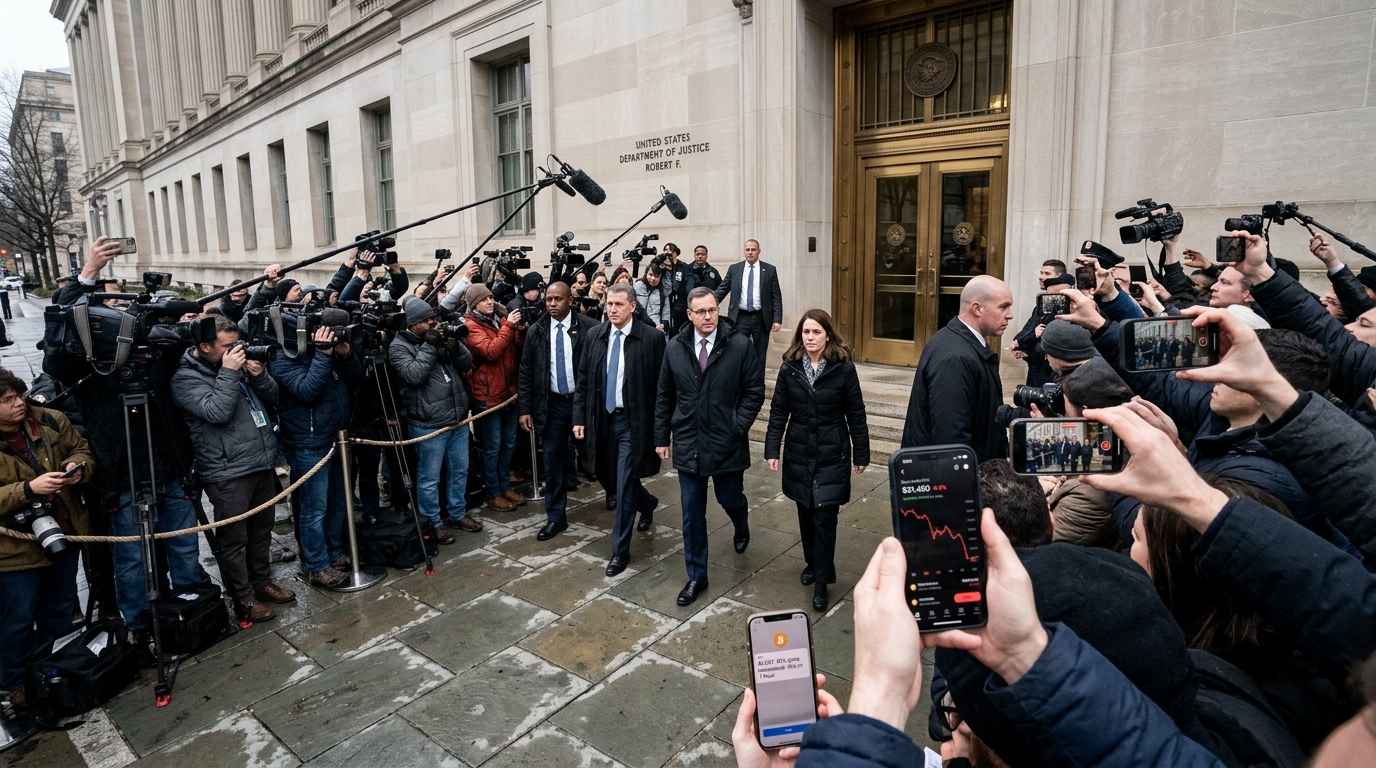
Mashinsky ban adds to U.S. crypto enforcement pressure
Crypto markets are again being shaped as much by regulation and enforcement as by price action, with a new settlement involving Celsius founder Alex Mashinsky adding to a growing list of legal and supervisory developments.
According to Cointelegraph, New York has permanently barred Mashinsky in a $35 million fraud settlement. The case is significant not only because of Celsius’s central role in the last major crypto credit cycle, but also because it reinforces a broader regulatory message: authorities are still pursuing accountability tied to the sector’s earlier failures.
The development comes alongside several other enforcement- and oversight-related headlines in digital assets. Cointelegraph also reported that U.S. officials plan to seize $1 billion in crypto linked to Iran this week, citing Scott Bessent, while CNBC, cited by Cointelegraph, reported that Blockchain.com is pursuing CFTC approval for prediction markets. Taken together, these stories point to a market where the legal perimeter is still being defined in real time.
Why the Mashinsky case still matters
Celsius was one of the most visible collapses of the crypto lending boom. As a result, actions tied to its founder still resonate across the industry. A permanent bar from New York, one of the most important financial jurisdictions in the U.S., is not just a personal legal setback. It also serves as another signal that regulators remain focused on conduct, disclosures and consumer protection in crypto-related businesses.
For market participants, the importance is less about immediate pricing in a single token and more about the broader operating environment. Enforcement actions can affect how platforms market products, how executives communicate risk, and how institutions evaluate counterparties.
A market split between adoption and enforcement
What makes the current crypto backdrop notable is that enforcement pressure is increasing even as parts of the industry continue to push toward deeper financial integration.
On one side, according to Cointelegraph, HSBC and Ant Digital are testing AI-agent payments using tokenized deposits. That points to continued experimentation by established financial players with blockchain-based systems. Cointelegraph also reported that wealthy investors are buying crypto, though their advisers remain cautious. Those are signs that interest in digital assets has not disappeared.
On the other side, the sector is still dealing with security and legal strains. Cointelegraph reported that Ledger is investigating fund losses linked to a Southeast Asian reseller and warned users, while THORChain’s executive accused Tether of temporarily freezing USDT vaults. Even without resolving the claims behind each case, the headlines reinforce an old challenge for crypto: adoption may be expanding, but trust and operational resilience are still under constant test.
What this means for market structure
The latest headlines suggest the crypto market is moving into a more institutional phase, but not a frictionless one. In that phase, legitimacy may depend less on broad narratives about innovation and more on licensing, controls, settlement integrity and legal accountability.
That is where the Mashinsky settlement fits. It is part of the market-structure story because high-profile enforcement can shape policy priorities, compliance costs and investor confidence. It may also strengthen the case for firms seeking regulated pathways, such as exchange approvals or more clearly supervised product lines.
According to Cointelegraph reports, the week’s crypto news flow spans enforcement, sanctions-linked asset seizures, platform oversight and institutional experiments with tokenized money. That mix suggests digital-asset markets are increasingly being judged by standards closer to those used in mainstream finance.
What to watch next
Investors are likely to keep tracking two parallel trends: whether institutional adoption continues through regulated channels, and whether new enforcement steps create caution around centralized platforms, lending products and token distribution models.
If those two forces advance at the same time, crypto could become more integrated into traditional finance while also becoming less tolerant of the practices that defined earlier boom periods.
Neutral outlook: The Mashinsky settlement adds to a steady drumbeat of legal scrutiny, underscoring that crypto’s next phase may depend as much on regulation and operating controls as on demand for digital assets themselves.
MarketPro reports are AI-assisted analyses of publicly reported market news. Not investment advice.