Fed minutes keep hike bias, but timing stays uncertain
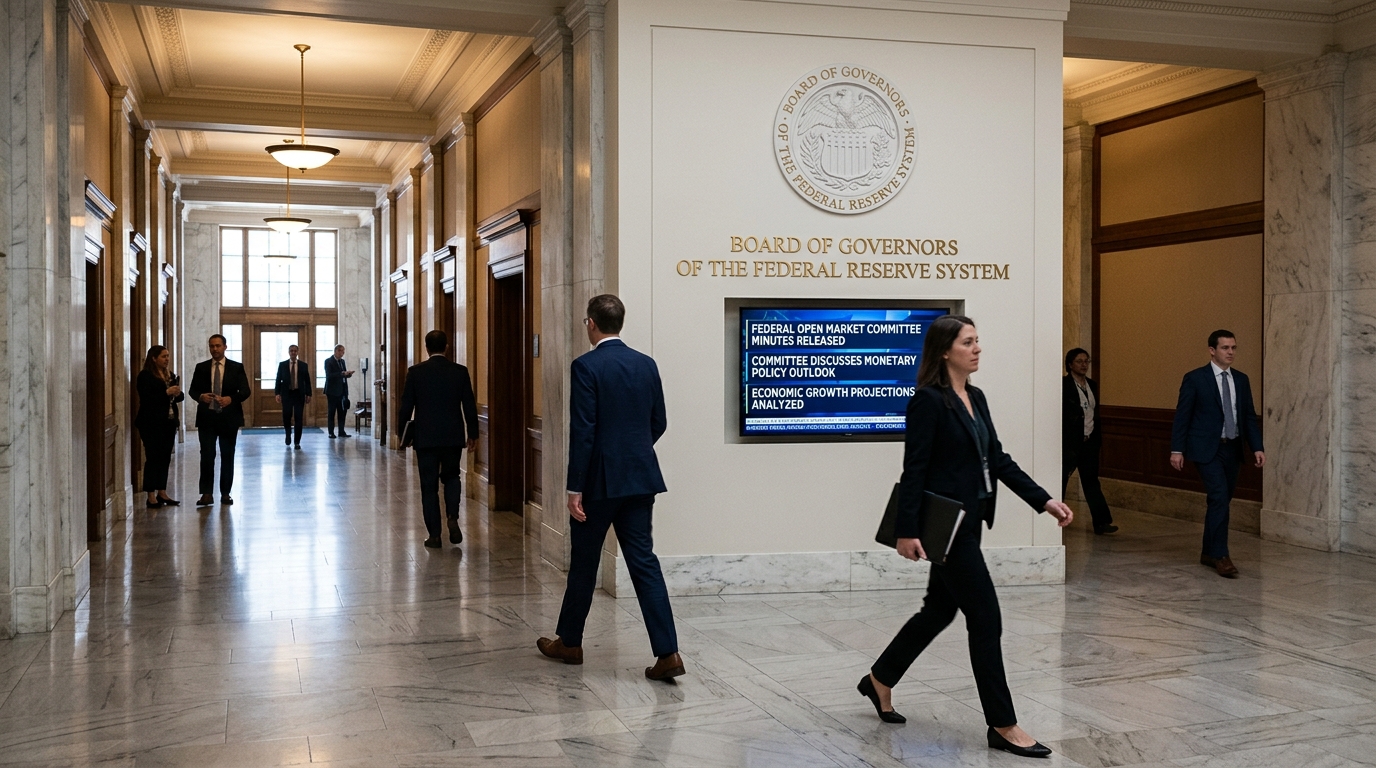
Federal Reserve officials still saw another interest-rate increase as possible at their latest policy meeting, but the minutes offered little guidance on when such a move might happen. That was the common takeaway in reports from CNBC and MarketWatch, which both highlighted a cautious central bank that has not fully ruled out tightening but is not signaling an imminent sequence of hikes.
According to CNBC, the minutes showed policymakers continued to see upside inflation risks and believed an additional increase could be warranted if incoming data failed to cooperate. MarketWatch similarly reported that the record of the meeting showed no appetite for a series of rate hikes, suggesting officials remain focused on optionality rather than a preset path.
Why the minutes matter now
The release lands at a delicate point for global markets. U.S. Treasury yields have been near multi-decade highs, financial conditions have tightened, and investors have been trying to judge whether the Fed still leans toward another move or has effectively shifted into an extended holding pattern.
The minutes did not appear to settle that debate decisively. Instead, they reinforced an already familiar message: policy is restrictive, inflation progress remains uneven, and officials want flexibility. That keeps markets highly sensitive to upcoming inflation, labor-market and growth data.
For investors and policymakers abroad, that ambiguity matters almost as much as the policy stance itself. A Fed that keeps the door open to one more hike can continue to support elevated U.S. yields and a firm dollar, even if it does not act immediately. That can tighten financial conditions beyond the United States, particularly for rate-sensitive assets and economies exposed to dollar funding.
Market reaction focused on restraint, not urgency
The tone described by both CNBC and MarketWatch suggests markets may read the minutes as hawkish in principle but restrained in practice. The distinction is important. Officials did not appear ready to endorse a renewed tightening campaign, but neither did they indicate confidence that inflation risks had fully faded.
That balance helps explain why the minutes can support a “higher for longer” interpretation without necessarily sparking expectations for rapid additional hikes. In effect, the Fed is signaling that the burden of proof remains on the data.
MarketWatch’s characterization that there was no appetite for a series of hikes is especially significant because it pushes back against fears that one strong inflation print or one resilient jobs report would automatically trigger a broader tightening cycle. Instead, the minutes point to a central bank still trying to calibrate how much of the inflation fight is being handled by existing policy restraint and how much more, if any, might be required.
What this means for broader markets
The message has several implications across asset classes:
- Bonds: Treasury markets are likely to remain highly reactive to economic releases, since the minutes preserved uncertainty rather than removing it.
- Equities: Stocks may welcome the absence of urgency around further hikes, but elevated yields still pose a challenge to valuations.
- Dollar-linked assets: Any perception that the Fed remains more restrictive than peers can continue to support the dollar and pressure global liquidity conditions.
The minutes also reinforce a larger policy reality: the Fed is not yet ready to communicate a clean pivot. Even if many officials believe the current stance is already restrictive, they appear unwilling to close off the possibility of another move while inflation risks remain unresolved.
A policy signal built on patience
What stands out most is the Fed’s emphasis on patience rather than acceleration. According to CNBC and MarketWatch reports, policymakers continue to acknowledge inflation concerns, but the minutes did not point to a near-term timetable for action. That leaves the central bank in a wait-and-see posture at a time when markets are craving clarity.
For global investors, this means the policy debate is less about whether the Fed is still hawkish in theory and more about how high the bar is for another hike in practice. The answer remains uncertain.
Neutral outlook: The minutes keep the possibility of another rate increase alive, but without a clear timing signal. That suggests markets will remain driven by incoming data and Fed communication rather than by any firm policy commitment revealed in the minutes.
MarketPro reports are AI-assisted analyses of publicly reported market news. Not investment advice.