AI Biology Push Gains Backing From U.S. and Big Tech
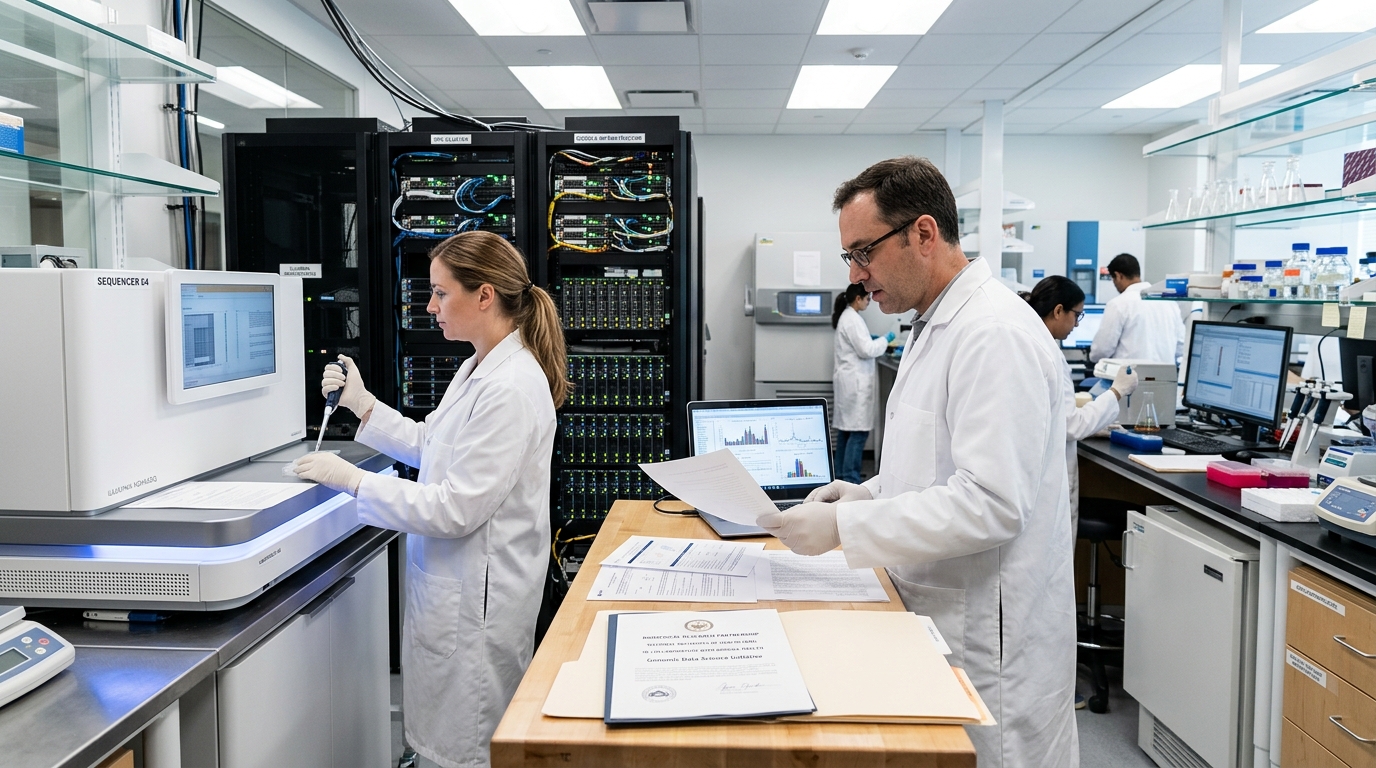
A new $1.8 billion push to build AI biology data infrastructure is bringing together the U.S. government, Google and the Zuckerberg-backed Biohub, according to Investing.com. The initiative points to a larger market theme: the race for artificial-intelligence leadership is expanding beyond consumer software and chips into strategically valuable scientific data.
For markets, that matters because data infrastructure is becoming a core competitive asset in AI. While investors have spent much of the past year focused on models, cloud capacity and semiconductor supply, biology and health data represent another frontier where scale, access and computing power can create long-term advantages.
Why this story matters for investors
The reported size of the effort suggests that AI deployment in life sciences is moving deeper into the infrastructure phase. That can have implications for multiple sectors, including cloud providers, chipmakers, biotech tools firms and research software companies.
Unlike consumer-facing AI products, biology-focused systems depend heavily on large, structured datasets that can be used in research, diagnostics and drug discovery. A coordinated push involving public institutions and major technology backers may also reinforce the idea that certain AI capabilities are now being treated as strategic national assets rather than purely commercial products.
According to Investing.com, the participants include both public and private actors, underlining how government-backed research ecosystems and large technology platforms are increasingly intersecting. That trend could affect where capital flows next within the AI trade.
From apps and chips to research infrastructure
The story also fits with a broader shift in the AI narrative. Recent headlines have often centered on which assistant, app or model is gaining user traction. But infrastructure remains the foundation of the sector’s economics.
That dynamic appears elsewhere in today’s technology coverage. MarketWatch reported that SpaceX is reportedly exploring a major borrowing effort tied to purchasing Nvidia chips, while another MarketWatch report said AMD Chief Executive Lisa Su plans to invest “tens of billions” as her Asia tour addresses supply-chain chokepoints. Although those reports concern different companies and were not framed as part of the same initiative, they reinforce the same broad market reality: advanced AI development increasingly depends on capital-intensive access to computing, supply chains and specialized datasets.
In that context, a biology-data initiative backed by government and major technology organizations may be read as part of the next layer of AI competition. The strategic edge may come not only from algorithms, but from who controls the best domain-specific data and the computing systems needed to use it.
Policy and market structure angles
The participation of the U.S. government adds a policy dimension. Public backing can help de-risk long-horizon scientific projects that may not produce immediate commercial returns but could become economically important over time. It can also encourage standard-setting around how sensitive biological data are collected, stored and used.
For equity markets, that creates a more nuanced AI story than simple momentum around consumer applications. Companies tied to scientific computing, lab automation, data management and specialized infrastructure could gain more attention if investors begin to look beyond headline chatbot adoption and toward the physical and informational backbone of AI.
At the same time, this is not yet a story about immediate revenue outcomes. The headline supports the view that investment commitments are accelerating, but not any firm conclusion about which listed companies will capture the largest commercial benefit. What it does show is where institutional backing is going.
What to watch next
Key questions for markets will include:
- Implementation: how quickly the initiative translates into usable scientific datasets and research platforms.
- Spillover: whether related demand rises for cloud computing, accelerated hardware and lab technology.
- Policy framework: how regulators and public institutions approach access, privacy and standards.
A neutral outlook is that the initiative strengthens the case for AI as a long-cycle infrastructure story, with biology emerging as an important strategic domain to watch alongside chips, cloud capacity and enterprise software.
MarketPro reports are AI-assisted analyses of publicly reported market news. Not investment advice.