Anduril Navy Deal Puts Defense Supply Chain in Focus
Anduril’s latest U.S. Navy contract is drawing market attention not only because of its size, but because it underscores a broader issue investors have been watching across the defense sector: whether the United States can expand industrial capacity fast enough to support long-cycle military programs.
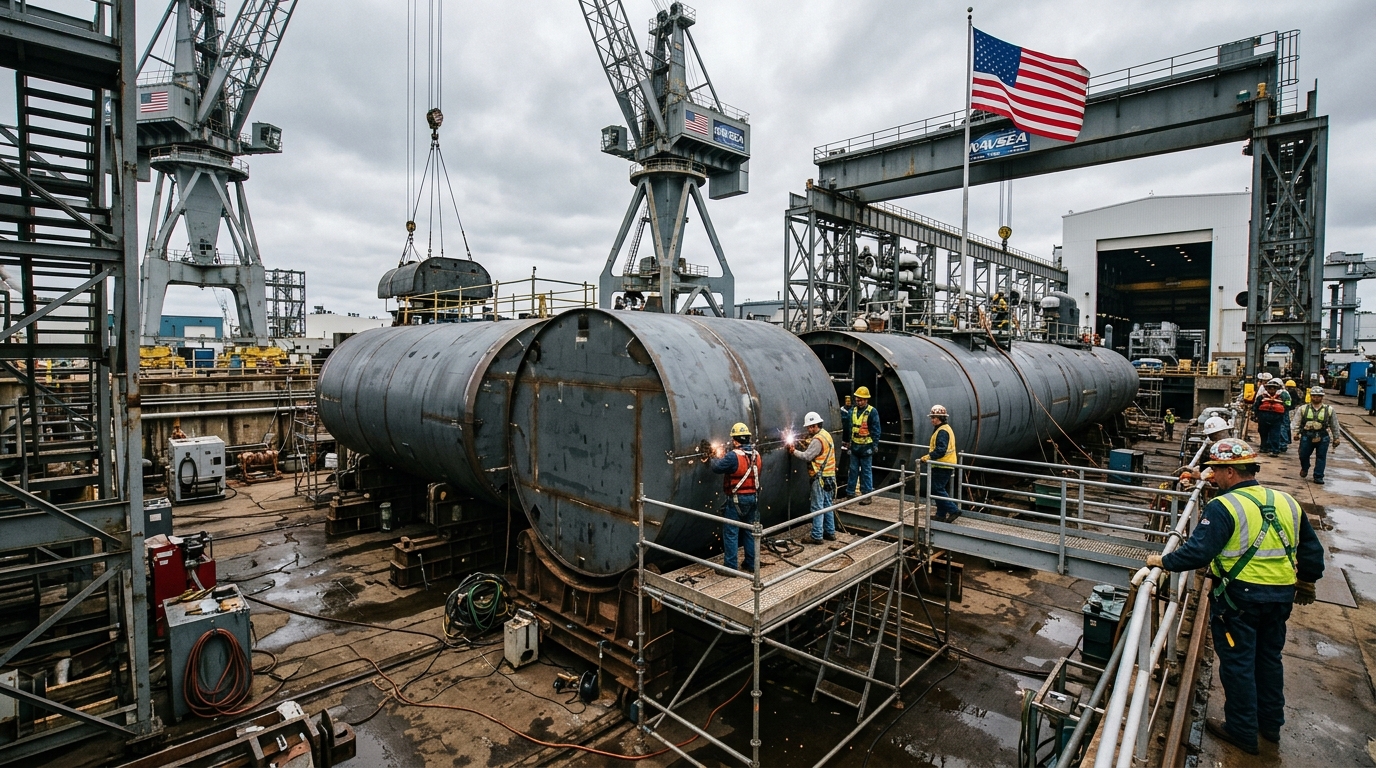
According to CNBC, Anduril won a $2.9 billion Navy submarine shipyard contract. Investing.com separately reported that Anduril and the U.S. Navy will invest $6.6 billion to boost submarine parts production. While the two reports describe the spending differently, both point to the same core development: a major new push tied to submarine infrastructure and production capacity.
That makes this more than a single-company contract story. It is also a signal about the Pentagon’s priorities and the market’s growing focus on defense manufacturing bottlenecks, especially in naval programs where timing, skilled labor and supplier availability can matter as much as budget approvals.
Why the market cares
Defense stocks often react to orders, but investors increasingly pay attention to where spending is being directed. Procurement of finished weapons systems is one thing; investment in the industrial base is another. The latter can indicate that the government sees production constraints as a strategic issue rather than a temporary operational problem.
CNBC noted that the contract arrived days after Anduril’s chief executive joined a Pentagon weapons group, adding an additional layer of attention around the company’s role in defense policy circles. That does not change the contract facts, but it may intensify scrutiny from investors and policymakers over how newer defense technology companies are gaining influence in traditionally entrenched segments of the industry.
For markets, the more durable takeaway is that defense spending is not just flowing toward software, drones or autonomous systems. It is also moving into physical production networks, yards and component pipelines that underpin major naval programs. That can matter for listed aerospace and defense names exposed to shipbuilding, propulsion systems, electronics, materials and specialized manufacturing.
Industrial capacity is becoming a market theme
The contract lands at a time when defense supply chains remain a live issue globally. Investors have spent the past several years reassessing the sector through the lens of replenishment cycles, geopolitical risk and budget durability. A shipyard-focused investment push adds another dimension: the ability of governments and contractors to actually deliver on strategic commitments.
Submarine programs are particularly relevant because they require long lead times and highly specialized inputs. If capacity constraints persist, that can affect revenue timing, margin assumptions and long-term planning not only for prime contractors but for parts suppliers across the chain.
Even without fresh financial guidance from the companies involved, the headline supports a broader market view that governments are willing to commit capital to remove production chokepoints. That theme has relevance beyond Anduril itself. It can influence sentiment across industrial, engineering and defense manufacturing groups where investors are trying to distinguish between order-book strength and real delivery capability.
Key points investors are likely to watch
- Execution risk: Whether infrastructure and parts-production spending translates into measurable output gains.
- Supply-chain spillovers: Which suppliers and subcontractors may benefit from increased submarine-related activity.
- Policy follow-through: Whether this signals a sustained federal effort to expand defense industrial capacity.
- Competitive positioning: How newer defense firms such as Anduril gain share in markets historically dominated by established contractors.
A wider read-through for stocks
The story also matters because it bridges two equity narratives that have often been treated separately: technology-led defense innovation and old-economy industrial expansion. In practice, governments increasingly need both. New systems may attract headlines, but they still depend on factories, yards, components and skilled labor.
That is why this contract may resonate more broadly than a standard procurement win. It reinforces the idea that defense-industrial resilience is itself becoming investable as a theme, particularly when geopolitical tensions keep military readiness high on policy agendas.
According to CNBC and Investing.com reports, the immediate facts center on Anduril and the Navy. But the market implication is wider: capacity-building is moving closer to the center of defense equity analysis.
Neutral outlook: Investors will likely look for more detail on contract structure, timing and industrial partners to judge whether this is an isolated award or part of a larger, sustained defense-capacity buildout.
MarketPro reports are AI-assisted analyses of publicly reported market news. Not investment advice.