Bond auction eases Treasury pressure as yields pull back
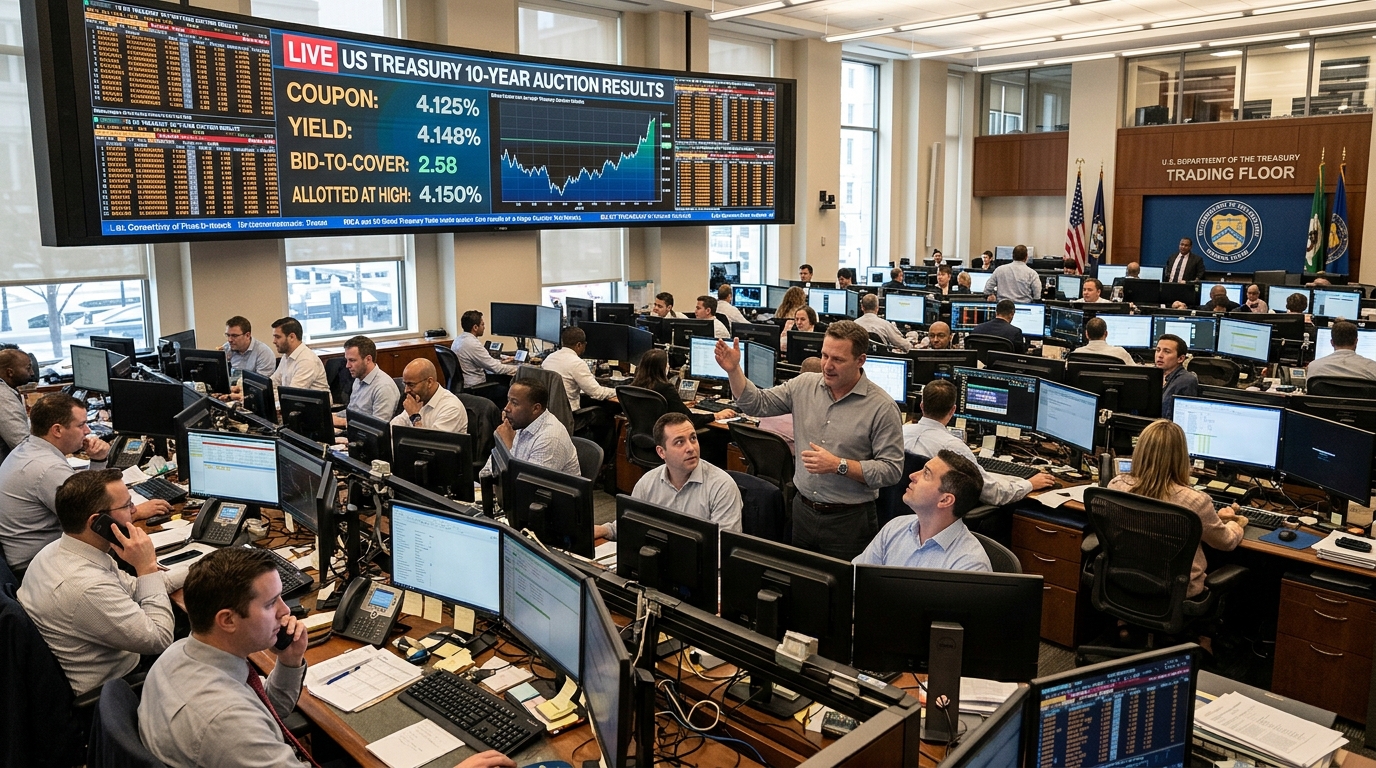
U.S. Treasury markets steadied after a closely watched government bond sale helped calm concerns about weak demand, sending the 10-year yield lower after it had reached a 24-year high earlier in the session. According to CNBC, the move followed a solid auction result that reassured investors the market could absorb new supply even after a sharp rise in yields. Investing.com also reported that yields pared gains after the strong auction, while U.S. stocks cut losses.
The pullback matters because the 10-year Treasury yield sits at the center of global asset pricing. It influences borrowing costs for households and businesses, affects equity valuations, and shapes capital flows across currencies and sovereign debt markets. When yields rise rapidly, markets often interpret it as a sign that investors are demanding more compensation for inflation risk, fiscal supply, or broader uncertainty.
Why the auction mattered
The immediate trigger for the reversal was the auction itself. Treasury sales are regularly used as a real-time test of investor appetite for U.S. government debt. A weak sale can reinforce fears that buyers are stepping back just as Washington continues to issue large amounts of debt. A strong sale, by contrast, can suggest that higher yields are attracting sufficient demand.
That appears to be what happened here. CNBC said the auction eased demand fears, while Investing.com described the sale as strong enough to help yields retrace part of their earlier move. For markets that had been focused on whether bond investors were losing patience, that distinction was important.
The reaction also showed how sensitive sentiment remains to funding conditions. In recent sessions, Treasury yields have become a broad barometer for investor confidence, not just a fixed-income story. A fast rise in yields can tighten financial conditions even without any formal central-bank action.
Inflation expectations remain part of the backdrop
Even with the auction relief, the underlying pressure on rates has not disappeared. Investing.com reported that U.S. inflation expectations rose to their highest level since May 2023, suggesting investors and households may still see price pressures as persistent. That backdrop helps explain why bond markets remain volatile even when individual auctions go well.
Inflation expectations matter because they can feed directly into nominal yields. If investors believe future inflation will be higher, they usually demand a higher return to hold longer-dated bonds. That can complicate the outlook for policymakers and keep upward pressure on market rates even if headline inflation data moderates.
For global markets, this combination is especially important: auction demand may be stabilizing day-to-day trading, but inflation credibility and fiscal supply still shape the medium-term direction. That leaves investors balancing two messages at once — tactical demand remains present, but structural concerns have not gone away.
Why global markets are paying attention
The Treasury market does not move in isolation. U.S. government yields influence everything from corporate borrowing and mortgage costs to emerging-market funding conditions and the relative appeal of the dollar. When long-dated U.S. yields surge, they can pressure risk assets worldwide and tighten financing conditions abroad.
That is why the post-auction pullback drew wider attention. According to Investing.com, equities reduced their losses as yields came off earlier highs. The move suggests that for now, the bond market remains the main transmission channel for macro stress.
There is also a signaling effect. A well-received auction can indicate that large institutional buyers, foreign reserve managers, and other major investors still view Treasurys as attractive at prevailing yield levels. In a market worried about debt absorption, that can help reduce immediate stress even if it does not settle longer-term fiscal questions.
What to watch next
Markets are likely to stay focused on three issues:
- Future Treasury issuance: Any sign of sustained heavy supply could renew pressure on longer-dated yields.
- Inflation expectations: As Investing.com noted, these have moved higher, which may limit how far yields can fall.
- Risk sentiment: Geopolitical stress and equity volatility can either boost Treasury demand as a haven or raise inflation and funding concerns, depending on the catalyst.
For now, the strong auction offered a temporary release valve for a market under strain. The neutral outlook is that Treasury yields may remain highly sensitive to incoming data and future debt sales, with global markets continuing to treat the bond market as the clearest real-time measure of macro confidence.
MarketPro reports are AI-assisted analyses of publicly reported market news. Not investment advice.