Global Markets Daily Brief — October 07, 2026

Global markets entered October 7 with investors balancing record-setting U.S. equities against a still-fragile geopolitical and rates backdrop. The day’s wire headlines pointed to a market tone shaped by three linked themes: renewed equity strength in the U.S., persistent energy and shipping risk around the Strait of Hormuz, and continued expansion in digital-finance infrastructure from crypto products to central-bank payment experiments.
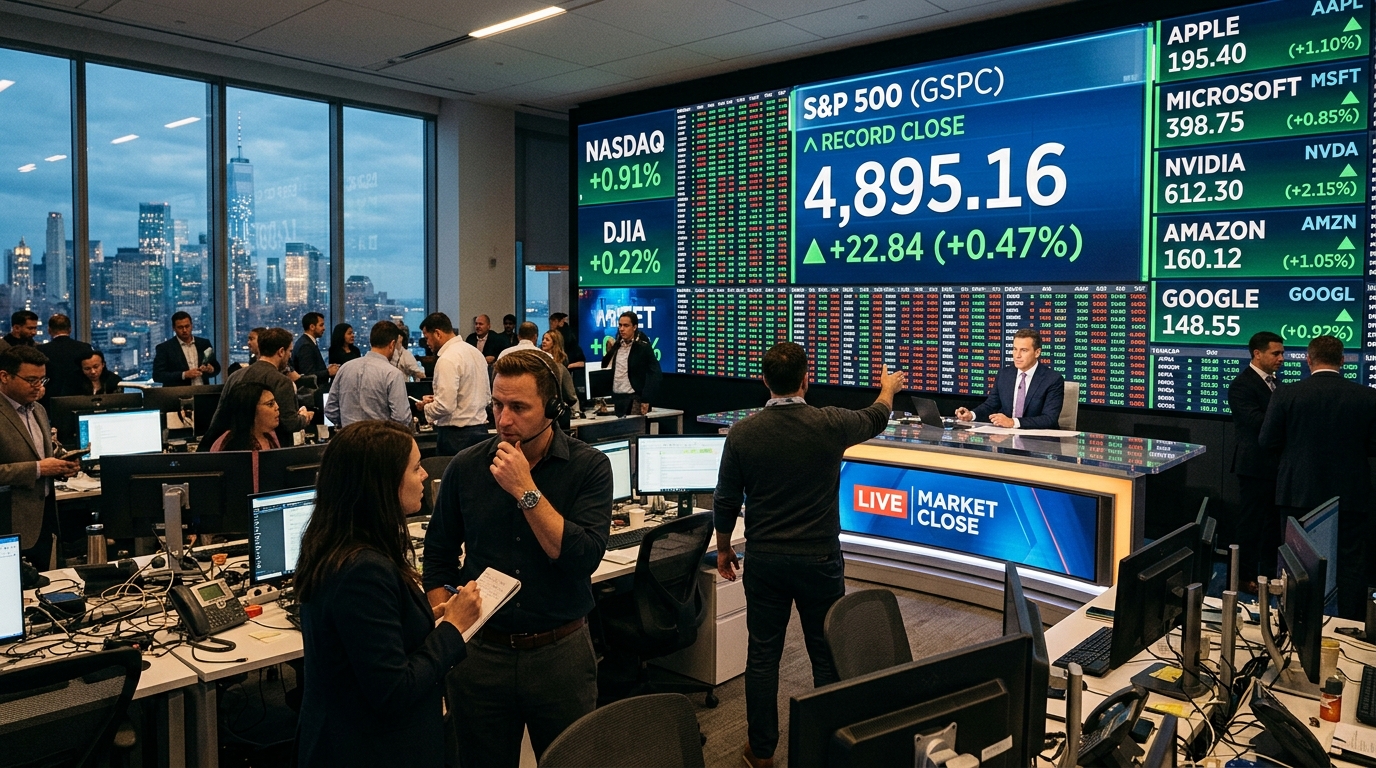
On the equity side, both CNBC and MarketWatch reported that the S&P 500 returned to record territory, with MarketWatch specifically highlighting renewed leadership from the “Magnificent Seven.” Because a very similar record-index story was already covered recently, the more important takeaway now is not the headline level itself but the broader market structure behind it: megacap leadership remains central to risk appetite even as investors also digest AI spending, energy constraints and rate sensitivity.
That same AI theme appeared in corporate and infrastructure coverage. CNBC reported that Anthropic expanded its Claude Startups program, while MarketWatch said Google is making a fresh bet on nuclear power as the AI energy crunch intensifies. Taken together, those headlines reinforce a pattern already visible across markets: AI is no longer only a software or valuation story. It is increasingly tied to electricity demand, capital spending and the physical infrastructure needed to support next-stage growth.
Oil, gold and shipping risk remain tightly linked
In commodities, the signal was clearer than the price action alone. Investing.com reported that oil prices rose as storms and air strikes threatened supply, while another Investing.com headline said gold held gains as oil flows recovered and Treasury yields eased. CNBC, meanwhile, reported that rebounding oil exports through the Strait of Hormuz remain vulnerable to stepped-up Iranian tanker attacks.
Those headlines suggest a market that is not treating the partial recovery in oil flows as a clean resolution. Instead, energy traders appear to be balancing short-term supply normalization against the possibility of renewed disruption. Gold’s resilience alongside easing yields also fits that pattern, indicating that investors are still willing to hold defensive assets even while equities push higher.
This combination matters for broader asset pricing. When equities, oil and gold all carry support from different narratives at the same time, investors usually face a more complex cross-asset environment than headline index levels imply. Growth optimism can coexist with geopolitical hedging, especially when shipping routes and energy security remain active concerns.
FX and rates credibility stay in focus
Foreign-exchange markets did not produce the biggest standalone headline on the wire, but the drivers were visible across categories. Gold’s support from lower Treasury yields, as cited by Investing.com, points to rates still playing a central role in currency pricing. At the same time, Investing.com reported that Vietnam’s banks are tapping investors for $7 billion as the economy runs hot, highlighting how funding conditions in fast-growing economies remain a relevant macro signal.
For FX watchers, this is less about a single currency move and more about credibility, liquidity and the cost of capital. Stronger equity sentiment can help risk-sensitive currencies, but that support can weaken quickly if oil rises sharply or if yields reverse. The day’s headlines therefore favored a selective rather than broad-based risk-on interpretation.
Crypto tracks mainstream risk appetite but keeps its own policy lane
Crypto headlines also aligned with the wider market tone. Cointelegraph reported that Bitcoin grinds toward $87,000 as U.S. equities hit new record highs, suggesting that digital assets are still responding to broader risk sentiment. But the sector also had several market-structure developments independent of price.
Among them, Cointelegraph reported that Russia’s digital ruble accounts topped 220,000 in the first month, far above the central bank’s initial forecast, and that a Winklevoss-backed Zcash ETF filed with the SEC for a Nasdaq listing. Elsewhere, Cointelegraph said affluent investors are seen boosting crypto exposure, and reported a U.S. bill aimed at stopping lawmakers from betting on their own elections. CNBC separately reported that Kalshi launched new transparency features on election contracts ahead of the midterms.
Together, these headlines point to a market where digital assets are increasingly shaped by institutional access, public-sector experimentation and regulatory design rather than by retail enthusiasm alone.
What mattered most today
- Stocks: U.S. equities remained firm, but leadership concentration still appears important.
- Commodities: Oil and gold reflected unresolved geopolitical and rates risk.
- Forex: Yield direction and external funding conditions remained central macro anchors.
- Crypto: Price gains coincided with ETF, CBDC and election-market transparency developments.
The neutral outlook is that cross-asset markets still look constructive on the surface, but the day’s headlines suggest investors are relying on a narrow set of supports: megacap strength, manageable yields and no major escalation in energy disruption.
MarketPro reports are AI-assisted analyses of publicly reported market news. Not investment advice.