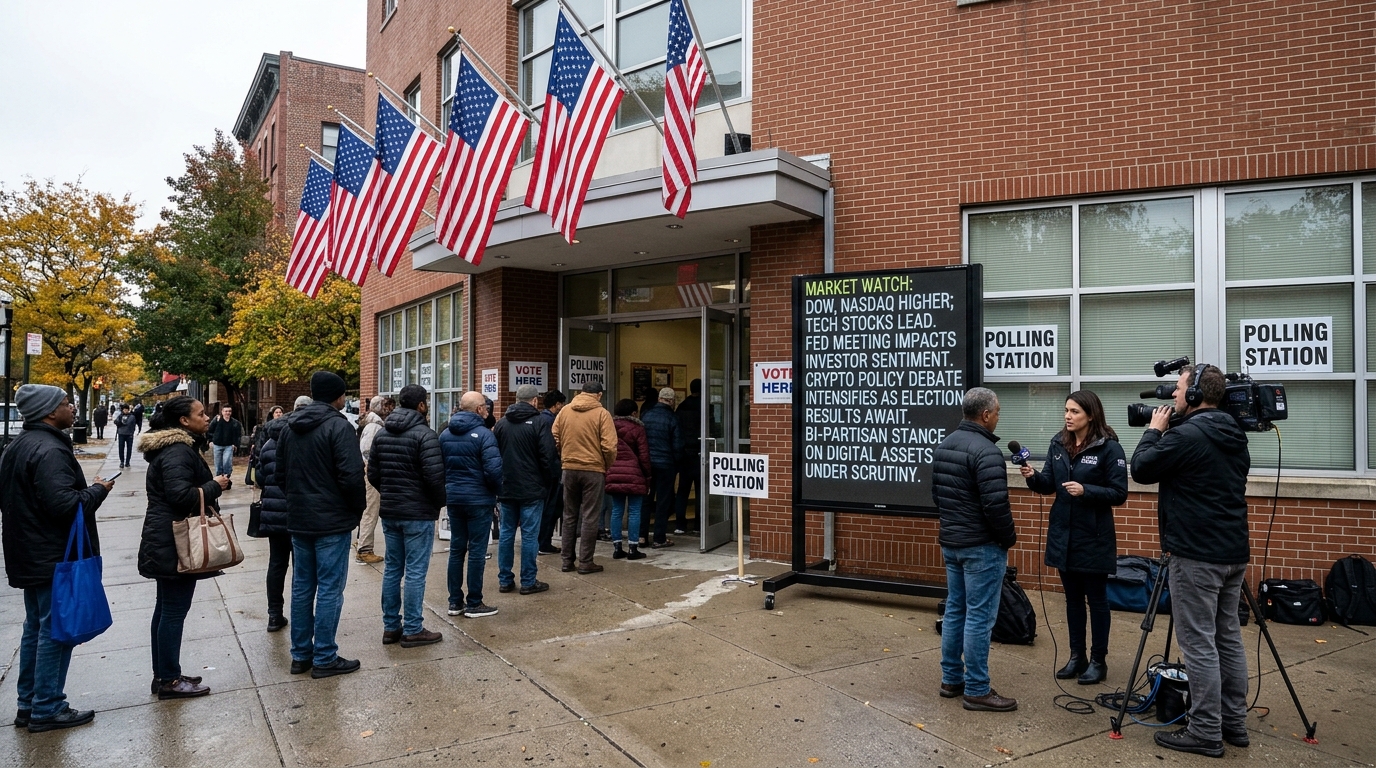
Global Markets Daily Brief — November 03, 2026
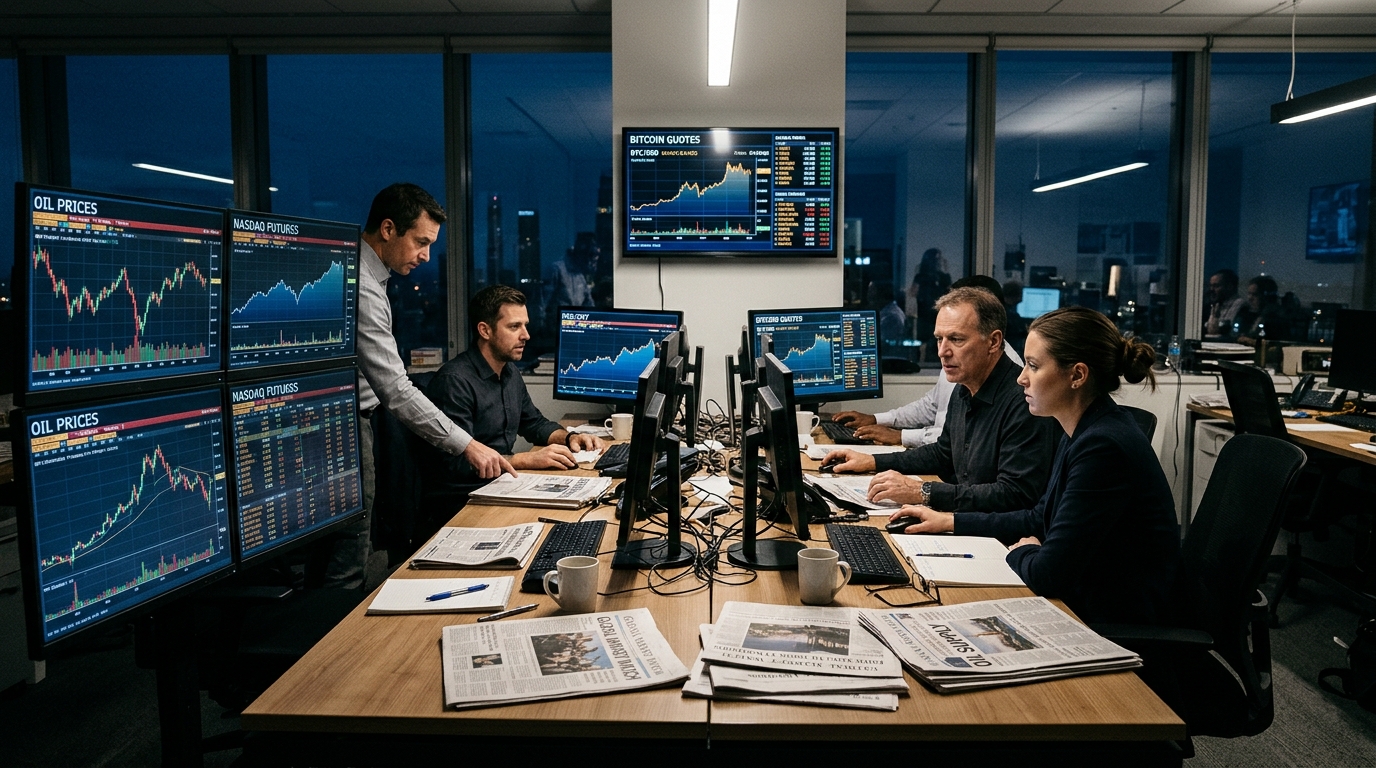
Global markets entered November 3 with investors balancing several competing signals across equities, currencies, commodities and digital assets. Based on reports from CNBC, MarketWatch, Cointelegraph and Investing.com, the day’s market picture was shaped by renewed pressure on technology shares, a sharp swing in oil, a policy move from China affecting foreign-exchange conditions, and continued fallout from major crypto security incidents.
Stocks: tech weakness remains a central market theme
U.S. equity sentiment appeared fragile after the Nasdaq-100 fell into what MarketWatch described as its third correction of the year, as worries around artificial-intelligence positioning and valuation continued to weigh on sentiment. MarketWatch also reported that traders who piled into a leveraged ETF for a bullish Nasdaq-100 bet were quickly punished by the latest reversal, underscoring how unstable positioning has become in growth-heavy parts of the market.
Single-stock reactions reinforced that theme. Palantir reported strong results, with CNBC saying U.S. commercial revenue growth topped government revenue growth for the first time, while MarketWatch separately focused on why the stock fell despite what it called a strong quarter. Apple also offered a similar market lesson, with MarketWatch reporting that its iPhone business is booming even as the stock has come under pressure.
Together, those stories suggest investors are still demanding more than headline growth: they are re-testing valuations, margin durability and future spending assumptions, especially across AI-linked names.
Commodities: oil headlines turned rapidly
Oil was one of the day’s clearest drivers of cross-asset sentiment. CNBC reported that crude prices sold off more than 7% on hopes for Iran peace talks ahead of the U.S. midterms. Later, however, Investing.com cited a Wall Street Journal report that the U.S. struck Iran’s Qeshm Island, with separate Investing.com items saying oil rose after that report.
That sequence matters because it shows how quickly geopolitical assumptions can reverse. A peace-related narrative can pull prices sharply lower, while any report implying direct escalation can force an equally sharp repricing higher. For broader markets, oil volatility can influence inflation expectations, transport costs, and risk appetite far beyond the energy sector.
Forex: China’s reserve-ratio move stands out
In currencies, the most notable policy headline came from Investing.com, which reported that China raised the foreign-exchange deposit reserve ratio to 6%. Even without wider detail in the available wires, the move is significant because changes to FX reserve requirements are typically watched for their implications for onshore dollar liquidity and renminbi management.
For investors, that places Asian currency policy back into the macro conversation at a time when global markets are already digesting uneven growth, election uncertainty and commodity-price volatility. It also fits reader demand for stories where policy tools intersect directly with market pricing.
Crypto: security concerns remain front and center
Crypto markets stayed under pressure from both price action and security concerns. Cointelegraph reported that Bitcoin risked falling below $76,000 as the 7% oil slide failed to lift sentiment. Meanwhile, security headlines remained intense: CNBC and Cointelegraph both reported that North Korea denied involvement in the Binance hack, even as researchers continued tracing stolen funds. Cointelegraph also reported that South Korea urged exchanges to boost cold storage after the hack.
Additional Cointelegraph reports on suspected thefts and post-hack wallet transfers at Mercado Bitcoin suggested that operational and custody risk is still a key market variable for the sector. That keeps attention not just on token prices, but on exchange practices, law enforcement pressure and regulatory response.
What ties the session together
The common thread across asset classes is instability around expectations. In stocks, strong company updates are not automatically lifting shares. In oil, geopolitical narratives are changing quickly. In forex, policymakers are still using targeted tools to influence liquidity and currency conditions. In crypto, security and trust remain as important as macro tailwinds.
According to CNBC, MarketWatch, Cointelegraph and Investing.com reports, investors are navigating a market where cross-asset signals can change quickly and where policy or geopolitical headlines can overpower company-specific fundamentals.
Neutral outlook: Near-term trading is likely to stay headline-driven, with markets watching whether policy signals, geopolitical developments and tech-sector repricing begin to align more clearly.
MarketPro reports are AI-assisted analyses of publicly reported market news. Not investment advice.