Nasdaq correction deepens as AI anxiety hits tech trade
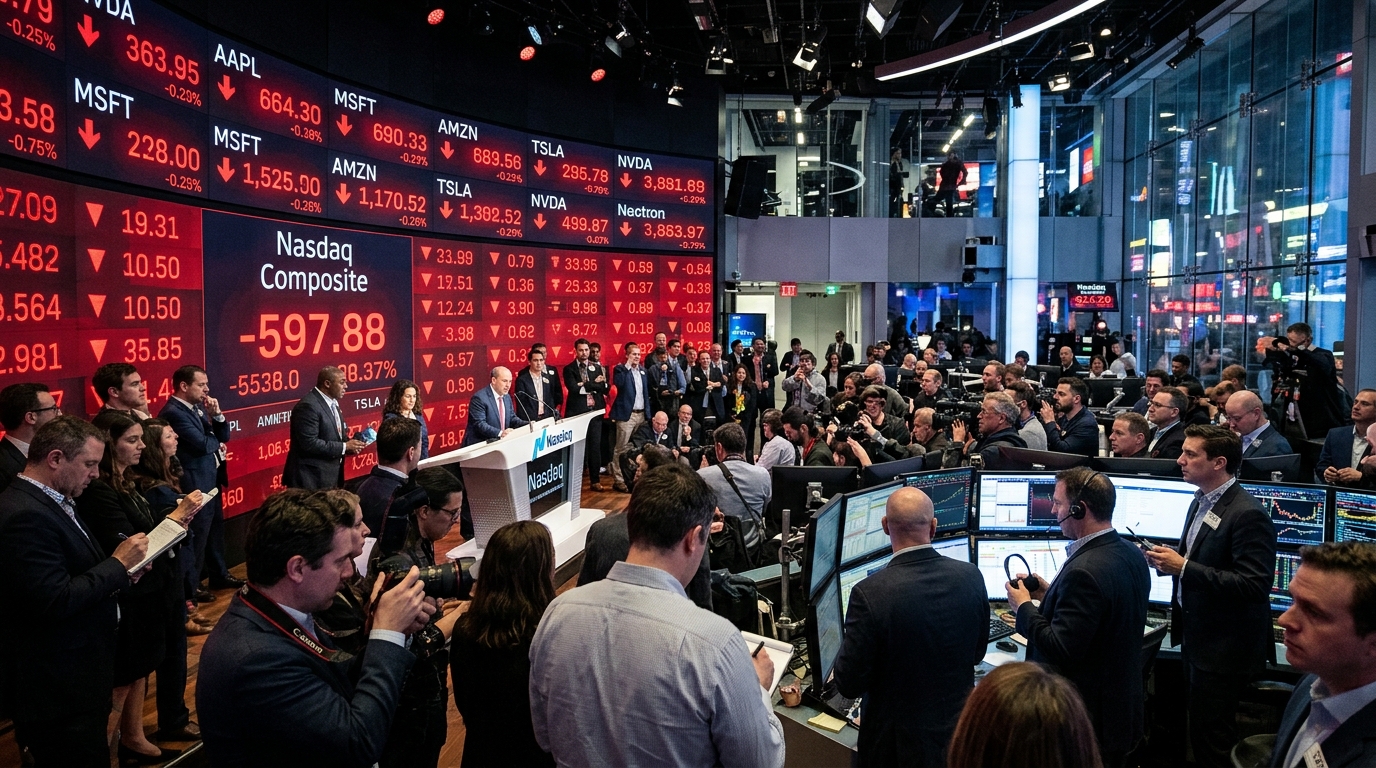
U.S. technology stocks are facing another test after the Nasdaq-100 fell into what MarketWatch described as its third correction this year, with concerns about the artificial-intelligence trade helping drive the retreat. The move is being reinforced by related signs of strain across sentiment-heavy parts of the market, including MarketWatch’s report that traders piling into a leveraged exchange-traded fund to make a bullish Nasdaq-100 bet were quickly burned.
Taken together, those reports point to a more fragile phase for one of the market’s most crowded themes. The issue is not simply that investors are turning against AI as a long-term story. Rather, the latest decline suggests markets are becoming less willing to pay any price for AI exposure, especially when positioning is stretched and expectations are elevated.
Why this correction matters
A third correction in a single year signals repeated difficulty in sustaining upside momentum. For investors, that matters because it can mark a shift from trend-driven buying toward a market that is more sensitive to valuation, earnings follow-through and capital-spending scrutiny.
The AI trade has been one of the market’s dominant narratives, lifting chipmakers, software names, infrastructure providers and adjacent growth sectors. But corrections of this kind often expose where optimism ran ahead of immediate fundamentals. MarketWatch framed the selloff around mounting AI worries, indicating that the market is increasingly asking harder questions about return on investment, spending durability and timing of revenue benefits.
Speculation is unwinding at the edges
The report on losses in a leveraged Nasdaq-100 ETF is also notable. Leveraged products can amplify moves, and when traders use them to chase momentum, they often become a real-time measure of confidence at the speculative edge of the market. According to MarketWatch, those bullish traders were burned, a sign that the reversal was strong enough to punish short-term momentum strategies rather than merely trim gains.
That kind of unwind can matter beyond the ETF itself because it hints at broader market mechanics:
- Fast-money exposure may be forced to reduce risk quickly when momentum breaks.
- Volatility can rise as concentrated positioning exits all at once.
- Leadership narrowness becomes more visible when the same theme dominates too much of the index.
Even strong franchises are not immune
The pressure is not limited to speculative corners. MarketWatch also reported that Apple’s iPhone business is booming but the stock is falling anyway. That contrast is important because it shows how the current market is treating even high-quality technology companies with greater skepticism. Strong operating performance may no longer be enough by itself if investors are already worried about valuation, product mix, margins or the broader tone of risk assets.
This is often how deeper growth-stock pullbacks develop: first the market questions the most aggressive narratives, then it re-rates companies that are fundamentally solid but still priced for high expectations. In that sense, today’s correction story is less about one disappointing company and more about an index-level reassessment.
From enthusiasm to selectivity
What appears to be changing is the market’s willingness to treat AI as a universal tailwind. Earlier phases of the rally rewarded broad exposure to the theme. A correction phase tends to be more selective, distinguishing between companies already converting AI demand into measurable revenue and those still trading mostly on future promise.
That also helps explain why the same session can produce conflicting signals: some AI-linked companies may still report strong growth, while the broader index falls because investors are rotating away from expensive exposure or reducing leverage.
Broader market implications
The Nasdaq-100 often serves as a barometer for global risk appetite. When it slides into correction territory, the effects can spread well beyond U.S. large-cap tech. Portfolio managers may reduce exposure across semiconductors, software, communications and even non-U.S. growth markets that trade in sympathy with American technology leaders.
In practical terms, this puts greater focus on upcoming earnings quality, forward spending plans and whether management teams can show that AI investment is generating durable commercial returns rather than just excitement.
Neutral outlook: The latest Nasdaq-100 correction suggests investors are shifting from broad AI enthusiasm to a more demanding, valuation-sensitive stance, with tech leadership likely to depend increasingly on execution rather than theme alone.
MarketPro reports are AI-assisted analyses of publicly reported market news. Not investment advice.