Global Markets Daily Brief: Brazil, AI Policy, Crypto
Global markets entered October 4 with politics, regulation and corporate positioning driving the day’s narrative more than any single broad asset move. Based strictly on the available wire headlines, investors are balancing election risk in Brazil, fresh U.S. policy signals around artificial intelligence, selective stock-specific developments and a mixed backdrop for digital assets.
Brazil election remains a key macro watchpoint
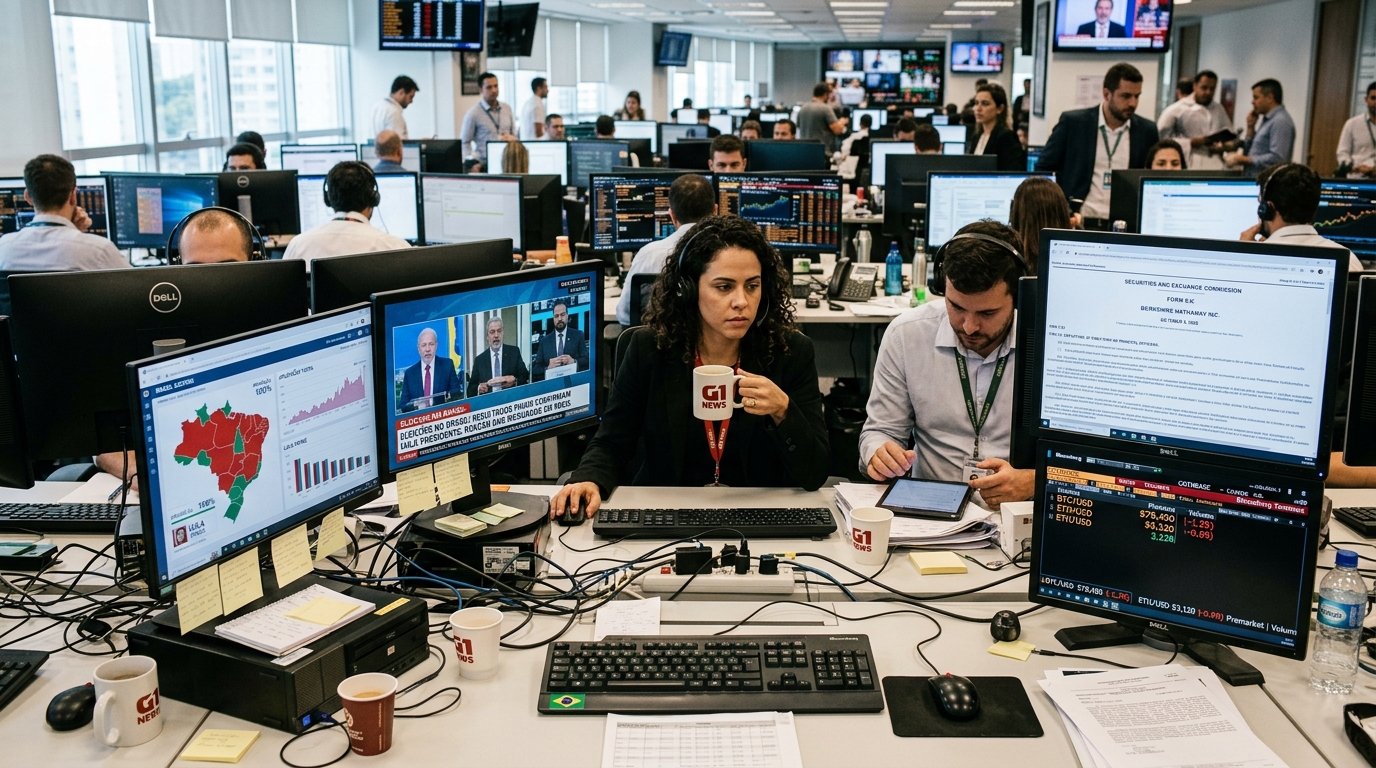
Brazil stands out as the clearest cross-asset story on the wire. CNBC reported that Wall Street is bracing for sharply different market implications depending on whether President Luiz Inacio Lula da Silva or Jair Bolsonaro prevails. Investing.com separately reported that Lula is ahead in polls for Brazil’s first-round vote and that a runoff is likely, while also noting that Lula and Flavio Bolsonaro wrapped up campaigning ahead of the vote.
Taken together, those reports reinforce Brazil as a live forex and rates story with broader implications for emerging-market positioning. With reader interest already strong in macro and currency-linked stories, Brazil remains one of the most market-relevant themes because election outcomes can quickly affect the real, domestic yields and risk appetite toward local equities.
U.S. AI policy is becoming a market variable
Another developing macro theme is Washington’s approach to artificial intelligence. CNBC, citing a Wall Street Journal report, said President Donald Trump is expected to appoint Director of National Intelligence Jay Clayton as AI czar. Cointelegraph also carried the same reported development, while Investing.com, also citing the WSJ, said the White House has formed an AI task force to assess technology risks.
Even though details remain limited in the supplied headlines, the combination of an expected AI czar and a risk-focused task force suggests U.S. oversight of the sector is becoming more formalized. For markets, that matters across semiconductors, cloud infrastructure, data centers and software, particularly as AI policy now overlaps with national security and industrial strategy.
Stock-specific stories show a selective tape
On the company side, CNBC reported that Berkshire Hathaway bought additional Lennar shares, although the pace of purchases slowed. That does not provide a broad signal for the whole housing market on its own, but it is notable because Berkshire’s moves often attract attention as a read-through on management’s capital allocation priorities and confidence in specific industries.
Elsewhere, Yahoo Finance highlighted a rail-services contract worth more than $700 million for Westinghouse Air Brake, while also flagging developments around industrial names including Titan International and chip-related competition touching Intel, Micron and AI networking. These are more idiosyncratic stories than broad market movers, but they fit a session where investors appear to be separating winners from losers based on project pipelines, AI exposure and balance-sheet flexibility.
Crypto backdrop stays active, but uneven
Digital assets remain busy on the news front, though the leadership is mixed. Cointelegraph reported that Anchorage Digital, described as a $4.2 billion crypto bank, is cutting 17% of its workforce, while also reporting that Blast plans to wind down its Ethereum layer-2 after costs outpaced revenue. At the same time, the publication said tokenization is expected to reshape financial services according to a Lloyds-linked survey of UK finance leaders, and that broader crypto capital has returned even as premiums have not.
That mix points to a familiar split in the sector: institutional and infrastructure themes continue to advance, while some standalone platforms face economic pressure. For mainstream markets, that makes crypto less a pure price story and more a question of which business models can sustain themselves under tighter investor scrutiny.
Industrial and consumer cost pressures remain visible
Beyond headline politics and technology, several reports point to structural economic pressures. CNBC said high-tech vehicles are driving up auto repair costs for shops and consumers, while also reporting that the fight over data centers in the U.S. is a preview of what may come globally. MarketWatch separately highlighted concerns around falling wages, high energy prices and inflation in a piece drawing comparisons with the 1970s.
Those stories do not offer a single unified market call, but they do suggest investors are still confronting the practical costs of electrification, computing infrastructure buildout and sticky household-level pressures.
What markets may watch next
The immediate watch list is straightforward: Brazil’s election path, any added detail on U.S. AI governance, and whether institutional crypto stories continue to center on regulation and operating discipline rather than token price alone. The short-term outlook is neutral, with markets appearing driven by policy direction and selective execution rather than a single dominant macro impulse.
MarketPro reports are AI-assisted analyses of publicly reported market news. Not investment advice.