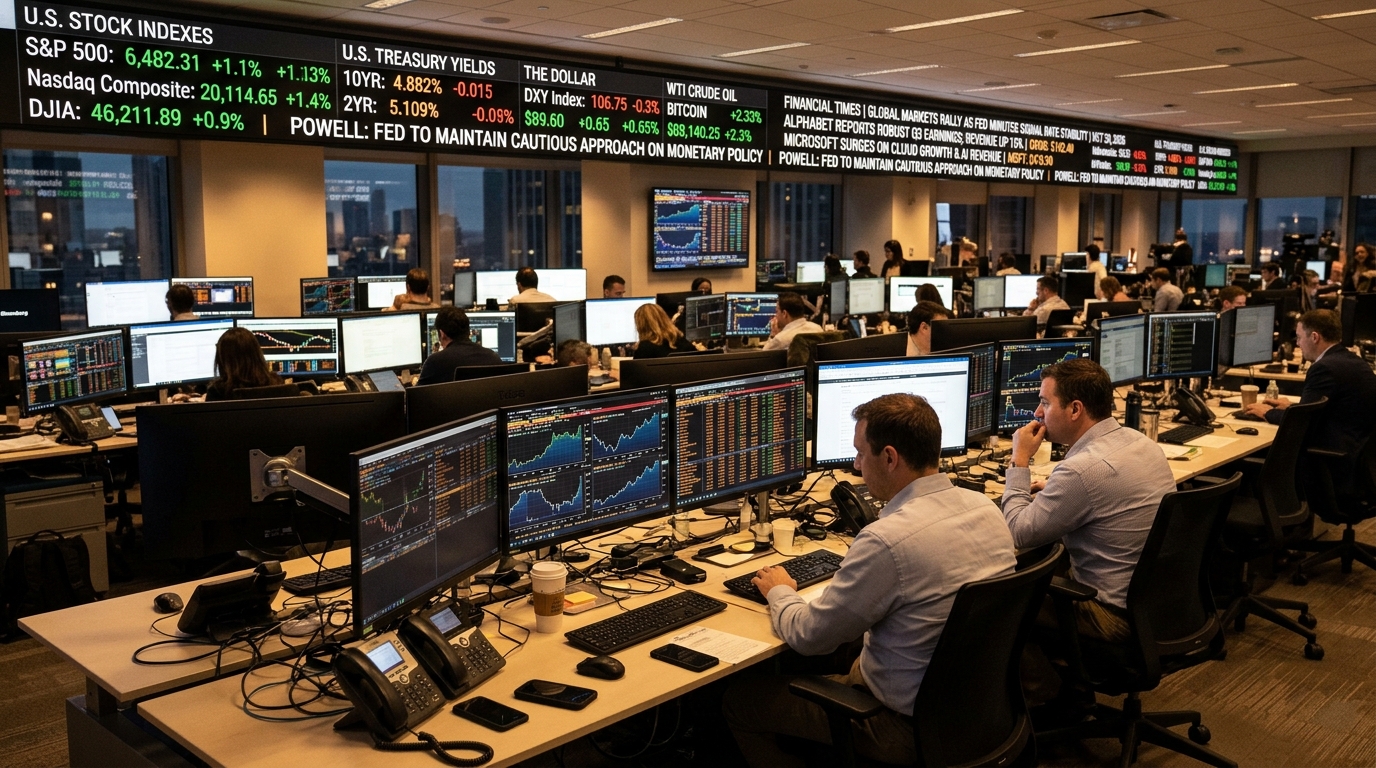
Global Markets Daily Brief — October 22, 2026
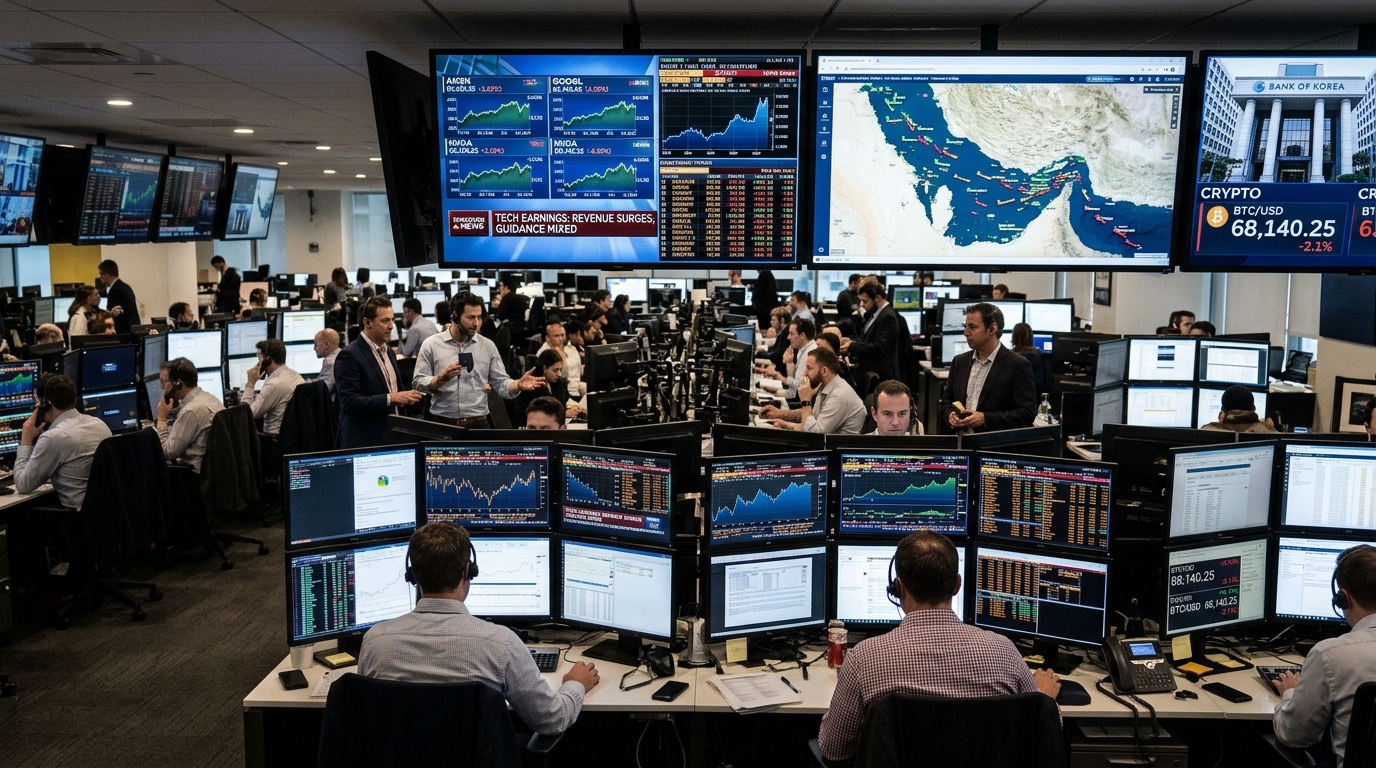
Global markets opened to a mixed set of signals on October 22, with investor attention split between major U.S. technology earnings, central-bank policy in Asia, oil-market normalization after recent disruption, and fresh regulatory debate in crypto.
On the equity side, several of the day’s biggest headlines came from large-cap technology. CNBC reported that Tesla beat on earnings and sales even as auto revenue declined, while MarketWatch said the stock fell as investors were left wanting more. CNBC also reported that IBM beat on both revenue and earnings, and that Meta outlined an ambitious monetization roadmap after a strong quarter and guidance. MarketWatch likewise said Meta shares rose as investors focused on a potentially large opportunity beyond its core ad business. Taken together, those reports pointed to continued selectivity in risk appetite: investors appeared willing to reward growth visibility, but not without demanding clearer follow-through.
Broader U.S. market tone was less upbeat. According to Investing.com, U.S. stock futures fell as investors weighed the Tesla and Meta results. That suggests that even with strong headline earnings from parts of big tech, the market remains sensitive to valuation, guidance quality and the effect of higher yields on equity multiples.
Asia rates steady as growth and housing stay in focus
In foreign-exchange and macro policy terms, one of the clearest developments came from South Korea. CNBC reported that the Bank of Korea held rates after President Lee called for boosting housing supply. Investing.com separately reported that the central bank held rates as expected after back-to-back hikes. With two outlets confirming the decision, the hold stands out as an important regional signal that policymakers are balancing inflation control with domestic growth and property-market considerations.
For currency markets, a pause after consecutive hikes can matter beyond Korea alone. It feeds into broader expectations for how Asia-Pacific central banks may respond if growth softens while inflation risks remain uneven. It also aligns with a session in which investors were already assessing the interaction between higher bond yields, growth-sensitive equities and commodity prices.
Oil supply normalizes, but price relief is not guaranteed
In commodities, MarketWatch reported that oil is flowing out of the Persian Gulf much as it did before the Iran war, but also cautioned that prices may not come down quickly. That is a meaningful cross-asset signal because it separates physical flow normalization from price normalization. Even when exports resume, geopolitical risk premia, shipping uncertainty and inflation concerns can keep crude markets firm.
That matters for equities and bonds alike. Persistent oil-price strength can reinforce inflation worries, complicate central-bank outlooks and weigh on sectors sensitive to fuel and freight costs. For investors already monitoring bond-yield moves and expensive equity valuations, oil’s resilience is part of the same macro picture rather than a standalone story.
Housing and credit data show consumers still under pressure
Another macro read-through came from the U.S. housing market. CNBC reported that mortgage rates fell for the first time in two months, but demand fell further. The combination suggests that lower financing costs alone may not be enough to revive activity if affordability remains stretched or buyers remain cautious. As a market signal, that points to continued fragility in rate-sensitive parts of the economy even if borrowing costs begin to ease at the margin.
Crypto policy stays active, with regulation still the core theme
In digital assets, the most notable developments were regulatory rather than price-driven. Cointelegraph reported that the American Bankers Association said the OCC’s GENIUS rules undermine Congress, while Treasury Secretary Scott Bessent likened the GENIUS Act to Lincoln-era banking reform. Cointelegraph also reported that Chainlink, Cardano and other blockchain groups pushed the SEC for clearer rules.
Those headlines point to a familiar but important market theme: crypto’s next phase is increasingly shaped by institutional access, bank oversight and legal clarity rather than only token-price momentum. Cointelegraph separately reported Bitcoin at about $84.6K as U.S. stocks moved higher, though that price move was supported by only one headline in the current wire set and should therefore be treated cautiously.
What ties the session together
The common thread across asset classes is that markets are still pricing a narrow path between growth optimism and policy restraint. Strong earnings from some technology leaders support risk sentiment, but uneven stock reactions show investors want stronger evidence of monetization and margin durability. Central-bank caution in Korea reinforces the view that policymakers are not ready to declare victory. Oil’s resilience keeps inflation risk in the frame, and weak mortgage demand shows lower rates do not automatically restore confidence.
Neutral outlook: The next market leg is likely to depend on whether strong corporate earnings can outweigh pressure from yields, sticky energy risk and still-cautious policy signals, according to CNBC, MarketWatch, Investing.com and Cointelegraph reports.
MarketPro reports are AI-assisted analyses of publicly reported market news. Not investment advice.