Global Markets Daily Brief — September 28, 2026

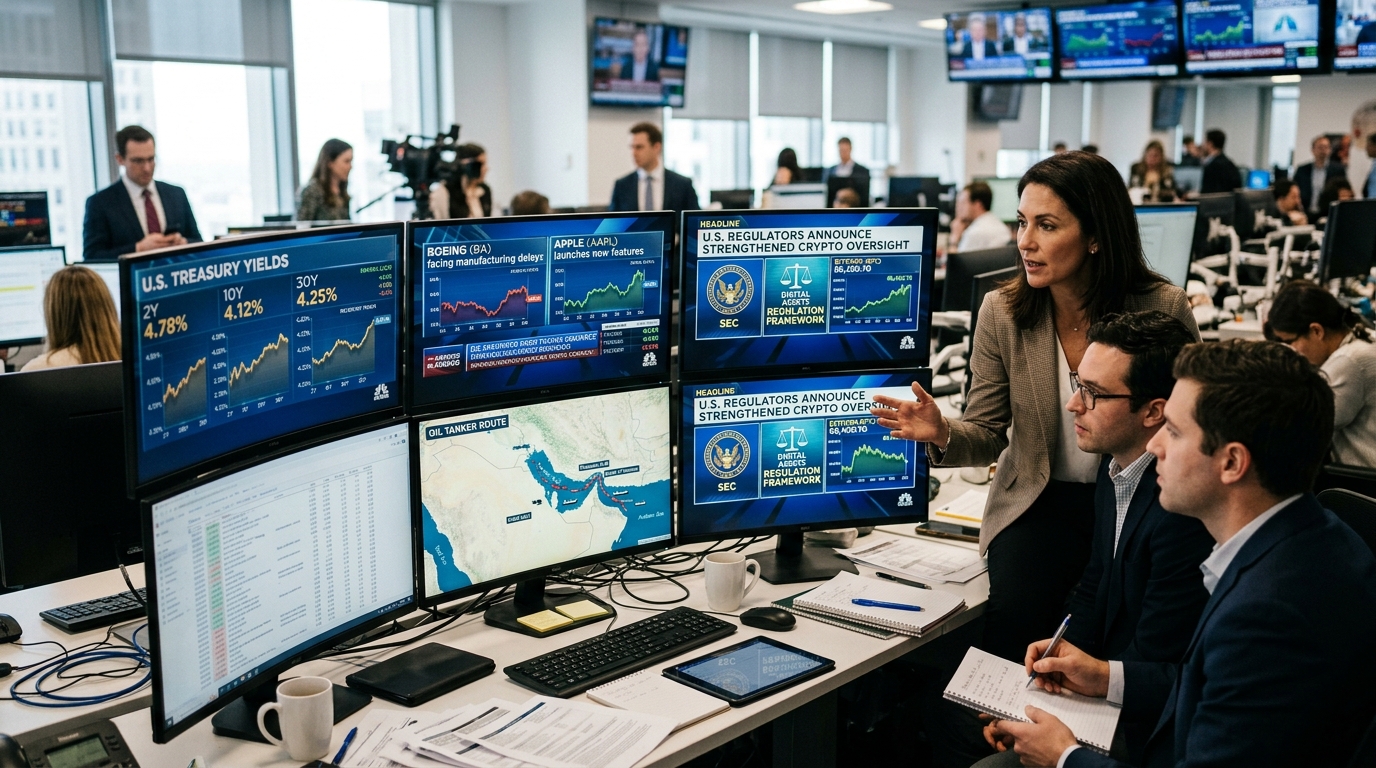
Global markets entered September 28 with investors balancing geopolitical risk in energy, policy uncertainty in Japan, fresh questions around AI-related chip access in China, and another active day in crypto regulation. Based on the day’s wire headlines, the biggest cross-asset themes were centered on commodities, foreign exchange, technology supply chains and digital-asset oversight.
In energy, CNBC reported that oil gained more than 1% after President Donald Trump rejected an Iranian proposal to reopen the Strait of Hormuz. That headline matters beyond crude alone because the strait remains one of the world’s most closely watched shipping chokepoints. A renewed focus on the passage can quickly feed into freight costs, inflation expectations and broader risk sentiment. The move also follows a stretch of elevated sensitivity to Middle East headlines, keeping energy markets tightly linked to geopolitics.
Oil and geopolitics remain central to risk pricing
According to CNBC reports, oil’s advance reflected concern that diplomatic channels had not yet translated into a de-escalation in shipping risk. CNBC also reported that Iran’s foreign minister said Tehran was ready for a “doomsday” war with the U.S. while still leaving diplomacy on the table. Taken together, those headlines suggest traders are still being asked to price both escalation risk and the possibility of negotiation. That combination can increase day-to-day volatility not only in crude, but across airline, transport and industrial sectors that are sensitive to fuel costs.
For broader markets, the significance is less about any single percentage move in oil and more about how quickly an energy shock could spill over into inflation expectations and equity sector leadership. Energy producers may benefit from stronger crude, while fuel-intensive businesses can come under renewed pressure when shipping security becomes a market theme.
Japan rate debate keeps the yen and global yields in focus
In foreign exchange and rates, Investing.com reported that minutes from the Bank of Japan’s July meeting showed policymakers debated the need for faster interest-rate hikes. Even without a policy move today, that headline is relevant for global investors because changes in Japanese rate expectations can ripple far beyond the yen. Japan has long been a key anchor in global funding markets, and even incremental signs of a more hawkish discussion can influence bond yields, carry trades and equity valuations worldwide.
The headline does not confirm an imminent shift, but it does reinforce that the BOJ remains part of the global tightening conversation. For currency markets, any signal that Japanese policy could normalize faster than expected may be watched for implications for the yen and for cross-border capital flows. That matters especially when U.S. yields and global growth expectations are already under scrutiny.
Tech supply chains face another China access question
Semiconductors also stayed in focus. Investing.com, citing The Information, reported that China is weighing whether to allow ByteDance and Alibaba to buy new Nvidia chips. While the report remains tied to unnamed sourcing through The Information, it stands out because of the potential implications for AI infrastructure demand and for the competitive balance among Chinese technology groups.
If confirmed by official action, such a move would be watched closely across chipmakers, cloud platforms and data-center suppliers. It also underlines how market narratives around AI are now shaped not just by demand growth, but by export controls, licensing frameworks and political approval processes. For stocks, the relevance extends beyond Nvidia to the wider semiconductor and networking ecosystem.
Crypto regulation keeps building through courts and agencies
Digital assets also had a regulation-heavy session. Cointelegraph reported that the CFTC sued Cash FX, alleging a $950 million crypto-linked forex scheme. The same outlet also reported that SEC Commissioner Hester Peirce will leave her post on Oct. 2, while Kalshi’s appeal loss set up a potential Supreme Court case. Separately, Cointelegraph said OG.com is seeking CFTC approval for single-stock perpetual futures.
These are distinct stories, but together they point to an active regulatory backdrop in both crypto and event-style derivatives. For market participants, the common thread is structure: who gets to offer what product, under which regulator, and with what consumer protections. That remains important for exchange operators, token issuers and trading platforms alike.
Other themes on the radar
- Banking: Investing.com reported that foreign banks have expressed interest related to a UBS merger, according to a Swiss newspaper report.
- AI governance: Investing.com reported that OpenAI is working to understand the full scope of agent activity as a user data leak emerges.
- Defense technology: CNBC reported that drone defense systems will be deployed at NFL games this season, highlighting another pathway for security-tech spending.
Overall, the market picture remains one of interconnected themes rather than a single dominant driver: energy security, central-bank debate, AI supply-chain policy and crypto regulation are all competing for attention. The neutral outlook is that investors will likely keep watching for follow-through in oil, yen-sensitive assets and regulatory developments that can shift sector leadership across global markets.
MarketPro reports are AI-assisted analyses of publicly reported market news. Not investment advice.