High mortgage rates deepen U.S. housing lock-in
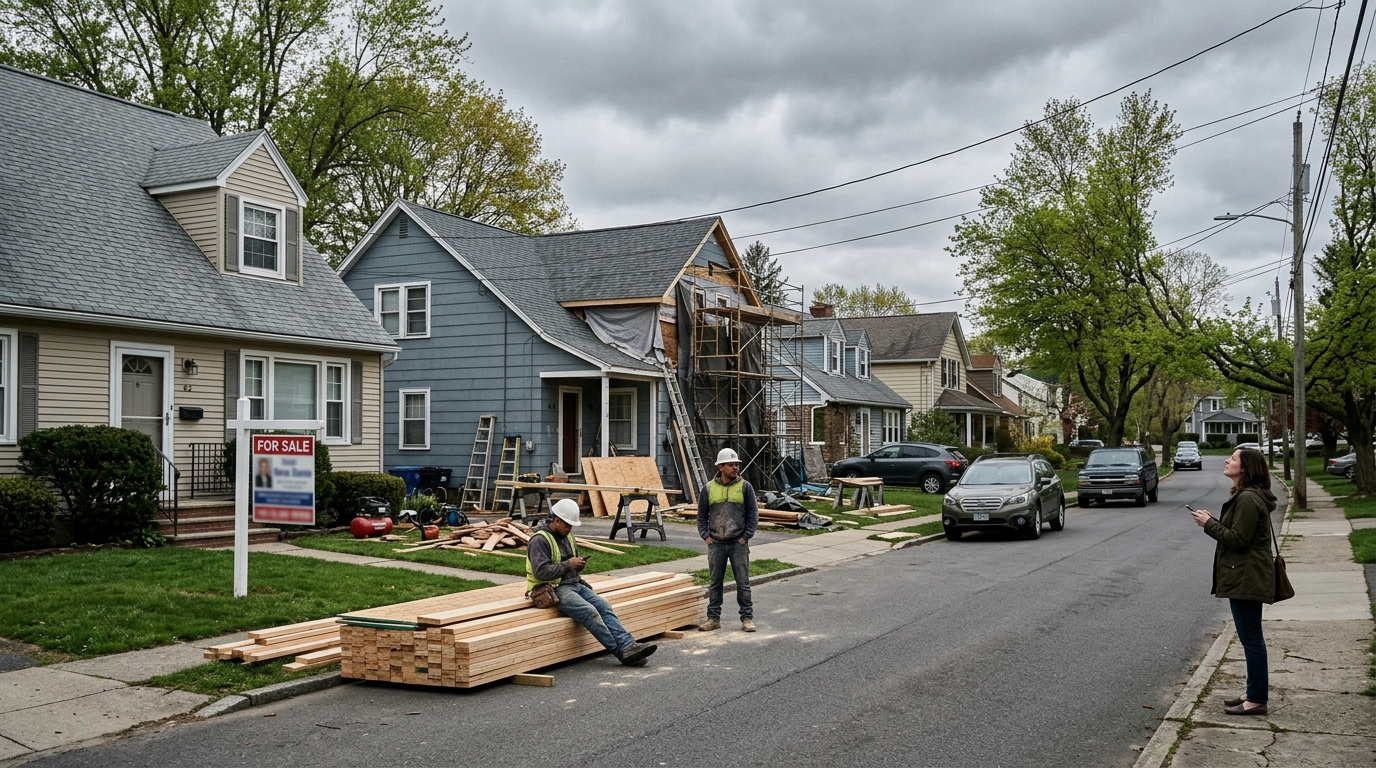
High borrowing costs are continuing to distort the U.S. housing market, with implications well beyond real estate. According to CNBC, high mortgage rates are trapping homeowners in place and making renovations harder to afford. That combination matters for investors because housing is tied to consumer spending, bank lending, building materials and a wide range of listed companies.
The key issue is the lock-in effect. Homeowners who secured lower mortgage rates in prior years may be reluctant to sell and finance another purchase at today’s higher rates. At the same time, those who stay put may be less able or willing to fund major renovation projects if financing costs remain elevated.
In market terms, that creates a double drag: fewer transactions and weaker discretionary spending on housing upgrades.
Why housing still matters to stocks
The housing sector influences far more than homebuilders. Mortgage lenders, construction suppliers, appliance makers, home-improvement chains and furniture sellers all feel the effects of a slower turnover market. If people move less often and spend more cautiously on renovations, revenue pressure can spread across multiple industries.
The broader macro context makes the story more important. MarketWatch reported that corporate America is highly upbeat about future profits, but housing remains one of the clearest examples of how higher rates can restrain parts of the economy even when earnings sentiment elsewhere is resilient. In that sense, the CNBC report offers a reality check on how uneven the high-rate environment has become.
The renovation angle is especially important
Housing slowdowns are often discussed through home sales or affordability. The renovation point adds another layer. If homeowners are not moving and also cannot comfortably fund upgrades, companies tied to remodeling demand may face a tougher operating backdrop than simple transaction data would suggest.
That matters because renovation activity often acts as a partial offset when existing-home turnover slows. If both channels weaken together, investors may have to reassess assumptions about demand resilience in housing-linked sectors.
Rates remain the central variable
Today’s housing pressure also connects directly to the week’s broader policy focus. MarketWatch said upcoming Fed minutes could offer important clues on future rate hikes. Even without new policy action, markets are highly sensitive to whether rates stay higher for longer.
For housing, that sensitivity is acute. Mortgage affordability depends not just on home prices but on financing costs, and those costs filter quickly into buyer behavior, seller decisions and renovation budgets.
If rates do not ease meaningfully, the market may remain stuck in a low-mobility equilibrium: owners stay put, buyers struggle, and housing-related businesses fight for demand in a smaller activity pool.
What investors may watch across sectors
- Homebuilders: Can new construction capture demand when existing inventory stays tight?
- Home improvement retailers: Does renovation demand hold up, or weaken further under financing pressure?
- Banks and mortgage lenders: Lower turnover can mean fewer originations and refinancing opportunities.
- Consumer cyclicals: Housing softness can spill into furniture, appliances and related purchases.
A broader economic signal
Housing is often one of the clearest transmission channels for monetary policy. The CNBC report therefore matters not only for sector stock selection but also for judging the wider economy. When households are constrained in both moving and renovating, it can signal that elevated rates are having a deeper behavioral effect.
That does not automatically imply a broad downturn. Other parts of the economy may remain firm, and corporate profit expectations, as highlighted by MarketWatch, still point to resilience in some sectors. But housing’s weakness is a reminder that high rates are not just a valuation story for markets; they are changing real-world activity.
The near-term outlook is cautious: unless financing conditions improve, the housing lock-in effect is likely to remain a headwind for transaction volumes and renovation-linked demand.
MarketPro reports are AI-assisted analyses of publicly reported market news. Not investment advice.