Housing Freeze Deepens as Sales and Builder Cuts Converge
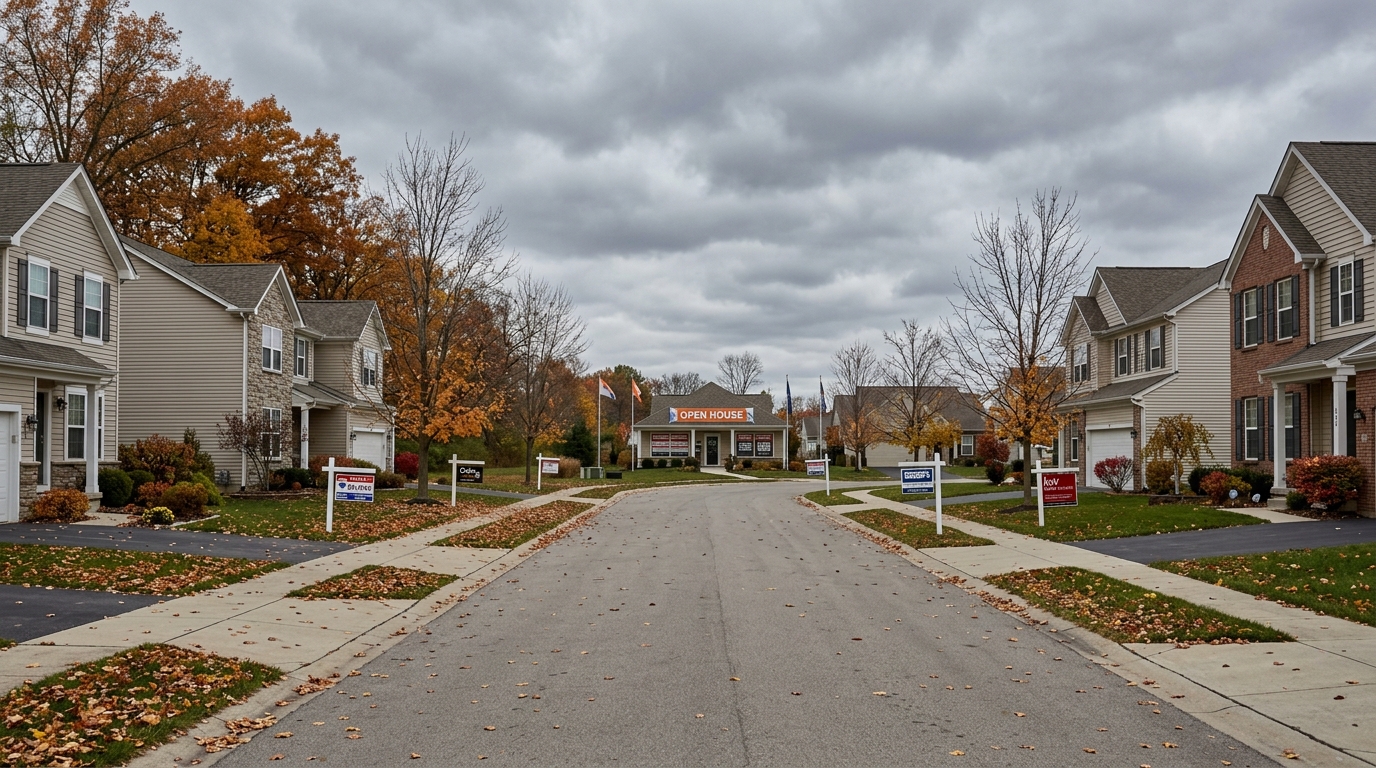
The U.S. housing market showed fresh signs of strain in September, with weak resale activity and mounting pressure on builders reinforcing the picture of a market stalled by elevated borrowing costs.
According to a CNBC report, September data shows the housing market in a “deep freeze.” That broad assessment was reinforced by multiple MarketWatch reports highlighting that pending home sales fell to a 25-year low and that builders are cutting prices as buyer traffic drops to a 14-year low.
Taken together, the reports point to the same underlying dynamic: affordability remains stretched, financing costs are still discouraging buyers, and homebuilders are increasingly relying on price incentives to move inventory.
Three signals point to the same slowdown
The housing story is notable because it is not resting on a single indicator. Instead, the slowdown appears across several parts of the market.
- CNBC reported that September housing data indicates a market in deep freeze.
- MarketWatch reported that pending home sales sank to a 25-year low as buyers pulled back in response to high mortgage rates.
- MarketWatch also reported that builders slashed prices on new homes as buyer traffic fell to a 14-year low.
When resale demand weakens and builders also cut prices, that suggests pressure is broad rather than isolated. Existing-home sellers may be reluctant to lower prices aggressively, but homebuilders often have more flexibility to use incentives, discounts, or financing offers to stimulate demand.
Why mortgage rates still dominate the market
The common thread across the housing reports is the effect of higher mortgage rates on affordability. Even if home prices have stopped rising as rapidly as they did earlier in the cycle, financing costs can still leave monthly payments out of reach for many households.
That helps explain why buyer traffic appears weak and why pending transactions remain under pressure. A pending home sale is a useful forward-looking indicator because it reflects signed contracts before closings are completed. When that measure drops sharply, it can signal continued softness in future sales data as well.
For builders, weaker foot traffic matters because it can ripple into construction plans, land purchases, and pricing strategy. If demand remains soft for an extended period, the housing sector can become less supportive of broader economic growth.
Why this matters beyond real estate
Housing has wide links to the broader economy. Slower home sales can affect demand for construction materials, home furnishings, appliances, mortgage lending, brokerage activity, and local tax revenues. That means a prolonged housing slowdown can influence consumer sentiment and business activity well beyond residential real estate.
The latest headlines also matter for investors tracking the path of U.S. growth. Housing is often viewed as one of the most interest-rate-sensitive sectors of the economy. When activity remains subdued despite seasonal turnover, markets may read that as a sign that policy-tight financial conditions are still constraining demand.
At the same time, the shift toward builder discounts may be watched for clues about pricing power. If incentives become more widespread, that could affect how analysts think about shelter-related inflation and the pace at which housing costs feed into broader price measures.
What markets may watch next
The next question is whether price cuts and builder incentives can stabilize activity or whether affordability pressures will continue to suppress demand. Market participants are also likely to watch whether resale inventory begins to build further and whether builders adjust construction pipelines.
According to CNBC and MarketWatch reports, the latest housing data does not yet suggest a broad recovery. Instead, it points to a market still caught between high borrowing costs and hesitant buyers.
Neutral outlook
For now, the latest September data suggests U.S. housing remains a drag rather than a tailwind for growth, with pending sales weakness and builder discounting likely to stay in focus in coming releases.
MarketPro reports are AI-assisted analyses of publicly reported market news. Not investment advice.