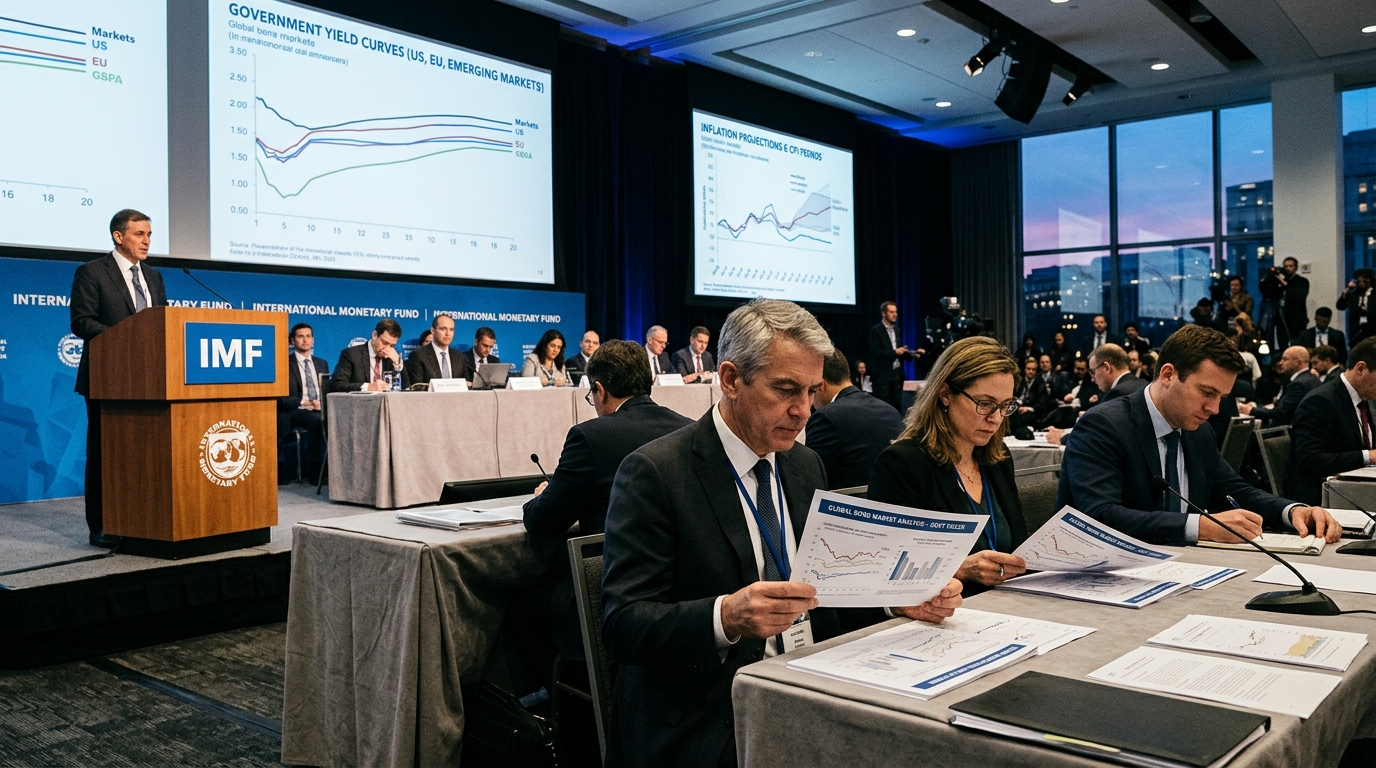
IMF says global slowdown may ease, but resilience is fading
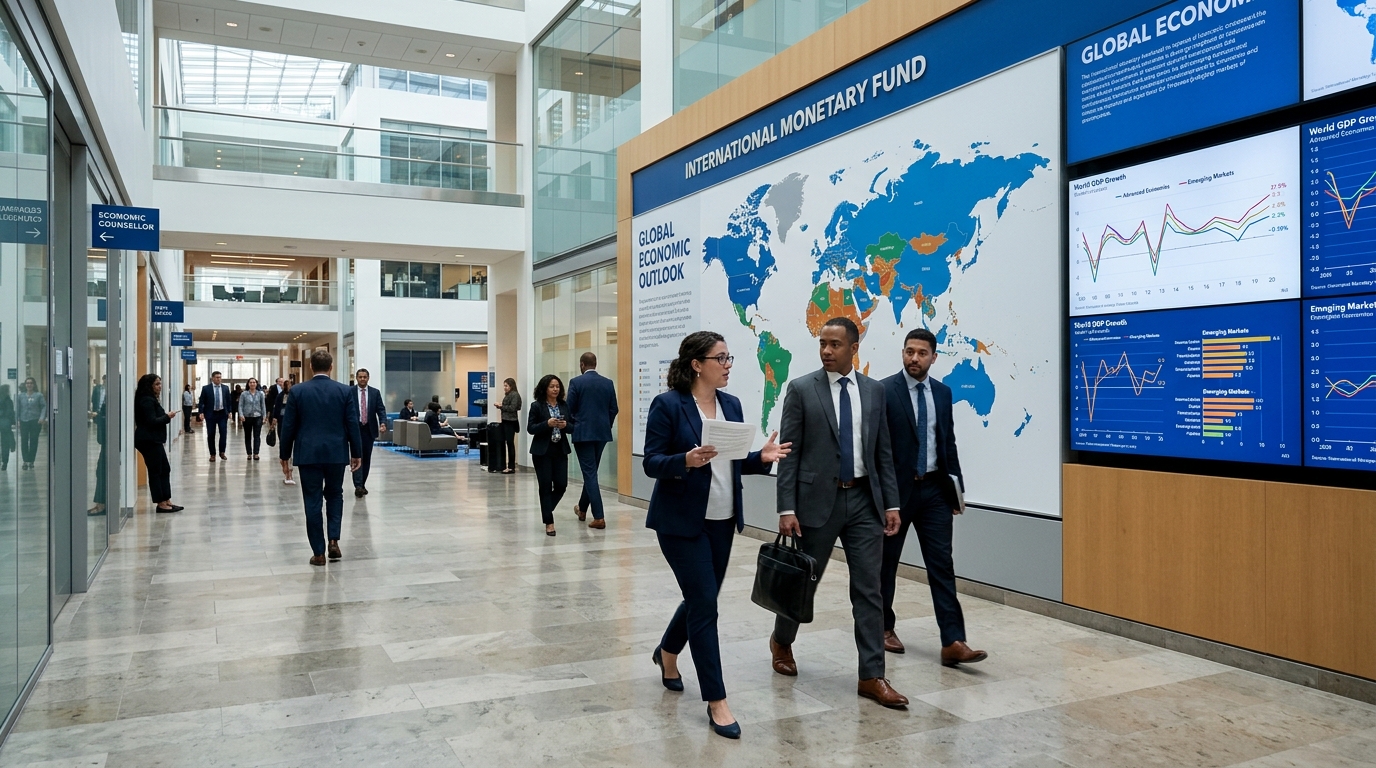
The International Monetary Fund is signaling that the global economy may be slowing less sharply than feared, helped in part by heavy investment linked to artificial intelligence, while also warning that the system is becoming less able to absorb new shocks.
According to CNBC and MarketWatch reports, the IMF said the global slowdown now looks milder than earlier feared, with AI-related spending providing support even as wars, inflation pressure and high debt continue to weigh on the outlook. The key message is not that risks have disappeared, but that recent resilience may be nearing its limits.
Why the IMF matters to markets
For investors and policymakers, IMF guidance often shapes how markets interpret the balance between growth and risk. A “milder slowdown” can support sentiment around equities and cyclical sectors, especially if traders believe economic activity can keep expanding without a deep contraction. But the IMF’s simultaneous warning about weakening resilience keeps attention fixed on sovereign debt, financing conditions and inflation-sensitive assets.
That dual message matters because markets are trying to judge whether the world economy is heading for a soft landing, a renewed inflation shock, or a more uneven phase where a handful of countries and sectors outperform while others weaken.
AI is helping offset part of the drag
According to CNBC, the IMF sees the AI boom as one factor cushioning the impact from conflict and broader economic strain. That does not mean AI is lifting all regions equally. Instead, it suggests spending on data centers, chips, software and productivity-enhancing tools is becoming meaningful enough to show up in the broader macro picture.
MarketWatch reinforced that theme in coverage of IMF-linked charts and analysis, pointing to a world economy that is increasingly uneven. Some countries and industries are benefiting from technology investment and stronger capital spending, while others remain more exposed to weak trade, higher borrowing costs or persistent debt burdens.
A more uneven expansion
The IMF-linked narrative fits a broader “K-shaped” pattern described by MarketWatch, where:
- Technology- and capital-intensive sectors may continue to attract investment.
- Highly indebted economies remain vulnerable to higher yields and refinancing strain.
- Consumers and businesses in weaker regions may still feel pressure from rates and inflation.
That unevenness is important because it means a stable global headline number may mask growing divergences underneath.
Debt and inflation risks have not gone away
The IMF’s caution stands out because it arrives at a moment when debt sustainability and inflation risks are still central to market pricing. CNBC separately reported that the IMF warned government bond yields could spike in a disorderly way if debt and inflation concerns worsen, underscoring how quickly funding conditions can tighten. While that specific bond-yield warning has already been widely noted, it supports the broader point in the IMF’s latest growth message: resilience should not be mistaken for immunity.
If growth is being supported by a narrow set of forces, such as AI-related investment, then economies with weaker fiscal positions or less access to capital may still face pressure. That is especially relevant in countries where public debt is already high and interest costs have become more sensitive to inflation surprises.
What this means across asset classes
The IMF’s latest assessment is likely to be read in different ways across markets:
- Equities: Growth-sensitive and AI-exposed sectors may benefit from the idea that the slowdown is less severe.
- Bonds: Debt-heavy sovereigns could remain under scrutiny if inflation or fiscal concerns intensify.
- Currencies: Relative growth and policy divergence may matter more if the global expansion becomes more uneven.
- Commodities: A milder slowdown may support demand expectations, though conflict and supply shocks remain major variables.
In other words, the IMF is not delivering a uniformly bullish signal. It is describing a world economy that is still functioning, but with less room for policy error or fresh shocks.
The bigger market takeaway
The most important implication from the IMF’s message may be that resilience itself is becoming a scarcer resource. Growth has held up better than some feared, and AI investment is playing a visible role in that story. But according to CNBC and MarketWatch reports, the IMF is also making clear that the global economy is closer to its stress limits than the recent data may suggest.
That leaves markets balancing two realities at once: stronger-than-expected support from technology-led investment, and a macro backdrop still defined by debt, inflation and geopolitical strain.
Neutral outlook: The IMF’s latest view supports the case for continued attention to growth-sensitive sectors, but it also suggests markets may remain highly reactive to any signs that inflation, debt stress or conflict are starting to overwhelm the current cushion from AI-led investment.
MarketPro reports are AI-assisted analyses of publicly reported market news. Not investment advice.