Malaysia launches tokenized-bond platform in DLT market push
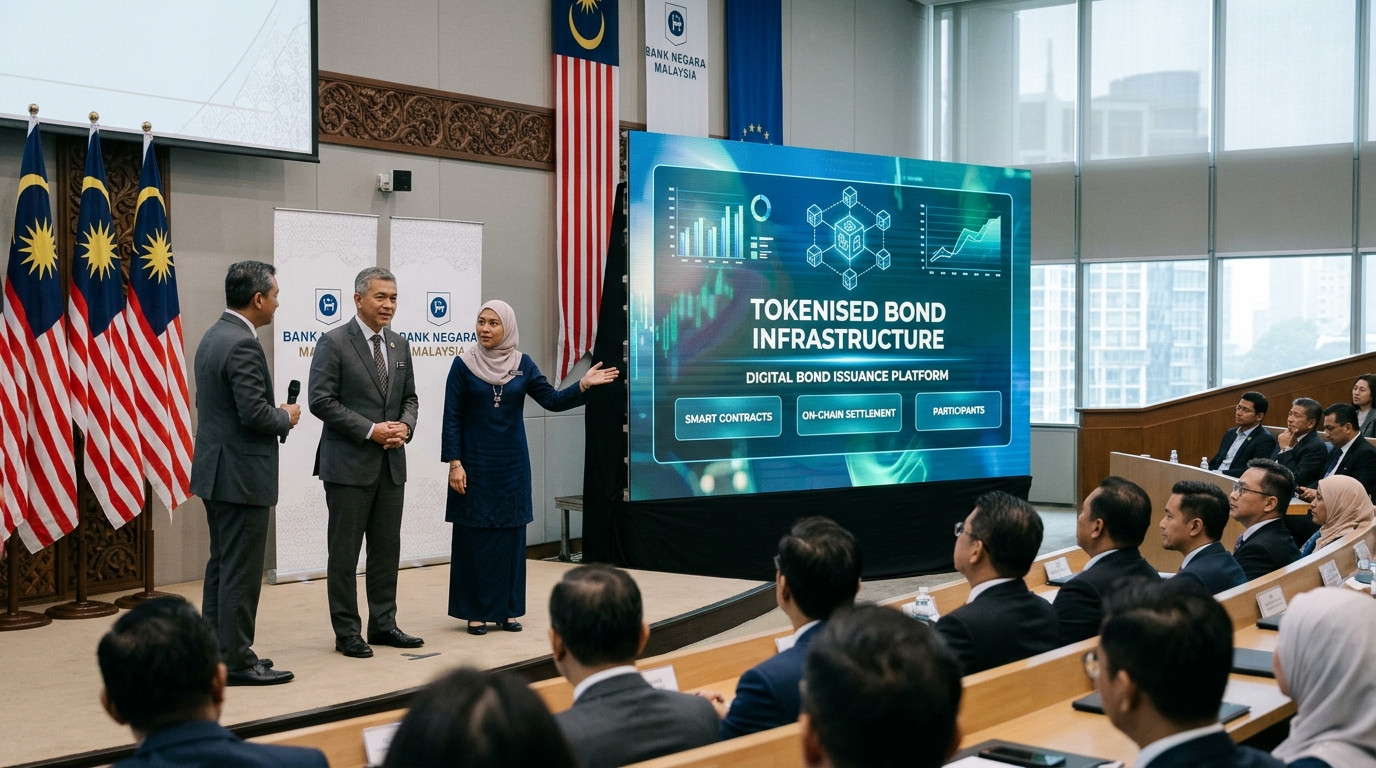
Malaysia’s central bank has launched a distributed-ledger platform for tokenized bonds, a step that points to growing institutional use of blockchain infrastructure in mainstream capital markets.
According to Cointelegraph, the new platform is aimed at supporting tokenized bond activity rather than speculative crypto trading. That distinction matters for markets: while digital-asset headlines often focus on prices, institutional investors and policymakers have increasingly shifted attention toward the plumbing of financial markets, including settlement, issuance, and record-keeping.
Why this development stands out
Tokenized bonds are typically presented as a way to represent traditional fixed-income instruments on blockchain-based systems. Supporters argue that this can improve operational efficiency, speed settlement, and reduce friction in parts of the issuance process. For central banks and regulators, these projects also provide a controlled environment to test how distributed-ledger technology might interact with existing financial infrastructure.
The importance of the Malaysia move lies in who is involved. A central-bank-backed platform carries more policy weight than a private-sector pilot because it signals direct official interest in how tokenization may fit within regulated markets. According to Cointelegraph, this is not a retail-crypto story; it is a market-structure story.
That puts it in line with one of the clearest themes in digital assets over the past year: the strongest institutional momentum has often come not from token speculation, but from efforts to build systems around custody, settlement, and regulated product issuance.
Institutional blockchain, not just crypto prices
For market participants, the launch reflects a broader separation taking shape within the digital-asset world. On one side are highly volatile token markets. On the other is a growing policy and infrastructure effort around tokenization of traditional assets such as bonds, funds, and cash equivalents.
Malaysia’s platform adds to that second trend. Even when countries take different regulatory approaches to cryptocurrencies, many are still exploring whether distributed ledgers can be useful in traditional finance. Bond markets are a natural area for experimentation because they are operationally intensive and central to government and corporate funding systems.
If such platforms prove reliable, they could eventually influence how investors think about issuance efficiency, post-trade processing, and transparency. But the launch stage is only an early step. Operational design, legal enforceability, interoperability with existing systems, and investor adoption all remain critical questions.
What global investors may take from it
The immediate market impact may be more thematic than price-driven, but the signal is still important. It suggests that parts of Asia continue to play an active role in financial-market digitization, particularly where official institutions are willing to test blockchain-based frameworks in a regulated setting.
For fixed-income markets, tokenization initiatives can matter because they touch on core questions of market access and efficiency. For digital-asset markets, they matter because they broaden the narrative beyond exchange-traded tokens and into the architecture of financial markets themselves.
This also helps explain why institutional crypto coverage tends to resonate more than purely speculative stories. A central-bank platform for tokenized bonds is easier for traditional investors to connect with than a headline about daily coin volatility, because it links directly to familiar concepts: bond issuance, settlement systems, and regulatory oversight.
The limits of the story
It is important not to overstate what a launch means. A platform announcement does not automatically translate into large-scale adoption, higher issuance volumes, or broad changes in bond-market structure. Much depends on how widely the system is used, what kinds of issuers participate, and whether market participants see meaningful cost or speed advantages.
Still, according to Cointelegraph, the move is a concrete example of official-sector engagement with tokenization at a time when global regulators and institutions are looking for practical uses of blockchain that fit within established financial rules.
That makes the Malaysia development notable even without a direct token-price angle. It reflects a part of the digital-asset market that is becoming increasingly important: infrastructure built for regulated finance rather than speculation alone.
Neutral outlook: The next phase to watch is whether Malaysia’s tokenized-bond platform moves from launch to meaningful participation, offering clearer evidence of how distributed-ledger systems may be used in mainstream debt markets.
MarketPro reports are AI-assisted analyses of publicly reported market news. Not investment advice.