New Zealand’s Two-Speed Economy Poses NZD Election Test
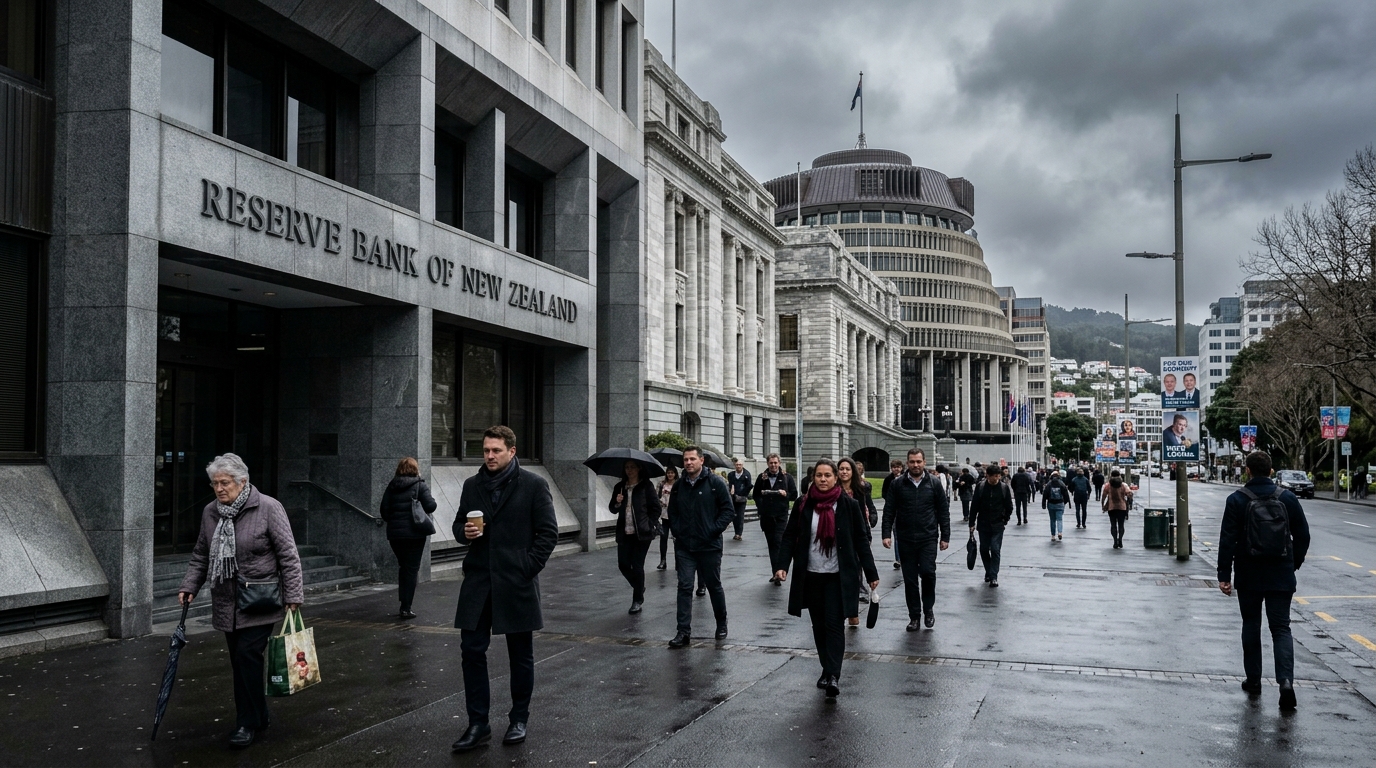
New Zealand’s economy is developing in an uneven way that could carry implications for politics, monetary expectations and the New Zealand dollar. According to an Investing.com report, the country’s so-called two-speed economy is becoming an election dilemma for the ruling National party, highlighting differences in economic performance across sectors and households.
While the headline is political, the market significance is broader. Currency traders often focus on whether economic conditions are becoming stronger or weaker in aggregate, but an uneven economy can complicate that picture. It may leave policymakers balancing soft domestic conditions against areas of resilience, creating uncertainty for rate expectations and, by extension, for the NZD.
What a two-speed economy means for markets
A two-speed economy generally refers to a situation in which one part of the economy is holding up better than another. For foreign-exchange markets, that matters because it can make the outlook for growth, inflation and policy less straightforward than the headline data alone suggests.
According to Investing.com, this dynamic is turning into a political challenge ahead of the election. For markets, that raises at least two questions. First, whether uneven economic performance will shape fiscal messaging during the campaign. Second, whether the imbalance will affect how investors interpret any future signals from policymakers.
Neither question is merely domestic. In currency markets, political campaigns can alter expectations for spending, reform priorities and economic confidence, especially when the economy is not moving in a uniform direction.
Why NZD traders may pay closer attention
The New Zealand dollar tends to be sensitive to shifts in growth expectations and relative-rate outlooks. When economic momentum is mixed, traders may become more reactive to incoming data and public commentary. A split economy can also make market pricing less stable if one data release points to resilience while another points to weakness.
That makes the political backdrop more relevant than usual. If the ruling party is forced to defend a patchy economic record, campaign rhetoric could increasingly center on cost-of-living pressures, sector weakness or support measures. Even without firm policy detail, that debate can influence how investors think about the medium-term macro path.
Election politics and policy interpretation
Investing.com’s report emphasizes the election dilemma for the National party rather than a specific market trigger. Still, the market implication is clear: when political pressure rises because growth is uneven, investors tend to look more closely at how governments talk about economic management.
That does not automatically translate into a directional move for the NZD. In some cases, political pressure can lead to promises of support that investors view as growth-friendly. In others, it can underline economic fragility and reinforce caution. The point is that the currency backdrop becomes more event-sensitive when domestic conditions are split.
What forex markets may watch next
With only the available headline and no additional confirmed policy details, it is important not to overstate the market case. But several practical watchpoints follow from the Investing.com report:
- Economic data consistency: Traders may look for signs that weakness or strength is spreading more broadly through the economy.
- Campaign messaging: Election debate can shape perceptions of fiscal priorities and household support.
- Policy expectations: Any shift in how markets read the domestic outlook could feed into NZD positioning.
- Relative performance: The currency may also be judged against peers if investors see New Zealand’s domestic story as unusually uneven.
Why this fits a wider market theme
The story also matches a broader global pattern in which political calendars and economic crosscurrents are increasingly colliding. Markets have had to digest elections not only as ideological contests but as events that can reshape assumptions about spending, reform and growth distribution.
In New Zealand’s case, the emphasis from Investing.com is that the economy’s uneven performance is becoming politically salient. That alone is enough to put the NZD on a more attentive watchlist, particularly for traders looking for economies where domestic political narratives may start interacting more directly with macro pricing.
Neutral outlook: If New Zealand’s two-speed economy remains a central election issue, the NZD could become more sensitive to domestic data and campaign signals, even without an immediate policy shift.
MarketPro reports are AI-assisted analyses of publicly reported market news. Not investment advice.