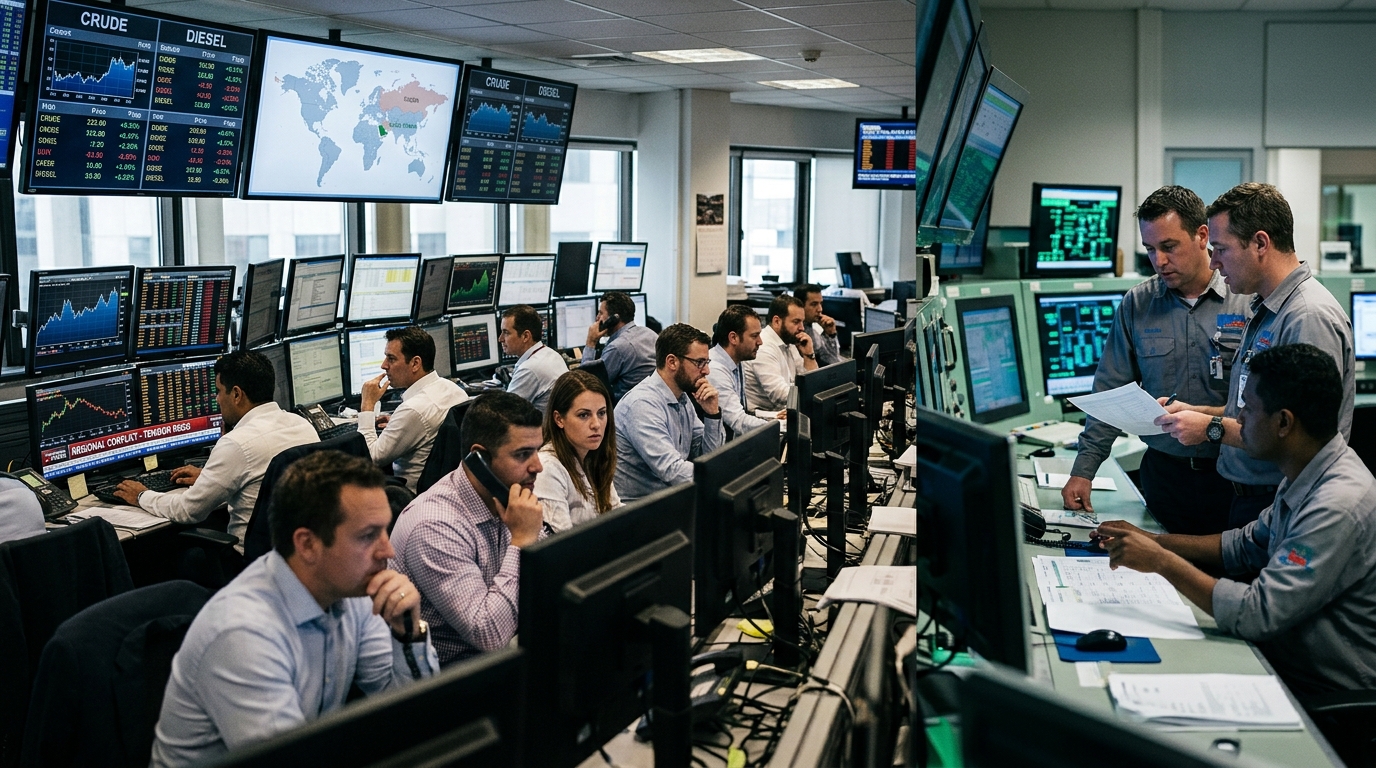
Oil rises as Middle East tensions return to market focus

Oil prices moved higher as traders responded to renewed Middle East tension involving Iran-backed Houthis and Saudi Arabia, according to CNBC. The move puts geopolitical risk back at the center of the energy market after a period in which traders had also been weighing supply balances, diesel demand and broader macro signals.
For markets, the significance of this type of headline is less about immediate confirmed disruption and more about risk premium. When tensions rise in or around major energy corridors and producing regions, oil prices can react quickly because traders begin to factor in the possibility of supply interruptions, shipping risks or a wider regional escalation.
Geopolitics pushes back into crude pricing
CNBC reported that oil rose amid growing tensions between the Houthis and Saudi Arabia. That headline alone does not establish an actual production outage or transport blockage, and responsible market interpretation requires that distinction. Still, the market often reprices before physical disruptions are visible, especially when the parties involved are linked to a region that remains critical to global crude flows.
The latest move is also a fresh development compared with previously covered stories centered on oil slipping as traders weighed diesel supply and conflict risk, or airline-market fallout from prior Saudi-related tensions. This time, the focus is on crude itself and the renewed geopolitical bid appearing in energy prices.
Adding context, CNBC also reported separately that Taiwan agreed to buy 30% of gas from the Alaska LNG project, citing comments from Donald Trump. That is not a direct oil-market driver in the short term, but it underlines a broader theme in global energy markets: buyers and governments continue to think in terms of long-term security of supply. In periods of geopolitical uncertainty, those strategic energy relationships tend to attract more attention.
Why energy markets react so quickly
Oil markets are highly sensitive to security developments because traders must assess not only current barrels but also transport routes, insurance costs, naval risks and the possibility of retaliatory action. Even without a confirmed supply loss, rising tension can change assumptions on availability and timing.
That sensitivity is amplified when markets are already alert to inflation and macro risks. Higher oil prices can feed into expectations around fuel costs, freight and headline inflation, making crude a cross-asset story rather than a niche commodity move. For equity and currency markets, the implications can spread to airline shares, import-dependent economies and inflation-linked rate expectations.
At the same time, a single geopolitical jump in prices does not necessarily create a sustained trend. Traders usually look for follow-through evidence, such as changes in shipping patterns, official production statements, infrastructure damage or broader diplomatic deterioration. None of those details are established by the available headlines, so the prudent reading is that the market is currently repricing risk, not yet confirming a supply shock.
What to watch next
- Shipping security: any sign of disruption in key regional routes could intensify the market reaction.
- Producer response: comments from Saudi officials or OPEC-linked sources may shape how durable the move becomes.
- Cross-asset spillover: stronger crude could influence inflation expectations and risk sentiment in equities and currencies.
In the near term, the headline-driven rise in oil highlights how quickly geopolitical developments can overwhelm quieter supply-and-demand narratives. With no confirmed outage in the provided reports, the current move is best understood as a renewed security premium entering crude prices rather than proof of a lasting shortage.
Neutral outlook: oil traders will likely keep focusing on whether tensions remain rhetorical or develop into disruptions that materially affect supply, transport or regional energy infrastructure.
MarketPro reports are AI-assisted analyses of publicly reported market news. Not investment advice.