South Korea Targets Sovereign AI Push With Record Budget
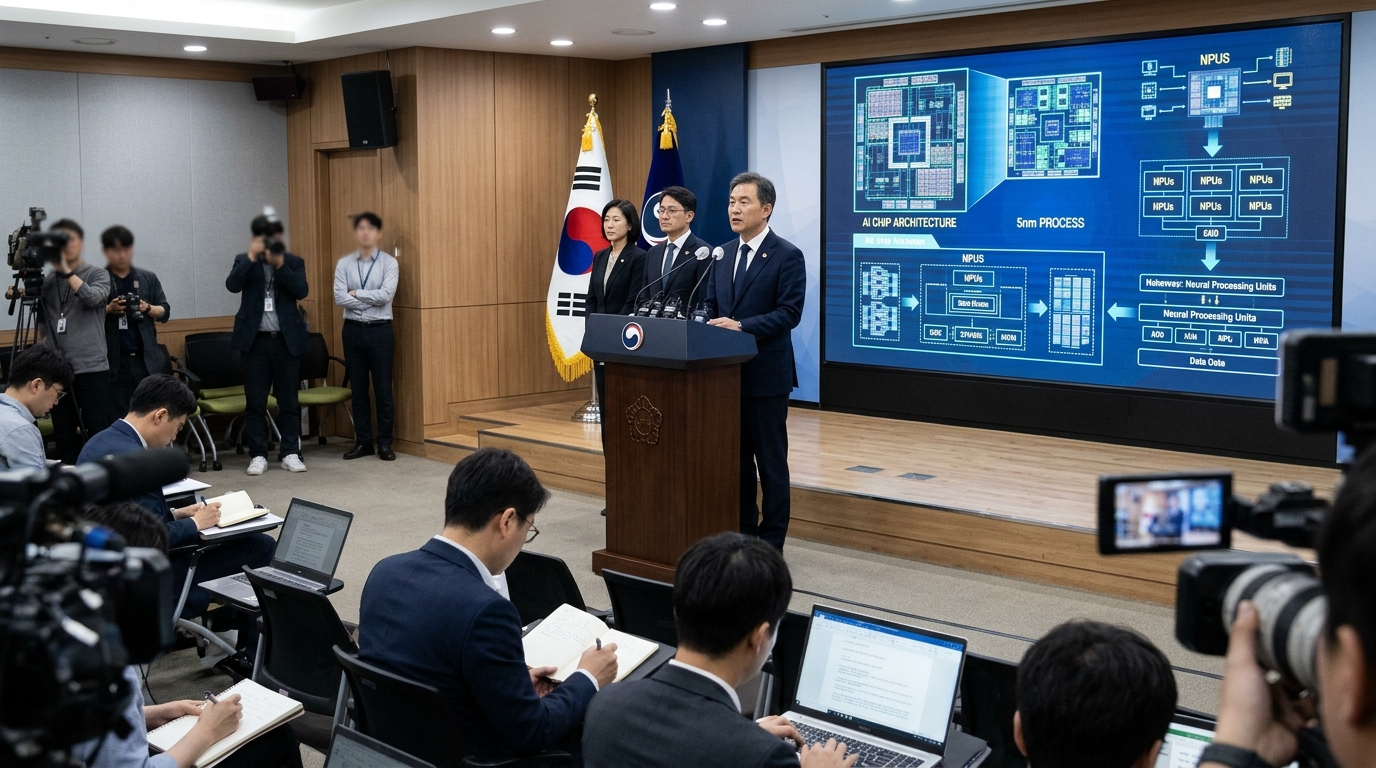
South Korea’s latest artificial-intelligence push is emerging as a market story with implications well beyond domestic policy. According to CNBC, Seoul is targeting what it called the world’s highest-performance sovereign AI model and is backing that ambition with a record new budget. In a separate CNBC report, OpenAI chief executive Sam Altman made a surprise visit to South Korea as the company builds on chip partnerships.
Taken together, the two developments reinforce a theme global investors have been tracking for much of the year: governments and private AI leaders are increasingly competing not only on software models, but also on control of computing infrastructure, semiconductor supply and strategic partnerships.
Why this matters for markets
For equity markets, the significance lies in how AI spending is broadening from private-sector capital expenditure into state-backed industrial strategy. South Korea is already central to the global chip supply chain, and a sovereign AI initiative suggests policymakers want a bigger role in the value chain beyond memory and hardware manufacturing.
That matters because AI-related valuations have depended heavily on expectations for sustained demand across chips, data centers, software and cloud infrastructure. A major government budget initiative can be read as another signal that AI investment is becoming embedded in national competitiveness planning, not just corporate experimentation.
Altman’s visit adds another layer. CNBC reported that the OpenAI chief was building on chip partnerships, a notable phrase given the market’s intense focus on semiconductor bottlenecks, packaging capacity and the geopolitical concentration of advanced chip production. Investors have been watching whether AI leaders can secure long-term access to computing power without being constrained by supply-chain limits.
A sovereign AI race is taking shape
South Korea’s announcement also fits a broader pattern in which countries seek domestic or nationally aligned AI capabilities. The market relevance is twofold.
- First, sovereign AI projects can support local hardware, data-center and software ecosystems.
- Second, they may intensify competition over talent, energy use, chips and government procurement.
For South Korea, that could strengthen the investment case around companies exposed to semiconductor manufacturing, AI infrastructure and enterprise digitization. It may also sharpen attention on whether public spending translates into commercially usable systems or remains largely strategic and symbolic.
The phrase “world’s highest performance” is attention-grabbing, but markets will ultimately focus less on political ambition and more on execution. Key questions include whether domestic firms win procurement mandates, whether computing capacity expands materially, and whether this policy triggers follow-on private investment.
Why Altman’s Seoul stop matters
Altman’s surprise visit suggests South Korea remains important in the evolving map of AI partnerships. According to CNBC, the visit comes as OpenAI builds on chip partnerships, linking one of the world’s highest-profile AI firms to a country already deeply embedded in semiconductor production.
That does not by itself guarantee new contracts or investment announcements. But it does indicate that major AI companies continue to pursue relationships that can help secure hardware access and possibly diversify supply arrangements. In market terms, that keeps semiconductor names and AI infrastructure providers at the center of the global tech narrative.
It also raises the possibility that future AI competition will depend as much on industrial capacity and national policy support as on model quality alone. That is relevant for investors trying to distinguish between near-term enthusiasm and longer-term strategic positioning across the sector.
What to watch next
The next market-moving details will likely be practical ones: the scale and timing of South Korea’s budget deployment, any named corporate beneficiaries, and whether Altman’s visit produces clearer partnership outcomes. Investors will also be watching whether other governments respond with similar sovereign AI initiatives, which could reinforce the current capex cycle in semiconductors and related technology infrastructure.
Neutral outlook: South Korea’s AI budget push and Altman’s Seoul visit strengthen the case that AI remains a strategic global investment theme, but markets will need concrete spending and partnership details to judge the lasting impact.
MarketPro reports are AI-assisted analyses of publicly reported market news. Not investment advice.