Berkshire Stake Increase Revives Homebuilder Market Focus
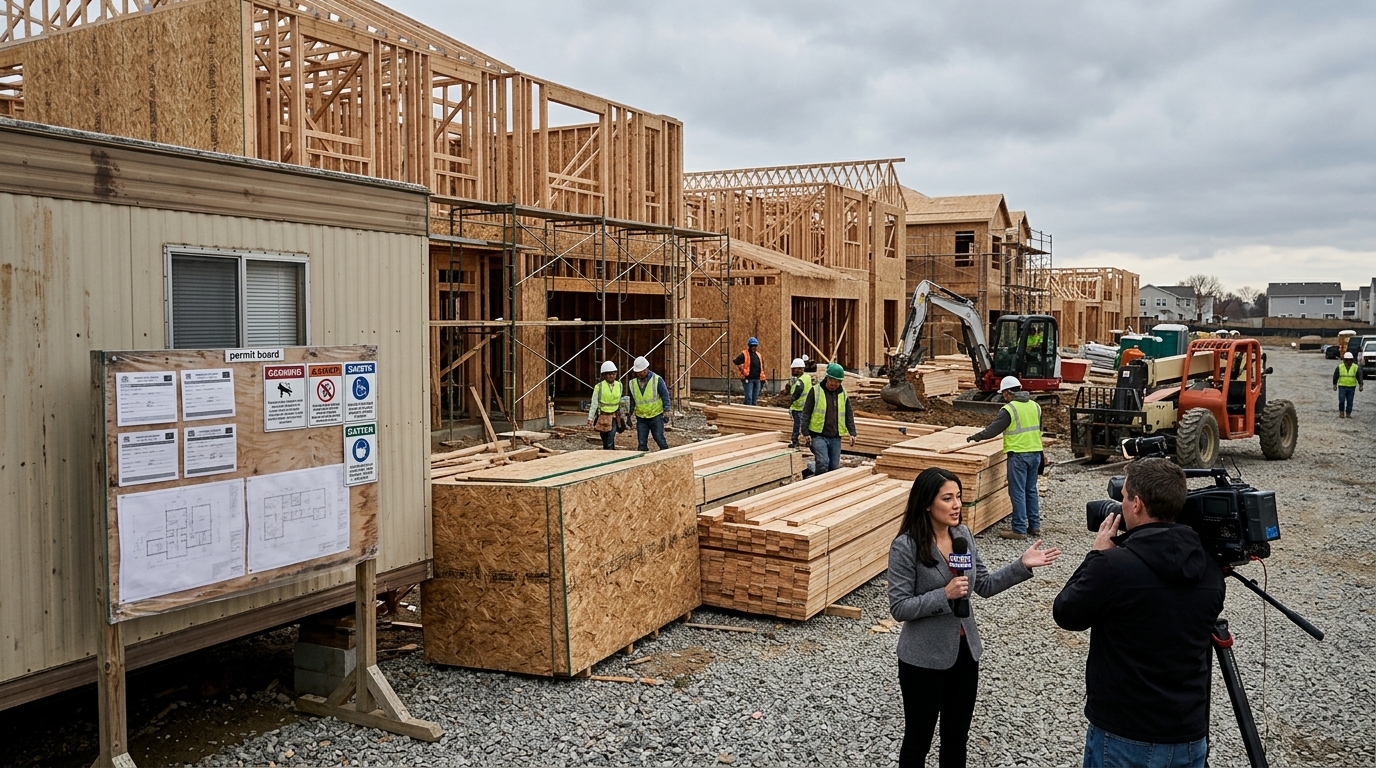
CNBC reported that Berkshire Hathaway added to a stake in a slumping homebuilder, extending a position that had already nearly doubled. Even without the full filing details in the headline, the move is notable because it arrives at a time when investors are still debating how higher borrowing costs and uneven housing demand should be reflected in homebuilder valuations.
The story matters for stock markets because Berkshire’s portfolio changes are closely watched as signals about long-term value, balance-sheet resilience and sector timing. In this case, the added stake suggests Berkshire saw enough appeal in a pressured housing name to keep buying despite a difficult backdrop for rate-sensitive equities.
Why the market pays attention to Berkshire moves
Berkshire’s equity trades do not automatically signal a broad turn in a sector, but they often influence investor attention. A larger position in a homebuilder can prompt the market to revisit several questions at once: whether housing-related stocks have already priced in bad news, whether higher rates are limiting downside visibility, and whether select builders still have strategic advantages in a weaker cycle.
The timing is particularly relevant because housing remains one of the most interest-rate-sensitive corners of the U.S. economy. Mortgage costs, land values, labor inputs and consumer confidence all feed into sentiment toward builders. Against that backdrop, Berkshire’s decision to add rather than reduce exposure stands out.
A housing signal in a high-rate world
This headline also intersects with one of the market’s biggest macro themes: persistently elevated yields. CNBC separately highlighted that the 10-year Treasury yield is near its highest level in nearly two decades and examined how rapid rate increases can create financial strain. That context helps explain why a Berkshire purchase in homebuilding is attracting attention.
Homebuilder shares often struggle when rates remain high because affordability worsens and financing costs rise. Yet the same pressure can also create stock-specific opportunities if investors believe a company can withstand a slower environment better than peers.
Berkshire’s reported purchase does not prove the housing cycle has turned. But it does suggest that at least one major long-term investor is willing to add exposure while the group is under pressure.
What can and cannot be inferred
Based on the headline from CNBC, the confirmed point is simple: Berkshire increased a stake in a homebuilder whose shares had been slumping, and the position had already nearly doubled. That is enough to make it a meaningful market development.
However, the headline does not confirm Berkshire’s precise rationale, the timing of all purchases, or whether the trade reflects a broad sector call rather than a company-specific view. It also does not support any conclusion that U.S. housing conditions are about to improve materially.
Those limits are important. Investors often treat Berkshire activity as a directional forecast, but the firm’s buying history can reflect patience and valuation discipline more than a near-term macro view.
Why this is a fresh story
This development is distinct from previously covered Berkshire leadership headlines. The earlier reader interest around succession does not overlap with this new portfolio action. Here, the market relevance comes from capital allocation into a weak part of the equity market rather than corporate governance at Berkshire itself.
That makes the story useful for stock readers watching where large, high-profile investors are finding opportunity during a period of elevated rates and selective economic pressure.
Broader implications for equities
If the market reads Berkshire’s move as a sign of confidence in housing-related valuations, it could bring added scrutiny to other rate-sensitive cyclicals. Even so, the larger test for the group remains the same: whether demand, financing conditions and margins can hold up under restrictive borrowing costs.
Neutral outlook: follow-up filings and reporting from CNBC and other major outlets should help clarify whether Berkshire’s latest move is an isolated stock decision or part of a broader commitment to the housing theme.
MarketPro reports are AI-assisted analyses of publicly reported market news. Not investment advice.